
 E-Paper



Your space: Onion price rise leaves residents teary-eyed
Should onions be declared an essential commodity? What steps should authorities take to ensure nobody in the ‘farm to fork’ supply chain suffers, not least the end consumer? Have you stopped eating onions?


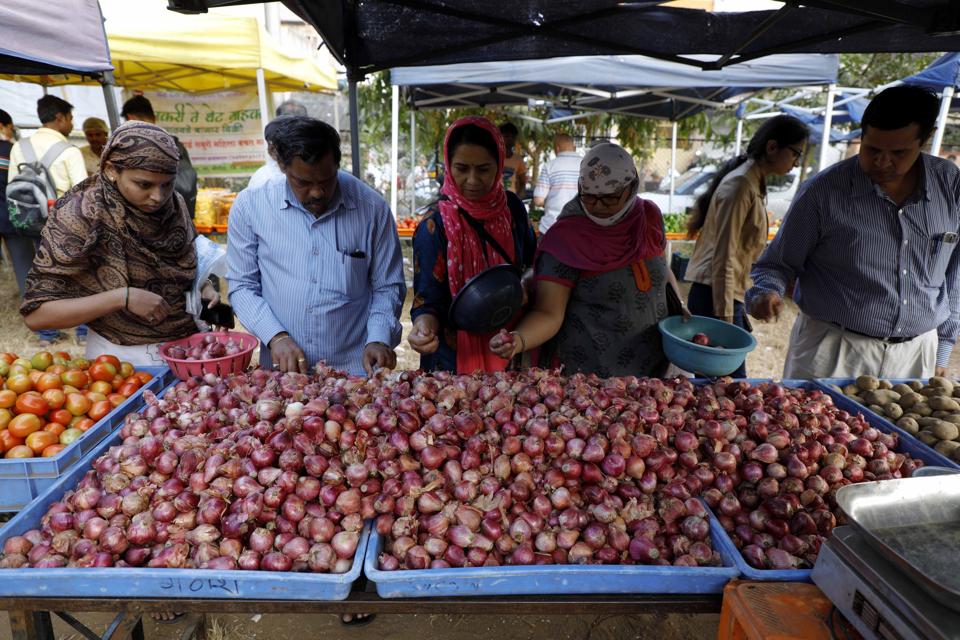
The hike in onion prices has badly affected consumers, with the vegetable in wholesale markets costing as much as 120-130 per kg. Agriculture experts believe the rates are expected to stay high till February, 2020. Farmers claim that the price is not benefiting them and residents are having a tough time managing kitchen supplies. Is this merely a case of demand and supply gone awry?
The authorities have failed to control the prices of onion. Their outlook towards the staple is wrong. The government, mainly the ministry of finance and consumer affairs, is taking steps in the wrong direction. They should have made plans in advance and taken steps to ensure adequate supply hits the markets as onion is planted during rabi and kharif seasons. My past experience is that whenever there is a blanket ban on export of a particular commodity, it takes a lot of time for the government to revoke the ban. The ban will be a huge loss for traders and farmers who want to export onions. The government policies show apparent lack of awareness regarding agricultural issues. Why would traders and farmers export onions to global markets when the rate is high in the domestic market?
Raju Shetti
The government has used traditional measures to control onion prices. When the central government’s team and officials visited Lasalgaon and other onion producing areas, we told them that the problem is related to demand and supply. The onion crop suffered huge damage first due to delayed monsoon. Then, as there was no production, it was natural that the prices would be inflated. India’s domestic demand of onions is 50,000 metric tonnes. The government is claiming that they are importing onions from Egypt, Turkey and Afghanistan, but the prices will not come down until the new crop arrives. Prices of onion will remain high until the first week of January next year. The government should make it clear to residents that the rise in price is due to damaged crops. Importing onions from other countries will not help as the taste is different from the local produce, as the imported variety will only sweeten it. The traders will not be able to keep more than 500 quintals of onions with them due to the stock holding limits. Now, since the traders have stopped procuring extra commodities from farmers, they have started their agitations at markets and market committees.
Nanasaheb Patil
During the rains last month, the crop which was ready for harvest and those in storage got damaged. Almost all farmers faced the same situation. Though the prices of onions have skyrocketed, we are not getting any benefit from it.
Satish Pawar
The onion prices will continue to be inflated till the arrival of the new crop. The prices will not decrease suddenly. With the arrival of the new onion crop, markets will stabilise.
Jaydutta Holkar
Importing onions is a tool used for psychological sentiments. It helps reduce prices when the shortage is not much. However, this time there is acute shortage, hence importing onions will not help in reducing its prices.
Nanasaheb Patil
Everyone is talking about onions nowadays because of the rise in price. However, when the price dips to Rs 2 per kg, no one talks about it. Though the prices are high, the yield is less. There has been no change in farmers’ income as maximum crops have been damaged. Though onion prices have reached Rs 150 per kg, farmers are selling it only in wholesale markets. The entire profit does not reach us and there is a huge difference between wholesale and retail prices.
Sunil Ahire
The difference in wholesale and retail prices is between 50 and 70 per cent. In the retail market, transport and other handling costs are added. The retailer’s margin is also added to the cost. Hence, there is a sizeable gap in the amount at which the farmers sell onions to wholesalers and the prices at which a consumer buys it from the retail market.
Ajay Nerkar
New crop has been completely damaged and now the onion rates are at 5,000 to 6,000 per quintal in the wholesale market. The crop is coming mainly from Pune and Ahmednagar district in the market. The purchasers are from north and south states. As the wholesale prices are in between Rs 50 and Rs 60 per kg, it will be double in the retail market. Once the rain stops farmers might get the onions in the market, but their quality will be low than the old stock. So the prices of old stock will be high.
Vilas Raikar
Farmers harvest the rabi onion crop in states of Maharashtra, Gujarat and others amid hopes of high yield. According to Nasik-based research body National Horticulture Research and Development Foundation (NHRDF), the harvesting of rabi onion normally begins from mid-March and continues till July. India has three seasons for onion — kharif (winter), late kharif and rabi (summer). The research body states that 50 per cent of the rabi onion output is kept in storage for use in lean season (August-November) and farmers fetch good price. Some states store the staple using post-harvest technology and improved storage structures.
Amit Khanna
The demand and supply gap of onion always hits our kitchen budget. It is always a regular affair. While we keep blaming the government, state and local authorities, middlemen and retail sector, the problem remains. As per a study, an urban household spends on average Rs 178 per month to buy vegetables. The high cost of tuber with Rs 150/kg has forced many households to omit onions as a part of their diet. Though the Centre prohibited onion exports to bring down the prices, the end result has been far from satisfactory. Soaring onion price will continue to upset household budgets till at least early next year. Since the next stock will arrive by next month, the onion prices are likely to stabilise by mid-January.
Deepti Narayan


