
 E-Paper



391 death spots dog Punjab’s roads in 12 districts
The NHAI has asked for data from Punjab to improve the situation and carry out work to ensure that the number of death sports on roads of Punjab can come down

 Prefer HTon Google


Chandigarh Punjab’s 12 districts have 391 death spots on the national highways and state highways; of these, 256 are on the national highways and remaining on 135 on state highways. The identification of these spots started two years ago, with the initiative of the Tandarust Mission, Punjab, that a private organisation is funding.
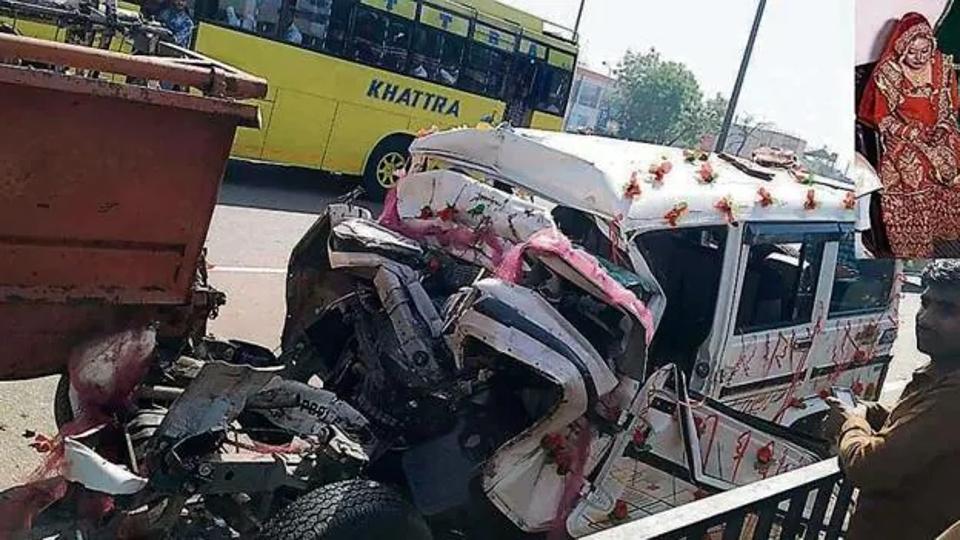
The survey in the remaining ten districts of Punjab is underway and after its completion, the total number of fatal spots is expected to touch 800. According to the National Highways Authority of India (NHAI), a road accident black (death) spot on the national highways is a stretch on the highway of 500-600metre on which either five road accidents have taken place over the past three years or mishaps involving fatalities/grievous injuries or 10 fatalities within the same time frame.
The report pinpoints ten most deadly spots in these districts, where 261 deaths have occurred in three years from January 2017 to December 2019, of which the most fatal spots are Malakpur T-point in Ropar district where 54 deaths have occurred due to accidents, Gurdwara Nabha Sahib, Mohali (46) and Tajpur-cut-Samrala Chowk-Vardhman Chowk, Ludhiana (31).
Subsequent to this report compiled by the Punjab Road Safety and Traffic Research Centre, Mohali, the NHAI has started taking corrective steps on the roads it has built. Authority added that works to the tune of ₹300 crore have been identified.
13 deaths a day from 2011-2019, state police record
From 2011 to 2019, 42,658 persons had died in road accidents, with a daily average of 13 deaths, record with the state police shows. There were 58,269 accidents on the state’s roads in which 42,658 people lost their lives and 35,606 were injured. The year 2016 was deadliest, when 6,952 accidents took place and 5,077 lives were lost.
“Road fatalities is the product of human error, road indiscipline, bad road engineering, and inadequate traffic management. The NHAI is spending about ₹300 crore this fiscal to improve accidents black spots, in addition to constructing large number of bypasses and vehicular underpasses at identified spots,” said NHAI adviser Kahan Singh Pannu.
He suggested that state government should also strengthen traffic police manpower in proportion to the increased density of vehicles and employ new traffic control technologies.
Dr Navdeep Asija, traffic adviser, with the State Road Safety and Traffic Research Centre told HT, “Scanning FIRs related to all the accidents is a tedious process and work remaining districts is going on. Identification of deadly spots and deaths in accidents from cases registered is done by our team,” he added.
He added that national highways comprise 4.6% of 72,000-km road network in the state, on which 80% of accidents take place. “The NHAI has asked state to provide data so that corrective steps could be taken,” said Asija. The deadliest hours on the road, in which 20% of fatal accidents take place is between 6 pm and 9pm; in terms of area classification, rural areas of the state account for 59% of accidents.


