
 E-Paper



Delhi: Amid 4th Covid wave, districts intensify micro containment zone strategy
Containment zones are sealed premises or areas that are essentially under a hard lockdown for a certain period, and are placed under increased surveillance by district teams.

 Prefer HTon Google


Dharamveer Singh, a 44-year-old labour worker, was isolated in his residence in Hanuman Mandir Gully — one of the many cramped lanes in west Delhi’s Palam neighbourhood — after he tested positive for Covid-19 last Thursday.
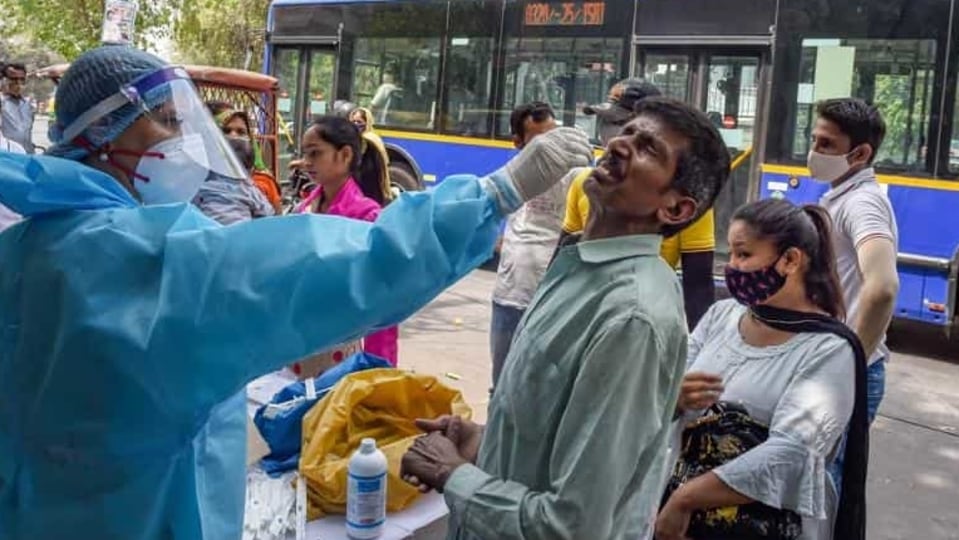
Two days later, his younger brother, Akash, who lives next door, also tested positive. With that, the two houses were clubbed and turned into one of the 4,200-odd “micro” containment zones in the city.
Containment zones are sealed premises or areas that are essentially under a hard lockdown for a certain period, and are placed under increased surveillance by district teams. Essential goods are delivered to doorsteps, and these areas can be de-notified only if no new cases are added for 14 days.
With each Covid-19 wave, the Delhi government has intensified its micro containment strategy. Revenue minister Kailash Gahlot said the efforts to create such zones in the city have yielded positive results, adding that even though Delhi is witnessing a fresh spike in cases, there have been no mass clusters or hot spots in the city so far.
“In Delhi, we have been following the micro containment zone policy for several months now. The current containment zones are smaller than most of the red zones that were demarcated and notified a few months ago. The policy has allowed the government to cover a large section of active cases, causing the least inconvenience to unaffected people. Due to the effective implementation of the micro containment policy, a higher proportion of people in home isolation are currently in containment zones — hence, much higher surveillance. It has been an effective strategy to ensure Delhi does not see mass clusters and hot spots,” he said.
In a meeting, Prime Minister Narendra Modi on Thursday urged chief ministers to focus on imposing micro containment zones to tackle rising cases.
As on Thursday, Delhi had 23,181 active Covid-19 cases, of which 13,988 were inside containment zones, government records said. This means that these zones cover around 60% of the total active cases — up from 33%-35% in mid-November, when the third wave was its peak in the Capital, showed data.
The micro containment strategy was implemented in Delhi during the second wave in September.
In November, each containment zone in Delhi on average had three active cases. Currently, each on average has 2.3 active cases, showed government data.
The demarcation process is, however, extremely complex, several senior district administration officials said.
For instance, Dharamveer lives with his wife, two children and mother. In the house to the right, lives Akash, his wife and their daughter. In the house to his left lives his sister Rama, her husband Kumar, and their two children. While these houses are separate units from the outside, from the inside, they are connected through corridors, shared terraces, and other links.
“In this case, it was a challenge to club two houses and leave out the third, the occupants of which — Dharamveer’s sister and her family — were not affected by the disease. Secondly, their house was connected to more relatives’ houses. It did not make sense to put everyone inside a containment zone,” said a senior official.
“So, we sealed all access points and shared spaces that connect Dharamveer and Akash’s houses to the residences of other relatives in the same stretch, and clubbed the two into one containment zone. The unit has two active cases (the brothers) and six other residents (their wives, children and mother). All members of the family are under surveillance.”
In the initial months of the pandemic, Delhi used to have much larger containment zones — often entire lanes and blocks, which government officials said led to several complaints from people who were not infected, but had to bear the brunt of restrictions.
“The old policy was difficult to implement and adhere to. A lot of people started providing incorrect addresses while getting tested for Covid-19, fearing that if they tested positive, their locality would be turned a containment zone. The micro containment strategy has largely resolved these problems,” said a second senior government official.


