
 E-Paper



Delhiwale: The parade sights
The Republic Day parade on January 26 showcases historic Delhi landmarks, from Vijay Chowk to the Red Fort, highlighting cultural and historical significance.

 Prefer HTon Google


It is the day of the parade. Most of us Indians associate the annual Republic Day parade on 26 January with the stretch along New Delhi’s Kartavya Path. This is the section that passes before an audience of the republic’s top VVIPs and is broadcast live on TV. The parade actually continues beyond this familiar route. Here is a sense of some of the sights that our esteemed paraders will see today as they parade along the historic route. Photo shows citizens trying to get a glimpse of a previous year’s parade as it crosses the Dilli Gate traffic light.
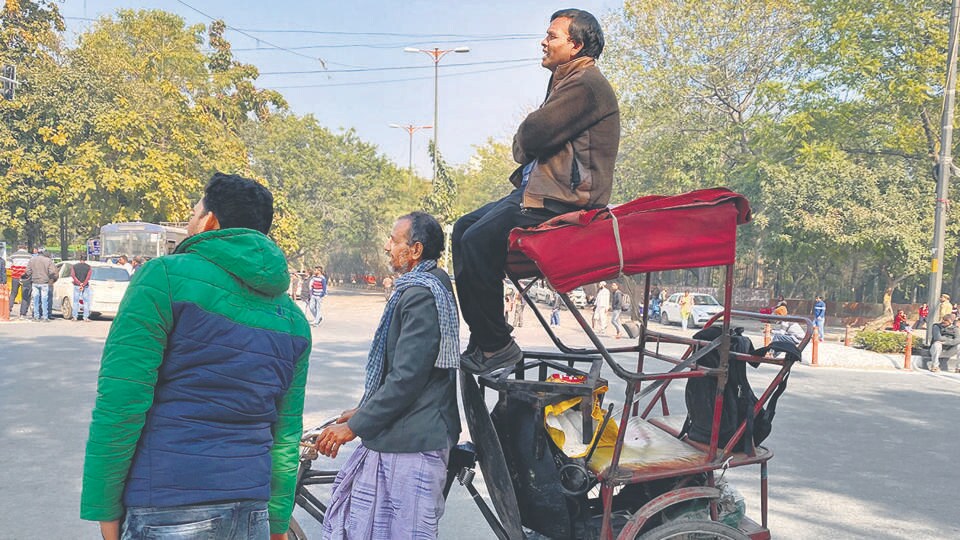
1. After exiting out of Vijay Chowk, Kartavya Path, and India Gate—the heart of the 26 January action—the parade proceeds along Tilak Marg, and passes by a white art-deco edifice. Presently the Polish ambassador’s residence, the building was once the home of Dr B. R. Ambedkar. As India’s first law minister, he lived in it from 1947 to 1951.
2. The parade enters Lala Ramcharan Agarwal Chowk, popular in Delhi lexicon as “ITO crossing”. Lala Ramcharan was Delhi’s first deputy mayor; his family lives in Old Delhi.
3. The parade enters the road named after the last Mughal emperor. Moving along Bahadur Shah Zafar Marg, it passes a building clad in multi-coloured mosaic panels depicting figures in varied costumes. This is Shankar’s International Dolls Museum, containing over 60,000 dolls from across the world, including a Kabuki dancer of Kyoto and a Flamenco dancer from Barcelona.
4. The parade passes by a block of buildings behind which lies Delhi’s largest graveyard. Thousands of Old Delhiwale are buried in Dilli Gate Qabristan. Last week it received the remains of Abdul Hamid, a retired watch repairer who would daily spend his evenings at a Purani Dilli barbershop, listening to old Hindi film songs. He died of a heart attack.
5. The parade passes by Lok Nayak Jay Prakash Narayan Park. The centrepiece is a gigantic statue of the “Lok Nayak” himself, perched atop a block. On Sunday afternoons, the park grounds are filled with cricket players; while the somewhat indifferent audience sit around the aforementioned statue. The park’s backside overlooks the ruined ramparts of Feroze Shah Kotla, one of the seven cities of Delhi.
6. The parade approaches the Khooni Darwaza. Legend has it that in the monsoon, the stone walls shed “khoon”. Incidentally, the Bahadur Shah Zafar’s sons were executed by the British at cthis spot.
7. The parade goes past Delhi Parsi Anjuman, the centre of the Capital’s minuscule Parsi community. The premises has Dar-e-Meher — the only Zoroastrian fire temple in north India. The temple is topped by a small spire sculpted into flames, painted the colour of fire.
8. The parade arrives at Dilli Gate, one of the four surviving gateways to Old Delhi. It goes past the ghostly building of long-shut single-screen Golcha Cinema, past the extinct Lohe Wala Pul iron bridge, to its grand finale—the Red Fort.


