E-Paper



Fighting legal battles to ‘reclaim’ Hindu places of worship
In the news for the Gyanvapi case, the father-son advocate duo – Hari Shankar Jain and Vishnu Shankar Jain – has filed around 110 cases across various courts, seeking worship rights for Hindus or representing Hindu deities

 Prefer HTon Google


LUCKNOW Lawyer Hari Shankar Jain, 68, has been at the forefront of legal battles, espousing the Hindu cause for decades – from the Ram temple-Babri Masjid case to the present-day Gyanvapi and Krishna Janmabhoomi disputes.
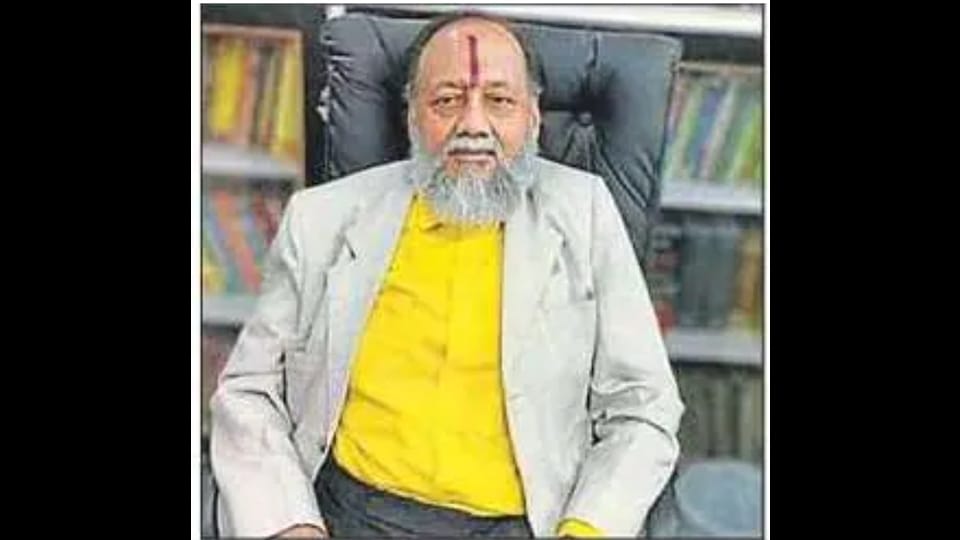
The Gyanvapi mosque row in Varanasi is the latest in a series of legal battles, which Jain is spearheading for Hindu petitioners.
His son, Vishnu Shankar Jain, 36, an advocate, is also at the forefront of all these high-profile legal battles. Together, they have filed around 110 cases across various courts, seeking worship rights for Hindus or representing Hindu deities.
Senior Jain says, “Injustice meted out to the Hindus angers me. I will continue to fight legal battles till Hindus get back their places of worship.”
Hari Shankar Jain began his legal career from Lucknow and thereafter relocated to New Delhi to practice in the Supreme Court. Vishnu Shankar Jain has been practicing law since 2010.
“I am fighting around 110 cases in various courts, all for Hindu cause,” said Hari Shankar Jain.
On how he is contesting so many cases across various courts, Jain said: “I draft the petition and build a fool-proof case. Thereafter, I select local petitioners to make the case more strong.”
Recently, Hari Shankar Jain drafted six applications that were filed in Varanasi district court, including the one in which his son is representing five Hindu women in the Maa Shringar Gauri case.
In addition to this, he has filed five more petitions, either claiming to be a friend of Hindu deities or seeking a Hindu’s right to worship them.
The father and son have also taken up other sensitive issues in public domain - Mathura’s Krishna Janmabhoomi–Shahi Idgah case and the Qutub Minar complex dispute among several other cases related with Hindu faith.
On Tuesday (May 24), when senior Jain was busy putting his arguments in the Qutub Minar complex case in a Delhi court, his son was sweating it out in the court of district judge, Varanasi, in the Gyanvapi case, on behalf of five Hindu women.
Jain had also filed a case in Agra court challenging the ownership of Taj Mahal and claiming it to be a monument dedicated to Lord Agreshwar Mahadev. Besides, he had filed a suit in Lucknow court, claiming that a temple once stood at the Teelewali Masjid.
Vishnu Shankar Jain is the main lawyer representing five Hindu women of Varanasi in the Maa Shringar Gauri civil suit seeking the right to worship inside the premises of the Gyanvapi mosque.
The petitioners have claimed that the mosque was a part of the Kashi Vishwanath temple and Hindu deities still exist there.
It was on this plea that the Varanasi civil court had ordered a survey of the mosque premises earlier this month.
Jain is upbeat and confident of victory as “facts are in the favour of Hindus.”
He had represented the Hindu Mahasabha in the decades-old Ram Janmabhoomi–Babri Masjid dispute that was decided in favour of Hindus by the Supreme Court on November 9, 2019.
It was Hari Shankar Jain and fellow lawyer Ranjana Agnihotri who had challenged the then Samajwadi Party government’s decision in Allahabad high court in July 2013 to withdraw cases against terrorists.
Commenting on the Places of Worship Act, 1991, Jain said: “The Places of Worship Act (1991) is not applicable in almost all the cases I am contesting, including the Gyanvapi dispute in Varanasi and the Shahi Eidgah in Mathura.”
“The Hindu community had access to all these shrines on August 15, 1947 and was regularly carrying out puja and other rituals,” asserted Jain.
In Mathura, he has filed a petition on behalf of Lord Krishna, seeking removal of the Shahi Eidgah adjacent the Shri Krishna temple complex in Mathura and transfer of 13.37-acre land to the deity.
“I have filed another lawsuit in district court of Indore, seeking religious rights to Hindus to perform puja at the Saraswati temple in Bhojshala (in Madhya Pradesh) throughout the year,” said Jain.
“In this petition, I have also asked the court to withdraw permission given to the Muslim community to offer namaz at the Kamal Maula mosque, which is adjacent the temple,” he added.
After the demolition of the Babri Masjid in Ayodhya on December 6, 1992, devotees were not allowed for ‘darshan’ of Ram Lalla. It was Hari Shankar Jain who won the legal battle in Allahabad high court.
On January 1, 1993, then Justice Harinath Tilhari, on Jain’s petition, ruled that devotees must be allowed to pay obeisance to Ram Lalla till the issue was resolved.
The father-son duo has pledged to work tirelessly till Hindus get back all their cultural heritage and places of worship back.
BOX
IMPORTANT CASES WON
After the demolition of the Babri Masjid in Ayodhya on December 6, 1992, devotees were not allowed for ‘darshan’ of Ram Lalla. It was Hari Shankar Jain who won the legal battle in Allahabad high court.
On January 1, 1993, then Justice Harinath Tilhari, on Jain’s petition, ruled that devotees must be allowed to pay obeisance to Ram Lalla till the issue was resolved.
Jain had challenged the then Samajwadi Party government’s decision to withdraw cases against terrorists in Allahabad high court in July 2013. He succeeded in getting quashed the government’s order.