E-Paper



Delhi plans 500-cusec Hindon river water diversion to Yamuna to improve e-flow
This aims to improve clean water availability and address inadequate ecological flow, crucial for the river's health.

 Prefer HTon Google


As part of the project to improve the water quality of the Yamuna, the government is working jointly with Uttar Pradesh to divert 500 cusecs of water from the Hindon river to the Yamuna, a senior official said on Thursday.
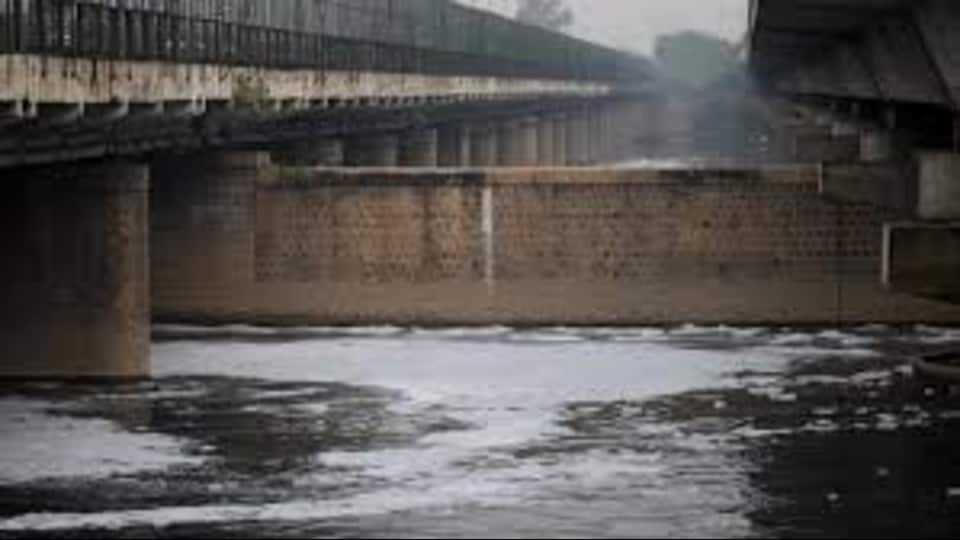
According to the plan, 1,300 cusecs of water will be released to the Hindon from Muradnagar instead of 1,800 cusecs, and the remaining 500 cusecs will be released into the Yamuna through a new pipeline.
“This will help increase clean water availability at Okhla barrage. Delhi Jal Board (DJB) has roped in Wapos Limited, a consultancy firm, to prepare detailed project reports by October. A joint survey of DJB and UP Jal Nigam was conducted in June for implementing the project and improving the e-flow in the river,” the official said.
Environmental flow, or e-flow, refers to the minimum flow of water required in a river to sustain its ecological health. The Yamuna in Delhi has long fallen short of this benchmark. Experts argue that the 10 cumecs currently allocated to Delhi is grossly insufficient, leaving the river dry and unable to flush out pollutants. Studies, including those by the National Institute of Hydrology, have pointed to an increased requirement for minimum water flow, especially during the lean season.
A second DJB official said the board is also working to reduce transmission losses in the Delhi Sub Branch (DSB). “Three meetings were held between DJB and Haryana Irrigation Department for DSB repair. The savings from transmission loss will be added to the river flow. A consultant is being appointed to prepare a fresh project report. Delhi has already conveyed its consent through a formal letter to bear its share of the cost for the lining of the DSB,” the official said.
DSB is a part of the Munak canal system, which carries raw water from Haryana to Delhi. Under this proposal, as part of reducing water losses in the Munak canal system, pipelines are proposed to be laid from Khubru head of the canal system up to Kakroi head, followed by rehabilitation of the DSB of the Munak system. The pipeline system will be around 25km, with an estimated cost of ₹750 crore, while rehabilitation of 41.6km of the DSB canal will be undertaken. Currently, the DSB canal witnesses more than 30% of water transmission loss.
Minimum environmental flow is required to dilute polluted water in the Yamuna in Delhi and meet the desired water quality levels for bathing, i.e., BOD < 3 mg/l and DO > 5 mg/l.
To assess the minimum required environmental flow of the Yamuna for the stretch between Hathnikund and Okhla, NMCG assigned a comprehensive study to the National Institute of Hydrology (NIH), Roorkee, in 2018, following which it recommended a minimum e-flow of 23 cusecs in the lean season.