
 E-Paper



Heavy rain brings Gurugram to a halt, poor drainage to blame, say commuters
The absence of timely maintenance of drains and rainwater harvesting pits has contributed significantly to the flooding. Despite numerous complaints and previous incidents, the authorities have failed to implement effective solutions, said commuters


Gurugram: Heavy showers measuring 105 mm on Wednesday led to severe waterlogging across Gurugram, bringing traffic to a standstill and causing commuters to be stranded on major roads for over two hours. The heavy rainfall inundated key areas such as the Southern Peripheral Road (SPR), Sohna Road, Golf Course Extension Road, Hero Honda Chowk and IFFCO Chowk highlighting the city’s inadequate drainage systems and the failure of authorities to carry out timely cleaning of drains and rainwater harvesting pits.
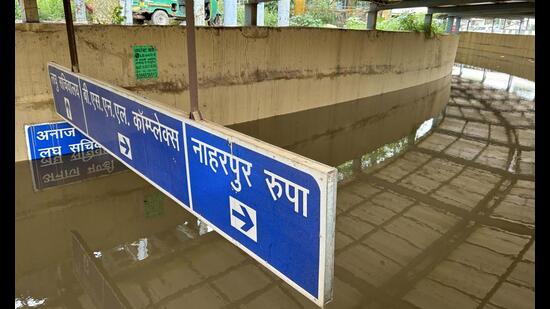
Commuters had a harrowing time as waterlogged roads turned into virtual rivers and underpasses became unsafe for commute. The severe waterlogging and traffic congestion have once again highlighted the shortcomings in Gurugram’s civic infrastructure.
MCG Commissioner Narhari Singh Bangar said that their teams are actively cleaning all rainwater harvesting pits, drains, and gullies and the debris will be cleared within a week. “Water pumps are being used whenever it is raining in the city, and teams have been directed to be at locations to ensure immediate response to any waterlogging issue. Our goal is to mitigate the impact of heavy rains and improve the drainage system’s efficiency to prevent future waterlogging problems,” he stated.
The absence of timely maintenance of drains and rainwater harvesting pits has contributed significantly to the flooding. Despite numerous complaints and previous incidents, the authorities have failed to implement effective solutions, said commuters.
Piyush Mehta, a daily commuter on the SPR and a resident of Sector 71, said Wednesday night was terrible and he was stuck at one spot for over two hours. “The waterlogging was so severe that it was impossible to move. It was frustrating, and there seemed to be no assistance from traffic authorities. At least 10 commuters fell on the potholed road and suffered injuries but the officials are not bothered to repair the road or clean the drains,” he said.
Residents alleged that the stormwater drains are filled with construction and demolition waste and fresh waste dumped by unauthorised vendors. “We have been complaining to authorities for the past many years but nothing has changed. The condition of all drains are bad,” said Rajkumar Yadav, president, RWA of Sector 46.
Dinesh Vashisht, president, Residents’ Welfare Association (RWA), Sectors 3, 5 and 6, said that all drains get clogged and water enters the basements in these sectors. “Many residents have suffered losses since their household stuff got damaged. Why should the residents suffer loss because of lapses on the part of the authorities?” he asked.
Haphazard and irregular planning, compounded by problems of illegal encroachments and bad waste management are the major causes of flooding in Gurugram.
Extreme weather events, like intense rainfall and rising sea levels, are becoming more frequent and severe. However, manmade challenges of bad civic infrastructure amplify these natural threats.
“Following Wednesday’s rainfall in NCR, several key areas experienced severe waterlogging, causing mayhem on the roads. Unfortunately, there was no traffic police present to manage the situation, resulting in massive traffic snarls. I, along with many others, was stuck in traffic for over four hours. Despite continuous assurances from the GMDA regarding the development of drainage systems in the new sectors of Gurugram, there has been no visible execution on the ground. This ongoing issue has not only caused inconvenience but also poses significant risks to residents and commuters,” said Ajay Sharma of Tulip Ivory Apartments in Sector 70.
Sarika Panda, architect, Urban Planner and a resident of Gurugram said that ultimately, addressing urban flooding requires a multi-faceted approach involving effective governance, infrastructure development, climate action, and community participation. “By investing in green infrastructure and efficient water handling systems, cities can significantly lower the risks and consequences of urban flooding. To mitigate flooding, restoring the city’s natural infrastructure is crucial. Roadside trees, water bodies, and permeable surfaces can act as natural sponges, absorbing rainwater and reducing runoff, creating a more sustainable and resilient city,” she said.


