
 E-Paper



Power crunch: Bihar pays ₹20 crore more a day to buy from open market
Union power minister RK Singh denied of coal scarcity in any state, saying that the government has an average coal reserve (at power stations) that can last for more than four days.


PATNA
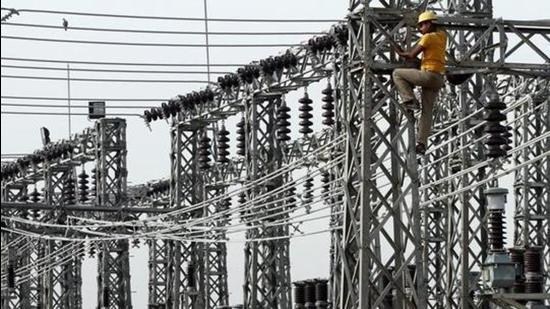
Bihar has been paying an additional ₹20 crore daily for the past couple of days to purchase power from open market during Dussehra but is still not getting as much to meet its peak load demand of 5,500 MW as the coal-fired utilities, supplying power to the state, are facing coal shortage, said power officials.
Union power minister RK Singh, however, denied of a scarcity in any state. “We have an average coal reserve (at power stations) that can last for more than four days. The stock is replenished every day. I am in touch with (Union minister for coal, mines and parliamentary affairs) Pralhad Joshi,” he said after chairing a meeting with discoms in New Delhi on Sunday, reported ANI.
Bihar’s power crisis, however, has deepened because of multiple reasons.
First, the Central sector, which supplies thermal power to the state through the NTPC (National Thermal Power Station), has been able to feed around 3,000-3,300 MW power against its scheduled allocation of 4,500 MW. The reduced power supply is attributed to the shutdown of 660 MW unit 5 of the Barh Super Thermal Power Project due to maintenance and shortage of coal at the Farakka and the Kahalgaon Super Thermal Power Projects, where coal was at a critical level to last for around four days, against an average buffer stock of 7-10 days at power stations.
If government sources were to be believed, the average daily availability of coal was 0.7 to 0.8 lakh metric tonnes (MT) against a demand of 1.2 lakh MT at NTPC power plants supplying power to Bihar.
Secondly, private players are unable to meet the increased demand of thermal power across the country, primarily due to steep hike in coal prices in the international market due to its shortage.
Sample this. The power buy quantum in open market at the national level was 10,000 MW against an availability of 2,700 MW and 4,500 MW on October 8 and 9, respectively. Given the high demand and low supply, the power purchase rate had shot up to ₹20 per unit against an average cost of ₹3- ₹5 earlier. In fact, the price was hovering between ₹12 and ₹16 per unit for the last 10 days, said officials quoted above.
To meet its deficit, Bihar was still bidding at a higher rate and spending an additional ₹20 crore per day to purchase power through private sources. This was in addition to its average monthly bill of ₹800 crore to the NTPC for supply of thermal power from central sector. Yet, it was unable to get the required quantity of power.
The state was getting only around 347 MW to 397 MW over the last couple of days against 688 MW power purchase agreement through private players, said an officer in the know of the subject.
Similarly, the state was also short of hydel and wind power. It was getting 453 MW hydel power against an allocation of 762 MW. Add to it the shortfall in wind energy. Against 580 MW, the state was getting between 50 MW and 175 MW wind power over the last few days.
Put together, these have led to a power scarcity, leading to an average power outage of 4 to 8 hours a day, especially in rural areas of the state.
“Bihar’s power firms do not generate electricity. Instead, they buy power from central power generation institutions and supply to consumers. Given the current coal crisis, we are getting expensive power, but are supplying electricity to consumers at a cheaper rate,” the Bihar State Power Holding Company Limited (BSPHCL) tweeted from its handle, quoting Sanjeev Hans, Bihar’s energy secretary, on Saturday.
Another tweet on Sunday, quoting Hans, said, “Power supply has been improving constantly. There has been a reduction in open market price. We are now buying power at ₹14- ₹16 per unit. The situation is returning to normal. We will soon be able to ensure availability of power commensurate to its demand.”
Bihar’s power demand goes up by 250-300 MW during the festival season of Dussehra and Diwali.


