E-Paper



2 components of Orissa's Puri temple in precarious condition: Amicus curiae
The amicus curiae appointed by the Orissa high court has submitted to the court to oversee the conservation work being undertaken by ASI.

 Prefer HTon Google


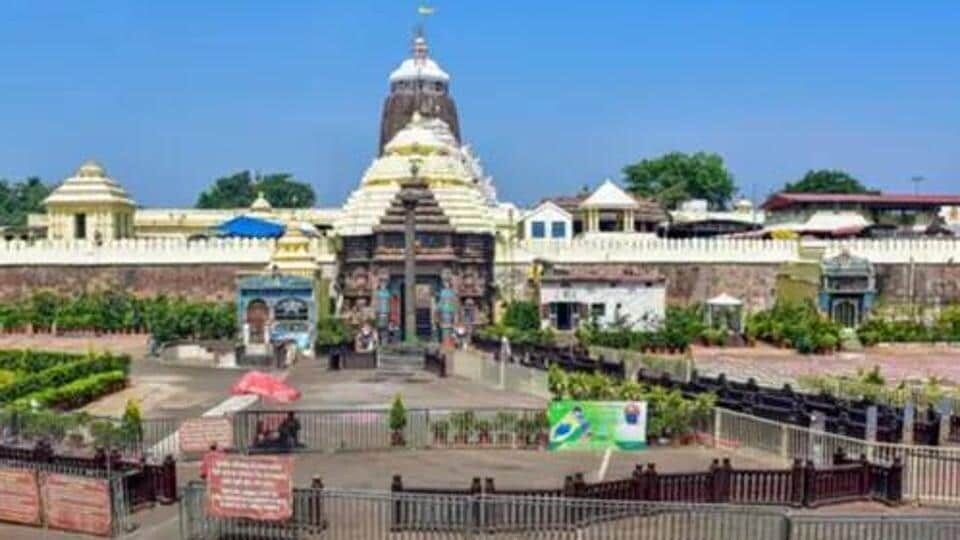
Two of the four main components of the 12th century Jagannath temple in Puri are in precarious condition and immediate steps are necessary for their repair work, the amicus curiae appointed by the Orissa high court has submitted to the court.
Read here: Odisha to reopen Jagannath temple Ratna Bhandar during next year’s Rath Yatra
“Many distressed locations were observed in the second pidha of Jagamohana — the audience hall- mostly in the form of wide structural cracks, localised dislodgement of stone blocks and detached weak lime plasters, and extensive corrosion of the existing wrought-iron clamps. These distressed locations were on the eastern and south-eastern corner of Jagamohana. There is a crack in the beam of the Nata Mandap (dancing hall). This work is very important and catastrophe may happen at any time as this subject beam is working as a cantilever from both sides,” amicus curiae NK Mohanty, a retired civil engineer pointed out in his report. Mohanty, a practising lawyer in Orissa HC, was appointed as amicus curiae by the court in November to oversee the conservation work being undertaken by the Archaeological Survey of India (ASI).
“The safety of the Puri Jaganath temple is very important in nature and this court may kindly take stock of the work every one or two months for monitoring the same so that the work could be expedited by ASI and Puri Jaganath temple administration,” said Mohanty in his report.
The Nata Mandapa, is a square room, measuring 69 feet by 67 feet in the inside, the outside measurement being a square of 80 feet. It used to be the place where Devadasis danced during morning hours till 1985. It has two main gates, one towards the south and the other towards the north and four another subsidiary small gates. The deities go to Car festival and Snana yatra through these steps.
The Jagamohana or Mukhasala stands on four squared pillars and is the main portico before the innermost apartment. People get the darshan from this part. It has two gates, one towards the Mukti Mandap and the other towards the Natamandir.
According to the report, no work is being carried out at the Jagamohan. A crack in the ‘pidha’ of the Jagamohan is visible and the layers of the stones have also been displaced, while the iron beam is getting damaged due to rust.
ASI superintendent D B Garnayak said though cracks have developed, they are minor in nature. “Repair work would be carried out. Structural design engineers would give a design and it would be implemented only after our approval,” he said.
Read here: ‘Water seepage’: ASI flags concern in HC over Jagannath temple’s Ratna Bhandar
Since the 1960s, stones have been frequently falling from the Jagannath temple. In the year 1972, severe water leakage was noticed in the temple and large cracks developed in the lime plaster. ASI then took up the job of removing plaster from the shikhara of the Jagannath temple and replaced many stones on the shikhara that were missing. To protect the temple from the corrosive sea winds, it was chemically treated and coated with a polymer layer. The Jagamohan was restored last in 2018.
Many servitors alleged that while the area outside the temple was being developed, not much is being done inside the shrine. “The outside of the temple is shining but the inside is getting damaged. If the government is launching several programmes in the name of the Lord Jagannath, it should also be careful about the safety of the Srimandir,” said senior servitor Binayak Das Mohapatra.