
 E-Paper



Pune district’s positivity rate up from 6.8% between Jan 23-Jan 29, to 10% between Feb 13-19
Positivity rate means there are 10 new cases now being reported for every 100 Covid-19 tests done in the district, thereby adding more pressure on hospital infrastructure


Pune district’s positivity rate has gone from 6.8% between January 23 and January 29, to 10% from February 13 to February 19.
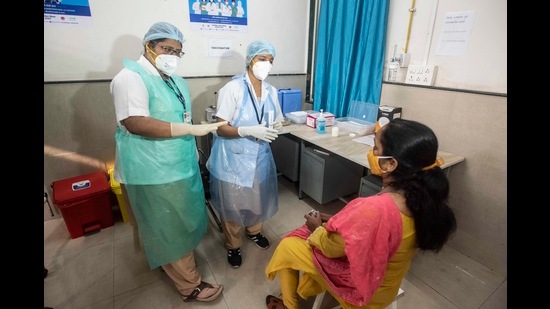
To bring down the positivity rate and for early detection, the administration is now looking at more options, especially given that central government laboratories located in the district have reduced testing capacity to focus on genome sequencing, due to various new mutations being reported.
During an online press meet, divisional commissioner Saurabh Rao said, “The district has witnessed a spike in the number of new Covd-19 cases. While the positivity rate was around six per cent in the last week of January, it has now gone up to 10%. This means with more new cases we will have added pressure on our hospital infrastructure. Also, we will increase testing now.”
Positivity rate means there are 10 new cases now being reported for every 100 Covid-19 tests done in the district, thereby adding more pressure on hospital infrastructure.
The major laboratories located in the city including NIV, ISSER, NARI and NCCS, have reduced their testing capacity.
Rao said, “NIV has stopped testing samples for Covid-19 detection as they are now exclusively doing genome sequencing. However, with the help of AFMC, the Command hospital and BJ Medical College, we are trying to increase capacity. We will increase the testing capacity by 1,000 tests daily at BJ Medical college alone, by giving them more manpower and the required machinery like an RNA extractor and a PCR machine.”
As per information from the district information office, between February 6 and February 12, PMC recorded a positivity rate of 7.4%; PCMC recorded a positivity rate of 9.4%; and Pune rural recorded a positivity rate of 10.3%.
Between February 13 and February 19, PMC saw a positivity rate of 10.3%, PCMC 9.7% and Pune rural, of 9.6%.
Currently, AFMC, AICTS and Command hospital test samples from defence personnel only. The administration is trying to communicate with the agencies to open up testing for civilians too.
ISSER used to test upto 200 samples daily.
The administration will now also target super spreaders, surveillance of influenza-like illnesses (ILI) and severe acute respiratory infections (SARI), sample collection centres at Covid centres, civic hospitals, medical universities, district hospitals, rural hospitals, and primary health care centres, ensuring full testing capacity at nine government and 24 private laboratories, with effective contact tracing.
IMA’ raises mutation impact
The new spike in cases is due to the reported mutation of the virus which has entered the city, said IMA president Dr Avinash Bhondwe.
He said, “The government wants to hide the fact that the spike is due to the entry of the mutated virus from either the UK or South Africa. There are two reasons for the same. One, if they admit it then it will expose the loopholes at the government’s end to isolate the UK or South African returnees, which led to the spread. Two, it will also question the ongoing vaccination because the efficacy of the current dose has to be tested against this mutated virus too.”


