
 E-Paper



Two days of rain inundate 20 underpasses in Delhi
Flooded underpasses that are meant to decongest traffic-heavy stretches become the symbols of the city’s poor drainage system whenever it rains heavily in the Capital

 Prefer HTon Google


Flooded underpasses that are meant to decongest traffic-heavy stretches become the symbols of the city’s poor drainage system whenever it rains heavily in the Capital. Following rains on Monday and Tuesday, traffic from at least 20 underpasses was diverted after they were all flooded with rainwater, Delhi traffic police officials said.
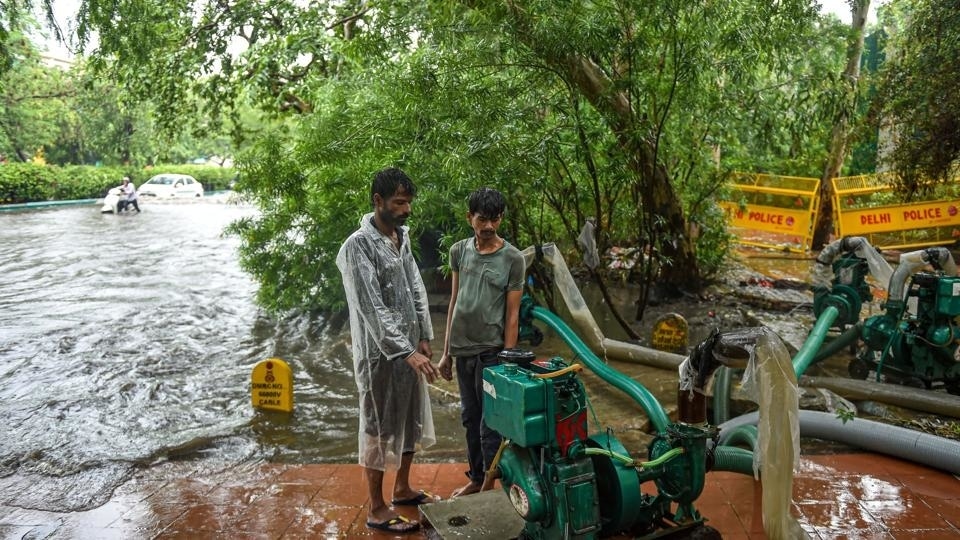
They said that though drainage at the Minto Bridge has been fixed by the authorities after a man drowned there last year, there are several underpasses across the city that get flooded every year even after moderate showers.
Traffic police records show that traffic from at least 20 underpasses was diverted on Monday and Tuesday after these roads witnessed heavy flooding. On Monday, a man drowned in the inundated underpass at southeast Delhi’s Pul Prahlandpur, which has been on the police’s list of most vulnerable waterlogging spots.
Besides Pul Prahladpur, the underpasses that were severely impacted were Airport Road underpass, Narela-Lampur underpass, Mehrauli underpass, Zakhira underpass, National Highway-8 underpass, Mehram Nagar underpass and Azadpur underpass. Traffic from all of these routes had to be diverted as the police along with road owning agencies pumped water out.
Earlier this month, the Public Works Department (PWD) wrote to the traffic police to temporarily halt traffic movement around underpasses and low-lying areas, if the depth of the flood water crosses 20cm. However, traffic officials said that at a time when enforcement teams are firefighting on-ground, trying to manage traffic jams, diverting traffic while also pumping out water, these “half-hearted” measures do not yield results.
“Once the water starts accumulating, it takes minutes for underpasses to get flooded. Though our teams are vigilant around these stretches but commuters are often unable to gauge the depth of the water on the stretches and often think they will be able to pass by. Monday’s case was slightly different though but year-after-year we find ourselves in the same position despite repeated reminders to the road owning agencies,” said a senior traffic official.
Also Read | Rain continues for second day in Delhi, triggers waterlogging, snarls
Traffic cops and experts said the sight of underpasses getting flooded to the roof with rainwater is not new, especially in areas around outer Delhi. They said the drainage issues at the Minto Bridge -- which became an iconic picture whenever Delhi recorded heavy rain -- might have been rectified but there are several such underpasses across the city where the problem is much worse. Rescuers including police and teams from the Delhi Fire Services often have to fish out cars, buses and commuters that get trapped in the water.
A senior PWD official said since most of the underpasses that witness heavy waterlogging are old, and the drainage capacity is not enough to flush out rainwater quickly. He said the department is now planning to redesign the drainage systems of these underpasses, adding that Pul Prahladpur is on top of their list.
“On Monday, when water started accumulating at Pul Prahladpur, we deployed around eight pumps to flush out water. However, these pumps take time to flush out the water when it is constantly raining. Just like Minto Bridge, there is a plan to redesign the drainage at these underpasses. We will share the details of that once the plan is ready,” the official said.
Sewa Ram, professor (transport planning) at School of Planning and Architecture, said that Delhi needs a dedicated traffic management plan for monsoon so that vehicular movement can be management more smoothly. He also said that road owning and civic agencies should also be made accountable for risking public life and ignoring the basic rules of designing roads and drainage.
“Why should anyone lose their life because of the carelessness of authorities? In every other country when a road is designed, agencies ensure that the drainage can handle water load at least three times its original capacity, but that is not done here. We know that such a problem occurs every year, then why can’t have set diversion plans that will come into effect when waterlogging starts. Agencies can also partner with Google so that commuters can get real-time information on which roads are closed off in advance,” Ram said.


