
 E-Paper



Water, sanitation, power woes plague Gurugram’s Ward 8
The ward, which is located in the heart of the city and includes Gurgaon village also has inadequate public healthcare facilities and a severe shortage of teachers in most government schools


Gurugram: With a population of 36,602, residents of Ward 8 are dealing with multiple issues such as poor waste management, erratic water supply, power outages, bad sanitation and regular flooding of low-lying areas during the monsoons. They have alleged that the situation deteriorated particularly after the tenure of the municipal councillors ended in 2022 and there were no elected representatives chosen as elections could not be held.
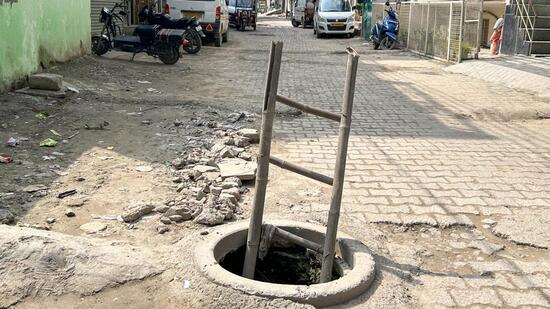
The ward, which is located in the heart of the city and includes Gurgaon village also has inadequate public healthcare facilities and a severe shortage of teachers in most government schools. These problems not only compromise the welfare of the residents but also highlight the urgent need for comprehensive municipal intervention.
Water woes
Erratic water supply is another major concern for the residents of Ward 8. The main water pipeline that supplies water to the area from Sector 4/7 to Palam Vihar is in a state of disrepair, leading to frequent disruptions in the supply. As a result, many households in Ward 8 do not receive regular supply of water and are forced to rely on private water tankers, which are expensive and unreliable.
Sushil Bhardwaj, a resident of Gurgaon village said that despite being in the heart of the city, water shortages have never been resolved in the entire area. “Even today our women and children have to wait till late in the night for water supply as there is no fixed timing. The population of the area has increased exponentially but infrastructure has not been upgraded,” he said.
The situation is aggravated by the fact that the area is prone to waterlogging, particularly during the monsoon season. The existing drainage system is inadequate, and the overflowing sewers add to the misery of the residents. The streets are often flooded with dirty, stagnant water, which poses serious health risks.
Another resident of the ward, who did not wish to be identified, alleged that not much improvement has happened on the infrastructure front. “The basic amenities are in poor shape in the area. Water and power supply are not adequate and people are suffering. Street lights are also not functional and despite repeated complaints to the authorities the system never works,” he said.
Residents have complained that the water supplied by the government is often contaminated and unfit for drinking. This has forced many families to purchase bottled water for drinking and cooking, adding to their financial burden. The lack of clean water has also had a negative impact on sanitation in the area, as residents are unable to maintain basic hygiene standards.
Poor sanitation
Sanitation is another area where Ward 8 is severely lacking. The streets are littered with garbage, and there is no regular collection of waste. The open drains are often clogged with plastic bags, debris, and other waste materials. Missing manhole covers on several streets pose a significant danger to pedestrians and vehicles alike, with several incidents of injuries reported due to people accidentally stepping into open manholes.
Dinesh Saini, former councillor of Ward number 8 said that the situation of waste management and sanitation has worsened in the last one year. “Only eight people have been deployed by the Municipal Corporation of Gurugram for picking up waste in the entire ward and this is the reason the entire area is strewn with garbage. How can eight people manage a huge ward? It is important that elections are held for MCG as without elected councillors the corporation has failed on every front,” he said.
The lack of regular sewage cleaning has resulted in a situation where the sewers frequently overflow, flooding the streets with sewage water. This not only creates an unbearable stench but also poses serious health risks for the residents. The stagnant water becomes a breeding ground for mosquitoes, leading to a rise in cases of malaria and dengue during the rainy season.
“The drains are choked and during the monsoons, the entire main road in Ward 8 gets waterlogged. This happens every year but despite repeated complaints nothing happens,” he said.
The situation is particularly bad in the slum areas of Ward 8, where the lack of sanitation is acute. The residents of these areas often live in makeshift homes without proper access to toilets or clean water. The open defecation and the lack of waste management further contribute to the unsanitary conditions, making these areas breeding grounds for diseases.
The residents of Ward 8 have repeatedly appealed to the municipal authorities to address these issues, but their pleas have largely been unheard.
Saini, however, said during his tenure as a councillor, a lot of work was carried out in the ward that included reconstruction of streets, roads, construction of 17 community chaupals and a water boosting station. “A lot of development work was done during my tenure,” he said.
Bad healthcare infrastructure
The primary health centre (PHC) in Ward 8 is in a deplorable state, serving as a stark reminder of the challenges faced by residents in accessing basic healthcare. The centre, which is supposed to be the first point of contact for medical emergencies and routine health checks, is severely understaffed and ill-equipped. Patients often have to wait for hours to see a doctor, and in many cases, they are referred to hospitals in other parts of the city due to lack of proper facilities and medical equipment.
“There is a shortage of essential medicines, and the facility frequently runs out of basic supplies. The building itself is in disrepair, with crumbling walls, leaking roofs, and inadequate lighting. The situation is particularly dire for the elderly and those with chronic illnesses, who require regular medical attention but are unable to access it locally,” said Gajanand Agarwal, a resident of Sanjay Colony.
Saini, however, said that they are in the process of shifting the dispensary to a new building that has already been constructed.
Shortage of teachers
The state of education in Ward 8 is equally alarming. Government schools in the area suffer from a severe shortage of teachers, which has a direct impact on the quality of education. Many of the classrooms are overcrowded, with a single teacher often having to manage 60 to 70 students. This not only affects the learning environment but also places immense burden on the teachers, who are unable to provide individual attention to students.
Locals also pointed out that the lack of teachers is particularly concerning in critical subjects such as Mathematics, Science, and English. Many students in Ward 8 are first-generation learners and the absence of qualified teachers means they are unable to receive the guidance they need, they added.
Need for municipal intervention
The challenges faced by the residents of Ward 8 are not new, but they have been aggravated by years of neglect and an absence of effective municipal intervention. The residents are in desperate need of improved healthcare facilities, better educational resources, reliable water supply, and proper sanitation services. These are basic amenities that every citizen should have access to, yet they remain out of reach for the people of Ward 8.
It is imperative that the municipal authorities take immediate action to address the issues in Ward 8. This includes investing in the refurbishment of the primary health centre, hiring qualified teachers for government schools, repairing the water pipeline, and implementing a regular sanitation schedule. The residents have suffered long enough, and it is time for the authorities to step up and fulfil their responsibilities.
Municipal Corporation of Gurugram (MCG) Commissioner, Narhari Singh Bangar, acknowledged the concerns raised by the residents of Ward 8 and assured that the issues would be addressed soon. “We are aware of the situation in Ward 8, particularly the missing manhole covers. The covers are available in additional numbers within the ward, and the concerned individuals can pick them up and place them on the open manholes. We will assign a dedicated team to conduct a thorough inspection of the ward to assess what needs to be done to resolve these issues effectively,” he said.
Bangar also touched upon the sanitation challenges in the ward, attributing the problem to local interference with the contractor responsible for waste management. “The sanitation issue has arisen due to local intervention by the contractor, which has disrupted the regular cleaning schedule. We are committed to resolving this by ensuring proper coordination between the local community and the contractor. Our priority is to restore cleanliness and ensure that the ward receives the municipal services it needs,” he added.
Nishant Kumar Yadav, the Deputy Commissioner, emphasised the urgency of addressing the issues faced by Ward 8 and assured that steps would be taken to resolve them. “We have taken note of the concerns raised by the residents, particularly the lack of sanitation, missing manhole covers, and erratic water supply. We will instruct the civic agencies to ensure these problems are resolved swiftly,” Yadav said.
“I will personally direct the Gurugram Metropolitan Development Authority (GMDA) to conduct a thorough review of the water supply situation in Ward 8. It is imperative that the residents have reliable access to clean water, and we will make sure that the necessary measures are taken to address any disruptions in the water supply. Our focus is on ensuring that the basic needs of the community are met without further delay,” said Yadav.


