
 E-Paper



Bihar cabinet approves changes to prohibition law
The state government has drawn flak over the poor implementation of prohibition, which has been blamed for hooch tragedies


The Bihar Cabinet has approved changes to the state’s liquor prohibition law to make it less stringent for first-time offenders and those caught carrying low quantities of alcohol in small non-commercial vehicles, officials aware of the matter said. The modified sections will come into force after the state assembly approves them, they added, asking not to be named.
The move comes even as the state government has come in for criticism from the Supreme Court, which has, pointing to the sheer volume of bail applications related to the law passed in 2016 that has choked the Patna high court, asked whether it (the state) carried out any impact-assessment of the legislation before enforcing it.
The law provides imprisonment up to life for serious offences and confiscation of houses, vehicles, and other properties from where liquor is seized. The Bihar government has drawn flak over the poor implementation of the prohibition law, which has also been blamed for hooch tragedies that have claimed dozens of lives.
Former chief minister Jitan Ram Manjhi’s party, Hindustani Awam Morcha, which is a part of the government, has demanded a repeal of the law.
The Supreme Court too has criticised the law saying it is impacting the functioning of the judiciary with 14-15 Patna high court judges only hearing the bail pleas relating to arrests made under the law. On Tuesday, the state government told the Supreme Court the law would be modified. The court warned that it could consider a radical order, such as granting everyone bail, should the government not work to address the logjam created by the law.
One of the officials cited above, who works in the state’s excise department, said that once the amendments are made those caught for the first time while consuming liquor would not require courts to provide them relief. Magistrates, deputy collectors or other officers of the same rank or above can do so, this person added. Currently, those arrested for consuming alcohol are jailed and need to get bails from the courts.
This will not be the first changes in the law. In July 2018, the law was amended to dilute some stringent provisions. For first-time offenders who store, manufacture, or sell liquor, the punishment was reduced from 10-year jail term and ₹10 lakh fine to five years in jail and ₹1 lakh fine. The amendment also scrapped a fine on an entire community in case liquor was found to be frequently manufactured and sold in a particular area. The 2018 amendment also did away with a mandatory jail term for first-time offence in case of consumption of liquor and replaced with a fine of ₹50,000 or three months in jail. But this has not resulted in any reduction in the load on courts.
As per Bihar Police records, 348,170 cases were lodged and 401,855 arrests made under the law until October last year. About 20,000 bail pleas in such cases were pending either in the high court or in trial courts.
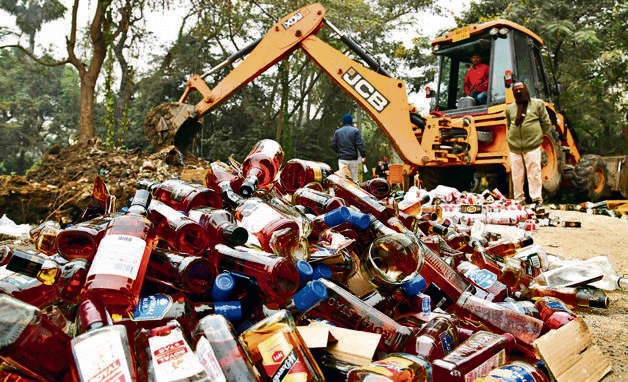
One of the amendments also says small non-commercial vehicles caught carrying small quantities of alcohol can be released with penalties. Under the existing law, such vehicles are impounded and auctioned. The proposed amendments seek to empower district magistrates to destroy liquor at the places of recovery. Earlier, the district authorities needed permission from the government for this.
In July, the Patna high court directed that all proceedings related to confiscation of property under the law must be initiated/concluded within 90 days from the date of appearance of the parties. It added that the appeal/revision, if any, be also decided within 30 days from the date of initiation, failing which the “things” (vehicle/property) shall be deemed to have been released.
The proposed amendments say any person arrested under law shall be produced before the nearest judicial or executive magistrate within 24 hours either in person or via video link. For seeking custody also, production of seizures will not be necessary and electronic evidence will suffice.
In February, chief minister Nitish Kumar claimed 16 million people in the state have given up drinking liquor since prohibition was enforced. Bihar had a population of 104.1 million as per the 2011 Census.
In January, a bench led by Chief Justice of India (CJI) NV Ramana dismissed the Bihar government’s batch of appeals against the grant of anticipatory and regular bails to accused under the liquor law, saying these matters have choked the courts.
The CJI, in a lecture in Vijayawada in December last year, underlined the importance of impact assessment and basic scrutiny of Constitutionality before passing of legislation. He said “a lack of foresight in legislating can directly result in the clogging of courts” and cited the case of the Bihar prohibition law.
The constitutional validity of liquor prohibition law is also under challenge before the top court.
Opposition Rashtriya Janata Dal lawmaker Bhai Birendra said the proposed amendments to the law reflect a lack of vision of the policymakers. “Illegal trade of liquor remains unabated even though more than 40,000 poor people are languishing in the jails due to unnecessarily harsh provisions of the law.”
Congress leader Prem Chandra Mishra said his party has been seeking a review of the law . “Instead of cracking down on the liquor consumers, the government should make foolproof arrangements to prevent smuggling of alcohol from other states,” added Mishra, pointing to the series of hooch tragedies that have befallen the state.
BJP spokesperson Nikhil Anand said the modifications were being done on the basis of feedback from the people. “The Opposition has nothing to question the government about as policies or legislation are amended to make them perfect and result-oriented. The changes will have a positive impact on society as a whole.”

Stay updated Bihar Lok Sabha Result and with all the Breaking News and Latest News from Bengaluru. Click here for comprehensive coverage of top cities including Delhi, Mumbai, Hyderabad, and more across India . Stay informed on the latest happenings in World News.


