
 E-Paper



No hike in Bihar’s power tariff; relief for 22.2 million consumers
Additionally, around 2.7 million consumers will get added relief, as the power regulator decided to merge their tariff slabs into a single slab for DS-II (urban domestic consumers), NDS-I (rural commercial users) and NDS-II consumers (urban commercial consumers)

 Prefer HTon Google


In relief to nearly 22.2 power consumers in Bihar, the Bihar Electricity Regulatory Commission (BERC), the regulatory body that fixes power tariff, announced on Wednesday that there will be “no hike in power tariff for 2026-27 across all consumer categories.” The commission decided to keep the tariff rate unchanged for the next financial year beginning April 1, said its chairman Amir Subhani.
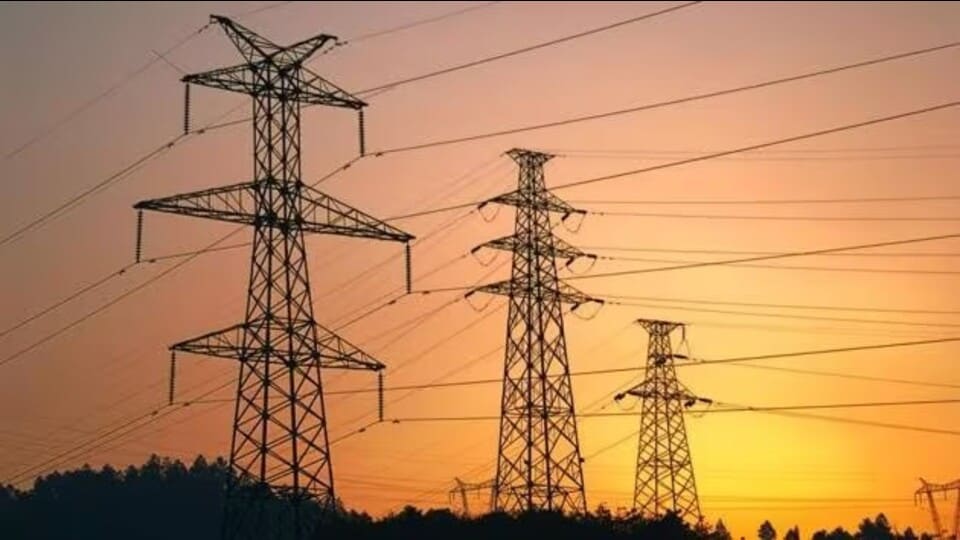
In doing so, the commission rejected the proposal from both distribution companies (discoms) — the North Bihar Power Distribution Company Limited (NBPDCL) and the South Bihar Power Distribution Company Limited (SBPDCL) - for a 35 paise per unit tariff hike in energy charges across all categories.
“The discoms’ proposal to increase energy charges by 35 paise per unit across all consumer categories is not accepted… There will be no hike in the electricity tariff rate in the next financial year beginning April 1. The order will remain effective until March 31 next year or the next tariff order of the commission, whichever is earlier,” Subhani told reporters after pronouncing the tariff order in the presence of the full commission, which included two other members: Parshuram Singh Yadav (legal) and Arun Kumar Sinha (technical).
Additionally, around 2.7 million consumers, which make for roughly 12% of the state’s total power consumers, will get added relief, as the power regulator decided to merge their tariff slabs into a single slab for DS-II (urban domestic consumers), NDS-I (rural commercial users) and NDS-II consumers (urban commercial consumers), keeping the energy charge of the existing lower slab for each category. This will result in an effective reduction of tariff (in terms of energy charge) by ₹1.53 per unit for DS-II (urban domestic consumers), ₹0.42 per unit for NDS-I (rural commercial users) and ₹1.20 per unit for NDS-II (urban commercial consumers).
The new system will replace the earlier system of differentiated rates for different slabs (1-100 units and above 100 units).
Currently, DS-I (domestic rural consumers) are charged a pre-subsidy flat rate of ₹7.42 per unit, while DS-II consumers (urban domestic consumers) are charged in two slabs. For the first 100 units, they pay a pre-subsidy rate of ₹7.42 per unit and ₹8.95 per unit for energy consumption above 100 units. Similarly, NDS-I consumers (rural commercial users) pay a pre-subsidy rate of ₹7.79 per unit for up to 100 units and ₹8.21 per unit for consumption above 100 units. NDS-II consumers (urban commercial consumers) pay a pre-subsidy rate of ₹7.73 per unit for the first 100 units and ₹8.93 per unit for consumption above 100 units. But now, the two slabs have been merged into a single category, retaining the energy charge of the existing lower slab for each category. This is intended to make billing more transparent and easier to understand.
Subhani also said that consumers will continue to avail concessions and exemptions announced in the current year’s tariff rate (2025-26).
Giving relief to traders and businessmen, the commission reduced the fixed charge for NDS-II (for contract load up to 0.5 kW sub-category) from existing ₹200 per connection per month to ₹150 per connection per month, Subhani said.
It also reduced the fixed charge for the LTIS-I (low tension industrial service rural consumers) category from the existing ₹288/kVA per month to ₹278/kVA per month and the charge for the LTIS-II (low tension industrial service urban consumers) category from the existing ₹360/kVA per month to ₹350/kVA per month, he added.
The commission also fixed the distribution loss trajectory at 11.97% for NBPDCL and 15.91% for SBPDCL for 2026-27.
The tariff announced by the BERC on Wednesday does not include the subsidies that the state government announces every year. Currently, the state government provides a per-unit subsidy of ₹4.97 for DS-I (domestic rural consumers) on the BERC approved rate of ₹7.42, reducing the effective energy charge to ₹2.45 per unit.
Similarly, the state government gives a subsidy of ₹3.30 for the first 100 units in case of DS-II (domestic urban consumers) on the BERC approved rate of ₹7.42, reducing the effective energy charge to ₹ 4.12 per unit. The per unit subsidy for energy consumption over and above 100 units is ₹3.43 on the BERC approved tariff of ₹8.95 per unit, reducing the effective tariff to ₹5.52 per unit.
For NDS-I (rural commercial users), the government subsidy is ₹4.44 per unit for the first 100 units, reducing the per unit effective tariff rate to ₹3.35 against the BERC approved rate of ₹7.79 per unit. For energy consumption above 100 units, the per unit subsidy is ₹4 against the BERC approved rate of ₹8.21, reducing the effective tariff rate to ₹4.21 per unit.
NDS-II consumers (urban commercial consumers) get a government subsidy of ₹2.06 per unit for the first 100 units and ₹2.49 for energy consumption over and above 100 units, reducing the effective rate to ₹5.67 and ₹6.44 per unit for the first 100 units and energy consumption over and above 100 units, respectively.
The government is likely to announce subsidies on electricity tariff rates for the next financial year of 2026-27 in the next few days, which is when the effective per unit tariff rate will be known.
In addition, the state government provides 125 units of free electricity to 18.6 million domestic power consumers of the state, leading to a monthly saving of ₹550 for every urban consumer while others consuming up to 125 units in rural areas save ₹306 per month. The free electricity is being provided under Mukhya Mantri Vidyut Upbhokta Sahayta Yojana.
The regulator also allowed the discoms’ proposal to include mushroom farming (excluding processing and manufacturing with mushroom) under the agriculture category of consumers in financial year 2026-27.
The move will help small farmers engaged in mushroom farming as it will now attract tariff rates applicable to agriculture.
Farming under this provision will cover all methods of farming including use of air conditioners or other power driven gadgets exclusively used for mushroom cultivation.
MIXED REACTION FROM INDUSTRIES:
Bihar Industries Association (BIA) president Ram Lall Khetan said while the BERC has not increased the per-unit electricity charges across different categories of consumers, the industry had anticipated a reduction in tariffs this year. He recalled that three years ago, consumers were subjected to a steep and unexpected increase in tariff, which continues to burden them.
Khetan highlighted that during the public hearings, the BIA had strongly advocated for passing on the benefits of improved financial performance of power discoms, including gains from reduced transmission and distribution losses, to consumers through lower tariffs. However, these expectations have not been met in the current order.
Sanjay Bharatiya, chairman of the energy committee of the BIA expressed concern over the continued high kilovolt-ampere (kVA) charges, which were nearly doubled three years ago and remain unchanged despite no incentive support from the government.
“We had hoped for a rational reduction in KVA charges, particularly to support industrial consumers. The absence of such relief has led to considerable disappointment within the industrial sector,” he said.
Despite these concerns, the BIA, however, welcomed several positive measures taken by the BERC, including rejecting proposals for a steep increase in kVA charges up to 85% and the imposition of a cap on incentives for online bill payments — both of which were opposed by the BIA during the public consultation process.
The BIA also appreciated the merger of DS-II and NDS-I & NDS-II consumer categories into a single slab while retaining the lower slab energy charges. This move is expected to provide effective tariff relief of approximately ₹ 1.53 per unit for DS-II, ₹0.42 per unit for NDS-I, and ₹1.20 per unit for NDS-II consumers.
Additionally, BIA welcomed the reduction in fixed charges for industrial categories, with LTIS-I charges reduced from ₹288/KVA/month to ₹278/KVA/month and LTIS-II charges lowered from ₹360/KVA/month to ₹350/KVA/month.
The BIA recommended that similar rationalisation and slab-merging measures be extended to high tension (HT) consumer categories as well, to ensure broader relief across industrial segments.
Khetan hoped that the BERC and the state government may like to revisit the tariff order and take further steps to ease the financial burden on consumers, particularly industries, to support economic growth and competitiveness in Bihar.

Stay updated Bihar Lok Sabha Result and with all the Breaking News and Latest News from Bengaluru. Click here for comprehensive coverage of top cities including Delhi, Mumbai, Hyderabad, and more across India . Stay informed on the latest happenings in World News.


