
 E-Paper



Samrat retains home and general admin; BJP tightens grip in Bihar portfolio distribution
Choudhary, who took over as chief minister following the change of guard in the NDA alliance, has been allotted 29 departments — far more than his deputies combined

 Prefer HTon Google


Chief minister Samrat Choudhary has kept a tight grip on the levers of power in the new Bihar government, retaining the crucial home and general administration departments for himself in the portfolio allocation notified on Wednesday.
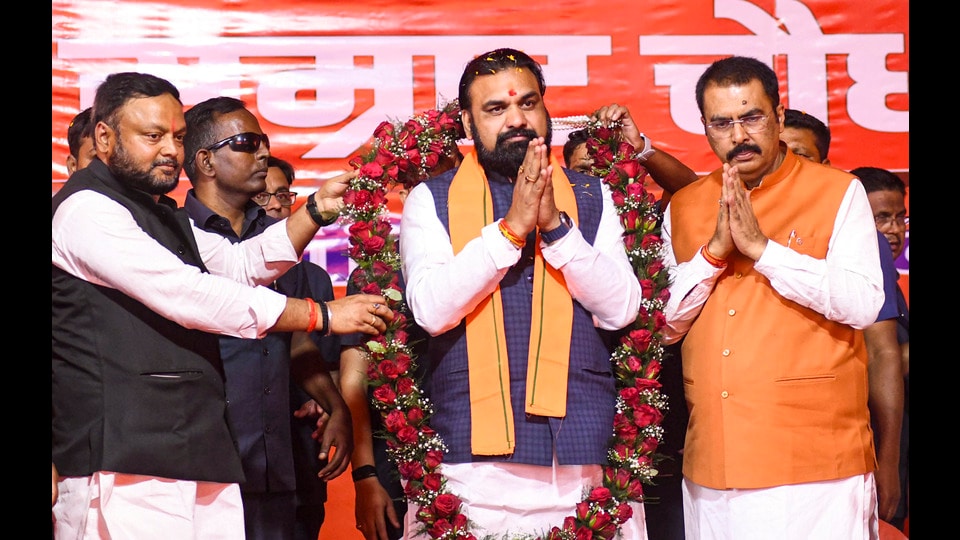
Hours after he and his two deputies were sworn in at the Lok Bhawan, the cabinet secretariat issued the order distributing departments among the trio. Choudhary, who took over as chief minister following the change of guard in the NDA alliance, has been allotted 29 departments — far more than his deputies combined — including several that directly influence day-to-day governance, law and order and the state’s vast bureaucracy.
Among the key portfolios he has held on to are home, general administration, cabinet secretariat, vigilance, revenue and land reforms, health, agriculture, urban development and housing, industries, road construction, tourism, art and culture and sports. The list also covers disaster management, information technology, panchayati raj, and several welfare departments ranging from backward classes to SC/ST welfare.
This is a marked departure from the previous arrangement under Nitish Kumar’s chief ministership. In the last government, the BJP had successfully extracted the home department from the JD(U) quota and handed it to Samrat Choudhary when he was deputy chief minister. Now, with the BJP leader at the top post, the party has not only retained that prized department but also ensured the chief minister keeps direct control over policing and the administrative apparatus — a move widely seen as a way to maintain firm oversight on the bureaucracy.
Deputy chief minister Vijay Kumar Chaudhary has been given 10 departments, including water resources, parliamentary affairs, information and public relations, building construction, minority welfare, education, science technology and technical education, rural development, transport, and higher education.
His colleague, deputy CM Bijendra Prasad Yadav, has received eight departments: energy, planning and development, excise and prohibition, finance, commercial taxes, social welfare, food and consumer protection and rural works.
The allocation shows a clear pattern. The BJP, through the chief minister’s extensive list, has secured the “command and control” departments — home for policing, general administration for bureaucratic management, revenue for land and resources and key economic drivers like industries, agriculture and urban development. These give the ruling party direct influence over law and order, financial flows, infrastructure push and day-to-day decision-making.
In contrast, the JD(U)’s share, routed through the two deputy chief ministers, leans heavily towards developmental and welfare-oriented sectors. Education, higher education, rural development, water resources, transport and social welfare have traditionally been areas of focus for the JD(U). Finance and energy with Bijendra Prasad Yadav add weight, but they still fall short of the sweeping administrative and enforcement powers retained by the chief minister.
Both alliance partners have largely managed to keep their preferred domains intact. However, the BJP clearly holds the upper hand this time. With 29 departments under the chief minister against the JD(U) deputies’ combined 18 and with the smaller allies — Chirag Paswan’s LJP (Ram Vilas), Jitan Ram Manjhi’s HAM-S and Upendra Kushwaha’s RLM — seeing their earlier portfolios temporarily parked with the chief minister, the BJP is in a visibly stronger bargaining position.
Sources said that these unallocated departments will be redistributed to the smaller alliance partners only after the full cabinet expansion in the coming weeks. Until then, Choudhary’s hold on them only reinforces the perception of BJP dominance following the leadership transition from Nitish Kumar.
The notification, issued under the orders of the Bihar Governor, cited constitutional provisions and rules of business. It ends with a standard line that any department not specifically allotted to anyone remains with the chief minister.
For now, the message from the portfolio distribution is unmistakable: After the change of guard, the BJP is calling the shots more firmly than before, while the JD(U) has settled into a supportive but secondary role focused on its traditional development briefs.


Stay updated Bihar Lok Sabha Result and with all the Breaking News and Latest News from Bengaluru. Click here for comprehensive coverage of top cities including Delhi, Mumbai, Hyderabad, and more across India . Stay informed on the latest happenings in World News.


