
 E-Paper



Terms of Trade: Five reasons why the obsession with lower OBC politics is a fad
OBC as a political category, is more heterogeneous than that of Dalits or Scheduled Castes (SCs). The latter faced the worst from of social discrimination and exploitation.

 Prefer HTon Google


The Oxford dictionary defines a fad as “something that people are interested in for only a short period of time”. In the study of politics and economics, fads are often a result of a blinkered intellectual view, or still worse, sheer lethargy of thought. The obsession with so-called lower Other Backward Caste (OBC) politics and politicians – its TRP has soared once again after the Rashtriya Janata Dal (RJD) alliance has announced Mukesh Sahani of the Vikasshseel Insaan Party (VIP) as its deputy chief ministerial candidate in the ongoing Bihar elections – is a classic manifestation of such a fad.
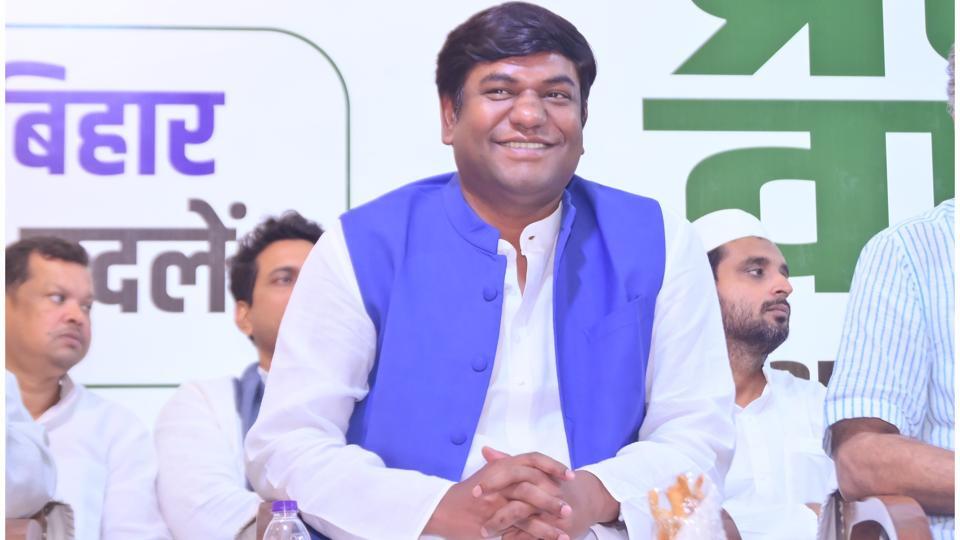
Lest there is a confusion, this piece is not intended as an ad hominem attack on Sahani or his party. What it does want to do is make a larger political ideological point about the lack of efficacy of such politics against the Hindu right. This is best understood in five separate arguments.
The tenuous link between OBC politics and social justice
OBC as a political category, is more heterogeneous than that of Dalits or Scheduled Castes (SCs). The latter faced the worst from of social discrimination and exploitation. They were granted affirmative action even before independence to retain them in the fold of Hindu religion. This was achieved through the Poona Pact between Gandhiji and B R Ambedkar, where the former prevailed over the latter by applying almost a moral coercion.
Affirmative action for the OBCs – it only exists in the realm of education and employment unlike the legislative for Dalits – came much later. It was achieved first in states and materialised at the national level more than four decades after independence. OBC assertion first gained ground against upper caste dominance and exploitation in the feudal agrarian economy and then its remnants in the non-farm public sector opportunities. It is a politics which has courted Dalits while trying to take on upper castes but is not averse to unleashing similar exploitation on them when in a position of power. Such conflicts can be found across the country and across time. The infamous Belchi massacre in Bihar which shot to national limelight after Indira Gandhi visited the village on an elephant, the Lucknow Guest House episode where the Samajwadi Party unleashed an ugly and dangerous attack on Mayawati, a Dalit chief minister of the state, are some such examples. The larger point is that OBC politics is not necessarily an agent of radical progressive social change all the time.
Militant OBC politics mutated into dominant OBC politics a long time ago
The first point should not dilute the importance of the fact that the initial wave of OBC assertion against upper caste dominance faced the most reactionary form of resistance from the latter. The only reason the OBCs did not perish in this battle was their numerical advantage vis-à-vis the upper castes in what was now a universal suffrage-based system. Bihar itself has had a number of historical figures such as Karpoori Thakur and Jagdeo Prasad, who are trailblazers in the struggle against upper caste exploitation. Lalu Yadav, the patriarch of the RJD, still claims to be carrying the legacy of the likes of Thakur. So does Nitish Kumar.
However, to say that a history of militant OBC struggles against feudal dominance will always ensure radical OBC politics is the same as saying that today’s Congress should embody the ideals of India’s anti-colonial struggle. Politics does not work like that, only rhetoric does. The fate of the militant OBC movement is pretty much the same as the Congress’s mutation from the freedom struggle to bourgeois democracy. The vanguards at every level, barring a few honourable exceptions, turned selfish and sectarian, defeating the larger cause which built the movement.
Politics, in a way, became shadow boxing bout between these self-serving individuals and vested interest conglomerations of the Congress and OBC politics since the late 1960s with both the ideological left and right occasionally fishing in these troubled waters. The lower OBCs rightfully felt that they had been used as cannon fodder in the power struggle between upper castes and dominant OBCs.
The Hindu right’s rise is best understood as Mandal, Mandir and Markets
The right eventually started gaining an irreversible lead in the political battle in the 1980s. It was the result of a shrewd deployment of majoritarian religious populism along with an upper caste backlash against the growing assertion of OBC politics which managed to achieve reservations at the national level. The Congress and the OBC parties joining hands because of concerns over rise of the Hindu right accelerated the rise of political Hindutva as upper castes shifted in large numbers from the Congress to the Bharatiya Janata Party (BJP), the new political-electoral front of the Rashtriya Swayamsevak Sangh in the country. The BJP was started in 1980 and first made political impact in the 1989 Lok Sabha elections.
Assured of the sanctity of its ideological core which portrays both caste and class contradictions in Indian society as manageable but only seeks to precipitate the contradiction around religion, the Hindu right was more than willing to widen its social base outside the priest-merchant clergy which founded the movement and nourished it in its infancy. In fact, the approach helped on two crucial fronts. One, it supplied the plebeian foot soldiers who implemented the militant praxis of the Hindu right when it was needed the most. Unlike today’s privileged armchair social media warriors, establishing the BJP and its fraternal organizations and doing things such as Kar Seva on scale required a more committed cadre base. Two, broader social coalitions became a necessity to counter an electoral tactic which exploited the first-past-the-post system to keep the BJP out of the power through relatively narrower but formidable social coalitions. The Congress has never won an election in Gujarat after Madhavsinh Solanki’s landslide victory in 1985 which came on the back of a KHAM (Kshatriya, Harijan, Adivasi and Muslim) formula. Leaders such as Narendra Modi who come from a numerically insignificant OBC group, are a byproduct of this lived experience of the BJP. The BJP’s current day dominance at the national level has built on this social counter-engineering along with rock-solid support from big capital and a deeply embedded and attributable welfare net among the poor.
And Mandal versus Kamandal is a false binary…
Commentators or political actors who want to attribute the BJP’s current dominance to just one of the three factors listed above are making the classic mistake of missing the wood for the trees. What they do not appreciate is the following.
Welfare is now a party-agnostic political trait in India but the incumbent has an advantage because of the ability to deliver ex-post benefits and not just ex-ante promises. The BJP did this smartly by launching a cash transfer to farmers before the 2019 elections, erred by presenting a fiscally prudent budget before 2024 polls and has learnt its lessons in the state elections which have followed.
The BJP’s ability to accommodate Hindus in its legislative ranks is greater than anti-BJP parties because it does not have to include Muslims who are almost 15% of the country’s population and have a much larger share in many large states. Its representation tactic is supported by an organic ideological traction within the larger base across Hindus, upper or lower castes.
Capital is not necessarily gung-ho about the BJP, but understands that it is still the best bet when it comes to containing class conflict and pursuing counter-cyclical policies when macroeconomic stability is under threat. The 2024 elections might have cost the BJP politically, but it has boosted its standing in the eyes of capital which was happy to see fiscal prudence being prioritised. The BJP can manage these contractions most of the times because it has a core support base which is wedded to a cause, not of freebies or profits or caste interests, but a larger worldview which seeks to politically unite Hindus to build a majoritarian state or Hindu Rashtra. The project is now a century old and at its peak today. For the Opposition, this is an ideological enemy which has to be fought upfront and not by stealth maneuvers. The latter is what has made the Hindu Right the political behemoth that it is today.
The Hindu right is somewhat immune to the political mutation which has degenerated the Congress and OBC politics because its contradictions are more imagined than real. Fathom the fact that despite the number of illegal infiltrators found in Bihar’s electoral rolls not even touching hundred, the BJP has made it a big issue in the ongoing Bihar campaign.
Markets have diluted Mandal’s once militant appeal
Last but not the least is a more philosophical point about political solidarity, empowerment and markets. Social justice battles of the 20th century, especially in the pre-reform period, were fought by underdog mobilisers with radical dreams about the future. The challengers were sons of the soil in organic ways and the underclass could see them as one of their own outside narrow caste boundaries. Karpoori Thakur came from a caste group which has a lower share in population than Sahani’s caste in Bihar. And yet, the former became a larger-than-life legendary figure for not his own caste but the entire social underclass in both Bihar and India. Sahani, unlike Thakur is bargaining for the deputy chief minister’s post without even having won an election in his life. This shows a desperation and entitlement at the same time to earn political legitimacy from top-down rather than the bottom up route. For Sahani, politics is a second order challenge he has taken on after having cracked the first order challenge of earning money in a capitalist setup. Capitalism did not exist for Karpoori Thakur and his comrades. They had no choice but to break free of feudal bondage, or as Jagdeo Prasad’s rabble rousing call of “abki savan bhado mein, goi kalaiyan kado mein”– this time in the monsoon, fair and slim wrists (of upper caste women) will be working in the paddy fields – suggested, forcing the class enemy to suffer the same fate as them.
The underclass has escaped this kind of feudal exploitation, not via an agrarian revolution but moving out of the rural economy, which is precarious, although not as socially denigrating as feudalism. There are many serious scholars who have argued that capitalism in post-reform India has done more for the social underclass than politics by offering them a space outside the exploitative feudal conditions in Indian villages. Perhaps they are right. What they often forget is that the same capitalism has also reduced caste-bases solidarities to a tool of grabbing a part of the political power pie rather than unleashing a radical change. It will be naïve to believe that it can demolish an ideological behemoth like the RSS-BJP.

Stay updated Bihar Lok Sabha Result and with all the Breaking News and Latest News from Bengaluru. Click here for comprehensive coverage of top cities including Delhi, Mumbai, Hyderabad, and more across India . Stay informed on the latest happenings in World News.


