
 E-Paper



Project Dolphin: Maharashtra develops action plan for conservation of oceanic dolphins
The Maharashtra government’s mangrove cell submitted a proposal on the implementation strategies and a synopsis of previous research on oceanic dolphins to Nitin Kakodkar, principal chief conservator of forests, earlier this week


Maharashtra has chalked out an action plan for the conservation of oceanic dolphins along its 720 kilometres (km) coastline in line with the Centre’s proposed Project Dolphin programme.
On the occasion of the 74th Independence Day on August 15, Prime Minister Narenda Modi had launched the Project Lion and Project Dolphin endangered species conservation programmes in a bid to replicate the success of Project Tiger.
Also read: My Ganga My Dolphin campaign launched at six sites across river Ganga
The Maharashtra government’s mangrove cell submitted a proposal on the implementation strategies and a synopsis of previous research on oceanic dolphins to Nitin Kakodkar, principal chief conservator of forests (PCCF-wildlife), earlier this week coinciding with the Wildlife Week, which is being celebrated from October 2 to 8.
“The proposal is being examined at the moment. The state government will send it to the Centre soon,” said Kakodkar.
“We will be looking into conservation-based research projects associated with the rich aquatic biodiversity. A special focus will be on oceanic dolphins over the next few years along the Konkan coast as part of the state’s action plan for Project Dolphin. Mangrove Foundation will be the nodal authority for the upcoming projects,” he added.
The plan suggested measures such as a monitoring network, population estimation, habitat conservation for dolphin hot spots, strengthening marine stranding network, and developing livelihood by building eco-tourism projects around protection of the species.
“Similar to the pan-India tiger estimation programme, we intend to develop a large population estimation exercise in Maharashtra to determine the oceanic dolphin count,” said Virendra Tiwari, additional principal chief conservator of forests (APCCF), (mangrove cell), Mumbai.
Manas Manjrekar, deputy director, Mangrove Foundation, said, “This project opens up the possibilities of studying and monitoring these cetacean populations on a long term basis. It will lead to the implementation of effective conservation measures for oceanic dolphins.”
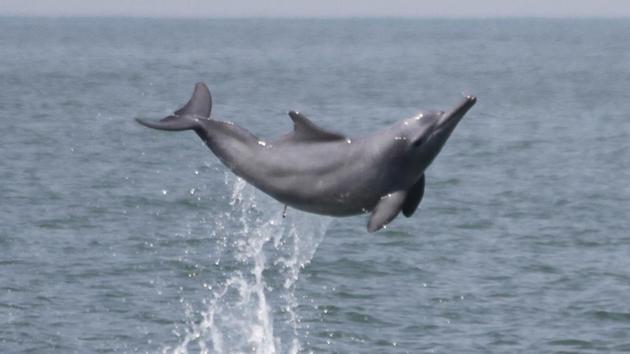
According to the mangrove cell authorities, four dolphin species – Indian Ocean humpback dolphin, spinner dolphin, pan-tropical spotted dolphin, and striped dolphin – have been found in Maharashtra’s coastal waters along with several sightings of the Indo-Pacific finless porpoise.
“Our plan entails conducting an initial baseline survey first along each district followed by identification and selection of dolphin congregation areas, where monitoring is carried out annually,” said Tiwari.
Kakodkar said dolphin watch has become a money-spinner for the local population. “The idea is to expand the programme. It will also help understand and implement dolphin tourism at feasible areas of specific coastal villages to promote community-based conservation and develop livelihood programmes for the locals,” he said.
Under a 2016 Cetacean Population Assessment Project, which was undertaken in Sindhudurg district by the Konkan Cetacean Research Team appointed by the mangrove cell along with the United Nations Development Program (UNDP), a statistical analysis had showed a minimum of 661 Indian Ocean humpback dolphins in the region, of which 572 had dorsal fins and another 15.5% of the population were juveniles.
The study had covered a total area of 4,086 square (sq) km and had showed an estimated encounter rates for Indian Ocean humpback dolphin and Indo-pacific finless porpoise at 0.0348 and 0.0152 per km, respectively.
Porpoises have smaller mouths and spade-shaped teeth, as compared to dolphins that have prominent, elongated beaks and small cone-shaped teeth. Dolphins have a curved dorsal fin, while a porpoise has a triangular dorsal fin.
All species of oceanic dolphins are protected under the Schedule I of Wildlife (Protection) Act, 1972.
“Occurrence and genetic studies related to Indian Ocean humpback dolphins are in progress along other coastal districts as well. It is being scaled up by pooling in research into other dolphin species for a wider conservation approach,” said Tiwari.
The Konkan coast has also reported 107 cases of marine mammal stranding, including dead and alive, along beaches and coastal zones between 2015 and 2017.
However, a sharp decline in their population was reported after 2017, which led to the formation of a marine respondents’ group involving forest department, citizens, non-governmental organisations (NGOs), veterinary doctors etc.
Between November 2019 and September 2020, 25 cetaceans, including nine Indian Ocean humpback dolphins, seven baleen whales, five finless porpoise and two striped dolphins were washed ashore along the Konkan coast.
“We plan to strengthen our marine stranding network for easy response and management of such incidents and equip groups with DNA (deoxyribonucleic acid) sample collection and morphometric kits for authentic data collection for genetic studies and to understand causes of offshore deaths and stranding,” said Tiwari.
Independent experts said the Project Dolphin must adopt a simple approach. “We need to know the exact abundance of various dolphin species. We have to study their mortality rate. If the difference between annual mortalities versus abundance is small, stringent conservation measures have to be implemented. Maharashtra has taken a lead with its plan,” said E Vivekanandan, emeritus scientist at the Central Marine Fisheries Research Institute (CMFRI), in Kochi, Kerala.


