
 E-Paper



1,118 wild animals spotted during waterhole census on May 23
At 726, the highest number of wild animals was spotted at the Nannaj forest range in Solapur district followed by 106 wild animals at the Rehkuri Black Buck Sanctuary in Ahmednagar

 Prefer HTon Google


In keeping with the tradition of conducting a waterhole/machan census across forest sanctuaries every year, the Pune Forest Division carried out a census this year too on the night of Buddha Purnima on May 23, and spotted as many as 1,118 wild animals.
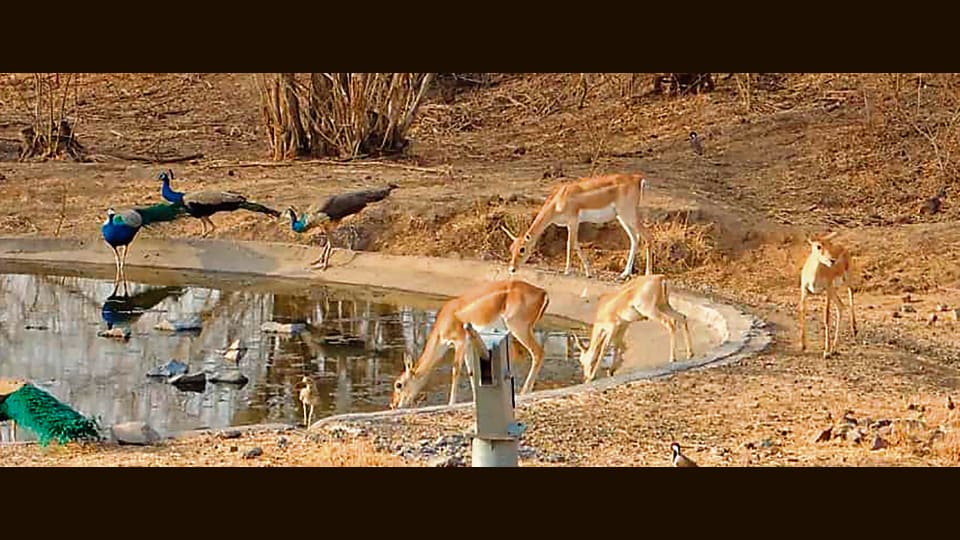
At 726, the highest number of wild animals was spotted at the Nannaj forest range in Solapur district followed by 106 wild animals at the Rehkuri Black Buck Sanctuary in Ahmednagar. Both these sanctuaries are categorised as grassland ecosystems and for the last two years, the forest department has made huge efforts for habitat restoration in both the areas.
This year’s wildlife census was conducted at 86 locations across sanctuaries in the Pune and Solapur districts. Around 150 volunteers from across Pune participated in the census along with forest officials. The volunteers stood on scaffolds built next to the water bodies and waterholes created by the forest department to observe animals wandering there to quench their thirst. After over 12 hours of observation, the forest department compiled data from all the forest ranges and the report was published on June 13.
Tushar Chavan, deputy conservator of forests (wildlife), Pune Forest Division, said, “Every year, wild animals are spotted in both sanctuaries however this year, the number of sightings has increased in both sanctuaries. It can be attributed to the habitat restoration efforts of the forest officials in the last two years. As a result, this year we also spotted a female Great Indian Bustard (GIB) that returned to its traditional habitat.”
According to the data, 451 Black Bucks were spotted followed by 278 Wild Boar. Whereas GIB, monkeys, Sambar Deer and Bengal Monitor were among the least spotted animals.
Of the 726 wild animals spotted at Nannaj, there were 331 Black Bucks, 249 Wild Boar, 18 rabbits, 61 peacocks, two Bengal Monitor, five mongoose, 13 Bengal Fox, six Wildcat and a few others.
Although the department now considers a more scientific method for the animal census in forest areas, the annual census carries significance as a traditional method of the census. It also helps in understanding the overall health of the forest area and gives people a first-hand experience of the forest area, said Chavan.


