
 E-Paper



Civic Sanskriti: #GenerationRestoration to give Pune’s ecosystems a new breath of life
It is imperative that biodiversity conservation and ecosystem restoration are taken up in Pune with scientific guidance and participatory processes, says Sanskriti Menon

 Prefer HTon Google


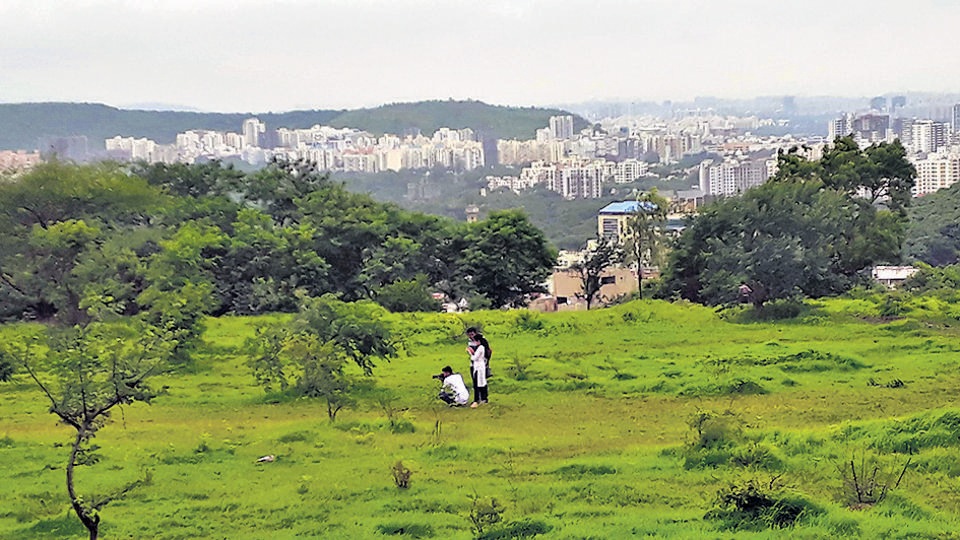
Pune folks are lucky to live amidst a variety of ecosystems – streams, lakes, rivers, grasslands, forests patches, and even quarries that have become unique habitats. We benefit in many ways from these ecosystems. Indeed, they are the basis of what makes the city liveable. Human-made infrastructure is but a layer on natural endowments.
Ecosystem benefits
The city is just at the edge of the Sahyadri mountains, and we enjoy their natural beauty. Walks and treks on hills in and around Pune are among the most popular recreational activities. An invaluable ecosystem the Pune urban region draws from the Sahyadri mountains is high quality, unpolluted water from Mutha, Pavana and Bhima rivers.
Pune has grasslands too. Recent research shows that the hills in Pune have naturally harboured grasslands and scrub vegetation, and not forests as many think. The western regions of Pune, such as Aundh, Baner, Balewadi, used to have orchards of guava, ber, ramphal and sitaphal. These are mostly converted into built-up spaces and only a few fruit trees remain.
These diverse ecosystems and habitats harbour many different types of plants and animals, including birds, butterflies and moths, spiders and other arthropods, skinks, lizards, snakes, insects and small mammals. All of them are a part of the complex webs of life and ecosystems in our city.
These ecosystems help to balance our microclimate, cleanse the air, provide us shade and moisture, help percolate groundwater, and convey floodwaters.
They are spaces to connect with nature, and they make our city beautiful.
They give us flowers, fruits and medicinal plants too, since the bees, birds and butterflies that help in pollination are also part of the complex web. The conversion of dead plants and animals to compost, humus and soil matter is also an ecosystem service.
Under threat
Unfortunately, often civic infrastructure projects end up destroying hills, grasslands, rivers and streams. Worse, ecosystems and habitats are just viewed as urban land to be traded for profit, covered with buildings; or waterbodies to be put into storm water drains and sewage pipes.
With degradation and destruction of ecosystems, our city is likely to become less resilient, subjecting people to more risks and ill-health. We may recall that lives have been lost in the flash floods in Pune in recent years, especially due to narrowing of nallah courses and encroachment. Abuse and cutting of hill sides has also caused compound walls to crash and kill people in adjoining huts.
Towards conservation
The theme for World Environment Day on June 5 is “Join #GenerationRestoration to revive and protect our ecosystems”. In addition, the UN has declared 2021 to 2030 as the Decade of Ecosystem Restoration, recognising that “there has never been a more urgent need to revive damaged ecosystems than now”. It can help to end poverty, combat climate change and prevent mass extinction. It will only succeed if everyone plays a part.
Pune has many wonderful initiatives for biodiversity conservation taken up voluntarily by people and NGOs: action projects of greening, home gardens, cleaning up and composting, adopting river bank stretches, to biodiversity studies and being vigilant about debris dumping. Such efforts need support and strengthening, and lots more volunteers.
Pune’s public also needs to ask elected representatives to ensure that the city takes up ecosystem restoration and biodiversity protection in earnest.
Government role
In fact, protection of nature is one of the mandatory functions of municipal corporations.
City governments are expected to Set up Biodiversity Management Committees at the city and ward levels and prepare Biodiversity Registers according to the Biodiversity Act, 2002.
Just making the committees is not enough. Their actual work should be to support extensive participatory processes that help to understand, document, protect and conserve biodiversity and ecosystems.
They need to ensure that city development and civic projects are conceived with an understanding about biodiversity and sensitivity to conservation. For example, riverfront development or beautification is likely to destroy the ecosystem, and it should not be confused with river restoration.
It is imperative that biodiversity conservation and ecosystem restoration are taken up in Pune with scientific guidance and participatory processes.
The City Biodiversity Indicators framework developed under the UN Convention on Biological Diversity is a useful guide. It suggests focusing on conserving native biodiversity and ecosystems and enhancing ecosystems services. It also suggests the creation of suitable governance mechanisms for local biodiversity conservation. It can be adapted for local situations, understanding and safeguarding the dependence of local communities on ecosystems.Such as for fuel wood, grazing, and cultural needs.
Let’s get active!
As the World Environment Day 2021 message goes: We are the generation that can make peace with nature. We need to get active, not anxious.
Let’s be bold, not timid. Let’s join #GenerationRestoration
Sanskriti Menon is senior programme director, Centre for Environment Education. She writes on urban sustainability and participatory governance. Views are personal. She can be reached at civic.sanskriti@gmail.com


