
 E-Paper



Civic Sanskriti: Historical core city of Pune needs an election push for devp
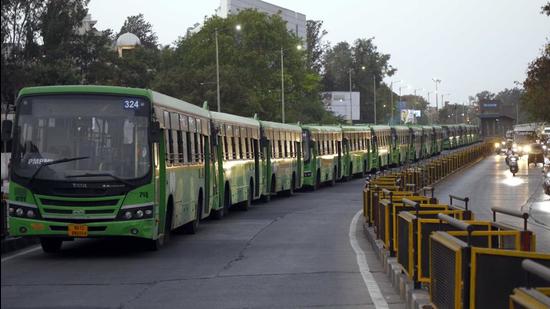
With good bus connectivity, shuttles and cycle-safe roads in place, people coming to the historical core area of Pune every day for work could leave their bike or car behind


PUNE Pune’s core city, like many historical cities built before motorcycles and cars were invented, has many people- and environment-friendly features. The street network with small block sizes makes it easy to walk around.
Despite the density, you find sitting platforms, locally known as paars, around peepal and banyan trees that provide quiet spaces to relax. You can enjoy a chai and misal and watch the bustle of commercial activity and modernity amid heritage.
The core city also has heritage temples and ghats, traditional occupations of Kumbhars (potters), Tambats (brass and copper workers) at Tambat Ali, bamboo artisans at Burud Ali. Tulshi Baug is still a popular shopping street selling specialised household products. Such precincts have a character that no other place in Pune has.
Unfortunately, new developments in the last few decades are erasing the core city’s unique fabric. The hustle-bustle has turned into congestion. People avoid visiting the core city for shopping for traditional items like saris and jewellery.
According to Sujit Patwardhan, founder Trustee of Parisar, “There are broadly two visions for the core area’s future. One that sees it as no different from the rest of the city, and the other, that values the historic and cultural qualities that need to be preserved.”
There is an even more serious consequence. The Indian Institute of Tropical Meteorology has recently published its study of air pollutants in Pune. Dr Gufran Beig, Principal Lead Author of the report cautions, “The Emissions Inventory study shows a very high level of emission in Pune’s core city. Pune’s high-altitude location helps in slower conversion of emissions to pollutants as compared to plain areas. However, looking at the high emission level and rate of increase, the time is not far when the advantage of being high altitude would be lost after emissions cross a tipping point and Pune will also witness high air pollution. Transport is the source of over 45% of emissions of most toxic PM2.5. Better to act now to reduce emissions.
Tiny pollutant particles enter the lungs, causing respiratory illnesses. Some particles are small enough to pass through the lungs into the bloodstream affecting the brain, heart and kidneys. Children, pregnant women, older people, those with cardiovascular ailments are at greater risk. Air pollution is also known to increase the severity of the Covid-19 disease.
Pune Municipal Corporation and Traffic Police must take note of the IITM Emissions Inventory and take urgent steps to reduce air pollution in the core city.
Fortunately, the PMC, with great foresight, has already got a few different plans – the Comprehensive Mobility Plan, Bicycle Plan, Parking Policy, Pune Streets Programme, and Urban Street Design Guidelines. Initiatives introducing minibuses and electric vehicles have been in the news recently.
Imagine the attractive, calmer, and healthier environment the core city could have with these provisions implemented in true letter and spirit:
Attractive street design
Beautiful designs for about 25 km of core city streets were prepared under the Pune Streets Programme with footpaths, vending zones, rickshaw stands, and easy bus movement. In addition, a walking plaza, greenery and neatly arranged street vending zones were designed reflecting the unique character of Laxmi Road.
Architect Prasanna Desai and PVP College Architecture students had conceptualized an “open-air mall” design for Laxmi Road. If traffic-clogged roads can be freed up, people can enjoy the core city ambience, its cultural activities, restaurants, and of course, shopping!
We can learn from similar projects at Chandni Chowk and Karol Bagh in Delhi, which are more crowded than Pune’s core city. Amsterdam, London, Paris, Stockholm and many others have decongested inner-city areas to improve liveability and economy.
Shuttles
Shuttle services with CNG or electric minibuses or share-rickshaws would help cut the noise and air pollution. Shuttles would ease mobility within the core city and connect to the metro, major bus stops, and parking lots.
Traffic re-routing
The Comprehensive Mobility Plan recommended an inner ring road of sorts by streamlining traffic movement along JM Road, Shastri Road, Shankar Sheth Road, Nehru Road. As a result, traffic that is not destined for the core city need not enter it but can go around. Traffic re-routing and restricted timings for vehicle movement would be a boon for residents in the Peth areas to reduce vehicular pollution.
Parking management
Vehicles parked on the road eat up one or two lanes of precious road space, making bus movement, cycling and even walking difficult.
Studies show that most of the parked vehicles are of shop employees, leaving very little for customers. Pay-n-park can ensure that long-term parking is shifted to parking lots and on-street parking is utilized efficiently.
Paid parking facilities exist in and near the core city. With free parking available on the road, they are not much used. In some parking lots, other businesses have come up! This situation should be corrected as recommended in the CMP.
With good bus connectivity, shuttles and cycle-safe roads in place, people coming to the core area every day for work could leave their bike or car behind. It is an adjustment people will have to make not to increase pollution and cause health problems for themselves and others.
All we need is for PMC to implement these projects already envisaged in city plans. Public deliberations among residents, businesses, institutions, the wider public and PMC are needed so that proposals are well-understood, tried out and fine-tuned for the public’s needs.
Lockdown losses, urgent health concerns, and the longer-term need for heritage-sensitive modernization call for authentic leadership from elected officials and the administration. Such a project to heal, nurture and celebrate Pune’s historical core city must find a place in election manifestos.


