
 E-Paper



Curtain Call: The journey of sangeet natak, the way ahead
Marathi theatre finds its roots in sangeet natak when Vishnudas Bhave staged “Sita Swayamwar” in 1843

 Prefer HTon Google


I was not introduced to theatre till I was nearly twelve years old. It was not a conscious decision, I suppose it was just something that happened.I was studying in an English medium school and theatre wasn’t a big part of it’s cultural activities. I do not remember seeing students performing too. I had watched a few plays on TV. It was common back then. So, when I wanted to sit at home and watch cartoons and my parents decided to take me to watch a play, I was not too thrilled. But I had no choice and I am glad that I did not! Amongst the many plays I watched before taking the decision to pursue it as a profession, I watched only one sangeet natak, the traditional Maharashtrian musical theatre.
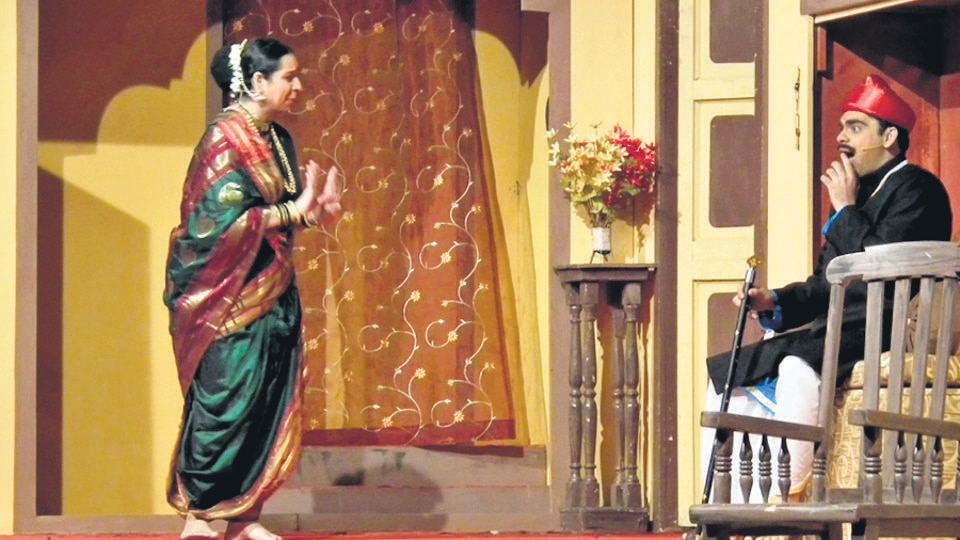
Marathi theatre finds its roots in sangeet natak when Vishnudas Bhave staged “Sita Swayamwar” in 1843. Since then Marathi theatre was dominated by Sangeet Natak like “Sangeet Saubhadra” by Annasaheb Kirloskar, “Sangeet Sharada” and “Sangeet Saunshaykallol” by Govind Ballal Deval, “Sangeet Manapman” by Krushnaji Prabhakar Khadilkar, and “Sangeet Ekach Pyaala” by Ram Ganesh Gadkari.
These were five-act plays with nearly fifty songs on an average. The performances used to start at sundown and continue till sunrise. Many-a-times the plays were socially and politically relevant. Singer-actors like Bal Gandharva, Keshavrao Bhosale and Deenanath Mangeshkar had become superstars and started their own production companies.
People used to come to listen to their songs and it is said that for some songs they would get as much as fifteen encores! It is considered to be a golden era of Marathi theatre. It is also the beginning of the downfall of sangeet natak.
Songs started becoming more important than the play and that led to an imbalance in performance. Newer singer-actors were not being curated and the old generation continued performing the roles of the protagonists who were young. This hampered the believability of the performance. Also, with the advent of the radio and other technological enhancements in audio recordings, the audience could listen to their favourite songs at home. As a result, lesser and lesser content in sangeet natak was being produced.
By the time I started doing theatre, I remember sangeet natak was described as being boring. I had watched a play while I was in school and honestly, I did not feel like watching another one. So, when I was approached to direct one by singer Rahul Deshpande, I was in a fix. On the one hand, I was just starting my career and absolutely wanted to work with someone like him. But, on the other, I wasn’t sure if I wanted to direct something that was exactly a century old – “Sangeet Saunshaykallol”.
I read the five-act script and thought that it had some really fun moments. After a brief chat with a theatre researcher about the play, I met Rahul and the producers and asked if I could have a free hand with the content.
Since I had not watched any version of the play, editing it became easier. I quickly edited the text into a two-act structure and narrated it to the team. They were on board. Then came the part about balancing the text with songs. I sat with Rahul and identified the songs that absolutely had to be there. It was a sort of a negotiation, wherein he was insisting that a song should be there because of its historic and nostalgic value, while I was trying to ascertain its place in the edited structure and whether it was adding any value to the play. Once we reached a consensus, rehearsals began in full swing. Before we knew it, we had produced three plays in eighteen months.
“Sangeet Manapman” and “Sangeet Saubhadra” being next. I had treated sangeet natak as an experiment and was contemplating whether I wanted to do “Sangeet Saubhadra” because the plot and text seemed dated. The songs were great, no doubt. But Anand Bhate agreed to play the part of Lord Krishna and that character had the most amazing songs.
Also, it was the first time that Anand was going to act in a play and I could not resist being the one to direct him.
All these plays did well commercially, helped me hone my skills, put me in the coveted Forbes Thirty Under Thirty list and brought me a lot closer to sangeet natak. I enjoyed the form, but longed for contemporary content.
“Sangeet Devbababhli” by Prajakt Deshmukh is a good start to newer Sangeet Natak and I hope that more and more plays are written and produced in this format.
Nipun Dharmadhikari is a storyteller and looks forward to telling them on stage, in front of the camera or in person.


