E-Paper



IUCAA’s radio survey gets new data gateway in Germany
Radio astronomy survey led by IUCAA, Pune, entered a new phase on Monday with the launch of a data gateway in Germany, giving scientists another way to access its observations and images

 Prefer HTon Google


PUNE: A massive radio astronomy survey led by the Inter-University Centre for Astronomy and Astrophysics (IUCAA), Pune, entered a new phase on Monday with the launch of a data gateway in Germany, giving scientists another way to access its observations and images.
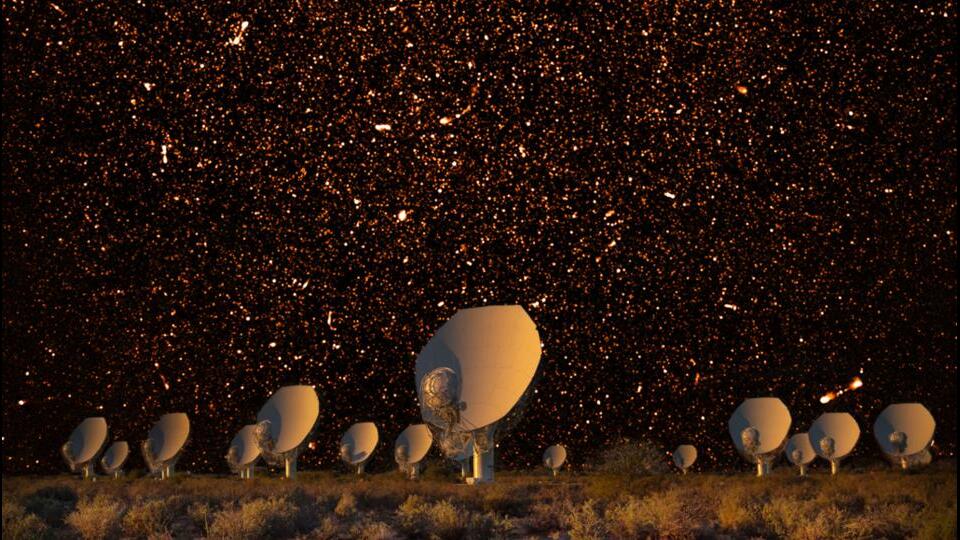
The Deutsches Zentrum fur Astrophysik (DZA) in Gorlitz has created a copy, or mirror, of the MeerKAT Absorption Line Survey (MALS) data in collaboration with IUCAA’s IT team.
MALS data is a huge collection of radio-wave observations of the universe made using the MeerKAT radio telescope in South Africa.
The move is aimed at ensuring long-term access to the survey’s rapidly growing data and developing systems to handle the enormous datasets expected from the next generation of radio telescopes.
MALS completed all of its planned observations by the end of 2025 after spending 1,400 hours observing the sky. The campaign generated about 1.5 petabytes of raw data — roughly equivalent to hundreds of thousands of hours of high-definition video.
With observations complete, MALS is moving from collecting data to using it for scientific research. Three major public data releases have already been made, with more planned.
“The DZA mirror ensures continuous long-term access to outputs from this 1.5-petabyte dataset for the global scientific community,” said professor Neeraj Gupta of IUCAA, principal investigator of MALS.
The German data mirror was developed jointly by DZA’s IT group and IUCAA’s IT department, with the setup at IUCAA coordinated by Dhanraj Borgaonkar, technical officer, IUCAA.
The project could also help prepare astronomers for the huge amounts of data expected from future observatories, including the Square Kilometre Array (SKA). DZA said the MALS system is being used as a prototype for building data services that can allow researchers around the world to access and work with very large astronomy datasets.
“MALS is a prototype for the DZA to lay the groundwork for the SKA and the deSRC (data engineering and science research centre) work,” said Lars Haupt of DZA.
UHF data to open new research possibilities
So far, most publicly released MALS data has come from observations in the L-band, covering radio frequencies between 900 and 1,670 MHz.
The next major release will add observations from a lower-frequency range known as the Ultra High Frequency (UHF) band, covering 580 to 1,015 MHz.
The new data is expected to give astronomers a deeper view of the radio universe. It will provide clearer images, cover a wider range of signals from atoms and molecules, and help scientists detect more distant galaxies.
This could allow researchers to study galaxies at earlier stages of the universe and better understand how gas turns into stars and how galaxies grow.
The data will help scientists study the magnetic fields spread across space. DZA researcher Aritra Basu said the centre plans to use MALS data to create a detailed map of the polarised radio sky, helping researchers understand how the universe became magnetised.