
 E-Paper



Monday Musings: Pune Metro will soon expand service, it’s time people change mindset
As per regional transport office (RTO) figures, there are around four million vehicles in Pune, close to its overall population. Metro, as the global experience goes, hopes to encourage people to shun private vehicles and instead use mass transport

 Prefer HTon Google


As the inauguration of the next stretch of Pune Metro Rail draws closer, Punekars have mixed feelings. They are happy that Metro service will expand from Garware College tod Ruby Hall Clinic and Phugewadi to Civil Court interchange, but the delay has already killed the enthusiasm for many who purchased properties in the past one year and have already paid one per cent cess for Metro service as additional stamp duty.
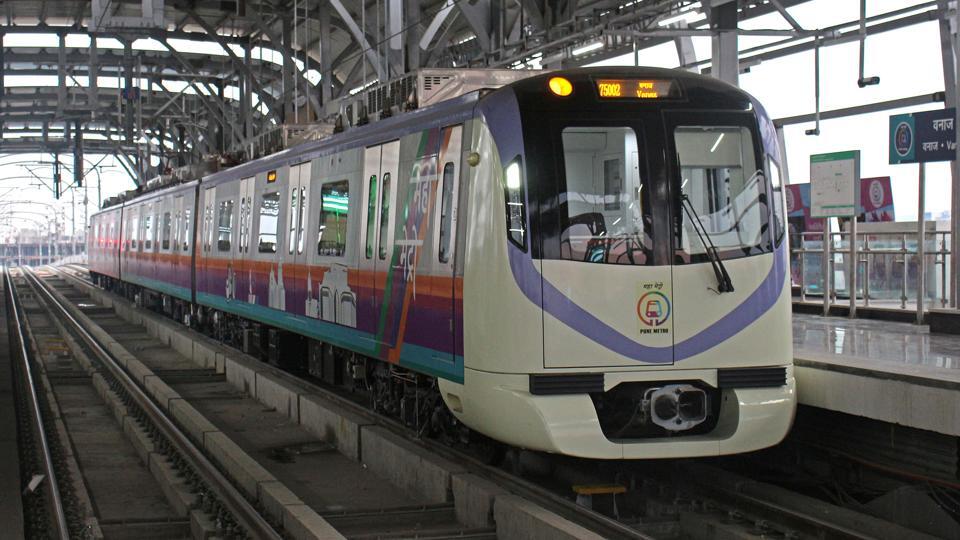
The city has already embarked late on the Metro journey. If Delhi first got the Metro trains in 2002 under then Prime Minister Atal Bihari Vajpayee, Pune has been two decades late.
After its inauguration in March last year, the existing operational stretch from Vanaz to Garware College and Pimpri to Phugewadi witnessed a rush for initial months before the footfall drastically dropped. Most commuters found the service good, but in absence of long run and no feeder services for last-mile connectivity, the service is now reduced to organising various events and functions.
Now, that the Metro rail has entered its second year of operations and very soon the next stretch will be operational, Maharashtra Metro Rail Corporation Limited (Maha-Metro) need to start paying heed to last-mile connectivity which hasn’t been the focus during the first year of operations.
The Maha-Metro in coordination with the Pune Mahanagar Parivahan Mahamandal Ltd (PMPML) had started on a trial basis feeder bus services from six metro stations on March 21, 2022, where the buses operated in 8 km stretches around the Garware College to Vanaz and Pimpri-Chinchwad Municipal Corporation (PCMC) to Phugewadi metro routes. However, due to poor response, the feeder bus services were suspended in October 2022.
Without last-mile connectivity, Metro Rail in Pune will not be a success even if the service expands. So far, the average daily ridership per day is 3,000 which could have been covered with a single public transport bus.
At the same time, it is also now the responsibility of commuters to start using the metro service while going to work and for other purposes.
This column has previously argued that Puneites, who always loved the independence of a personal vehicle, should now adapt to the Metro Rail culture. For the city once known to be the capital of bicycles, the growth brought in by industrialisation – mainly through IT and enabled services – has changed its character in the past two decades.
Pune and Pimpri-Chinchwad’s population has now crossed over five million. However, the absence of strong public transport has led to a sharp increase in private vehicles with the city earning a sobriquet of two-wheeler capital of India, something people of Pune have been facing adversely.
As per regional transport office (RTO) figures, there are around four million vehicles in Pune, close to its overall population. Metro, as the global experience goes, hopes to encourage people to shun private vehicles and instead use mass transport.
Successful Metro can reduce the intensity if not end, Pune’s traffic problem, and reduce distance. Traffic has been one of the worst problems the city is facing and its intensity is increasing every passing day with PMC not being able to either boost PMPML or create adequate road infrastructure, which are complementary to each other.
At the same time, it has the potential to further expand the city’s economy, unify its markets, and allow social integration. At the same time, it can turn complementary to other public transport like PMPML service.
Last year during its inauguration, Prime Minister Narendra Modi said his government’s priority is to focus on improving mass transportation, including Metro Rail connectivity. It couldn’t be more urgently needed than it is today
After all, Metro has the potential to change not just the ways we commute but our lives as well.


