
 E-Paper



Only 11% of Pune’s cycle tracks meet basic standards: Audit flags alarming gaps
Findings come at a time when Pune is trying to project itself as a global cycling destination through the annual Pune Cycle Grand Challenge

 Prefer HTon Google


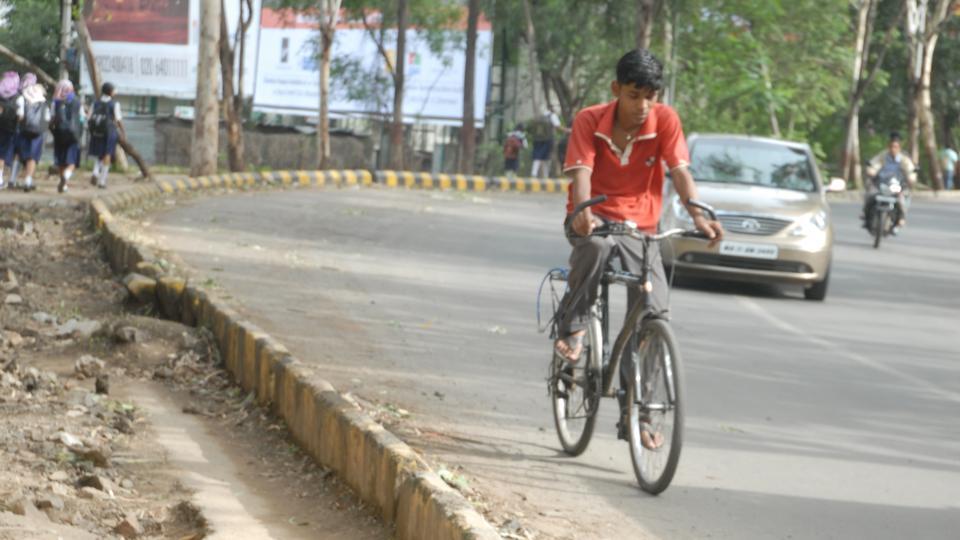
Pune’s push to brand itself as a cycling city is falling flat, with a new Parisar audit, released on Saturday, revealing that only 11% of the city’s cycle tracks are in “good” condition. The assessment of 35 km across 19 roads, done from September to November, shows widespread gaps in safety, comfort and continuity.
Parisar is a city-based non-government organisation (NGO) focused on sustainable development, especially urban transport, road safety, heritage, and environment.
The findings come at a time when Pune is trying to project itself as a global cycling destination through the annual Pune Cycle Grand Challenge. However, the city’s on-ground infrastructure remains far from capable of supporting a serious cycling culture.
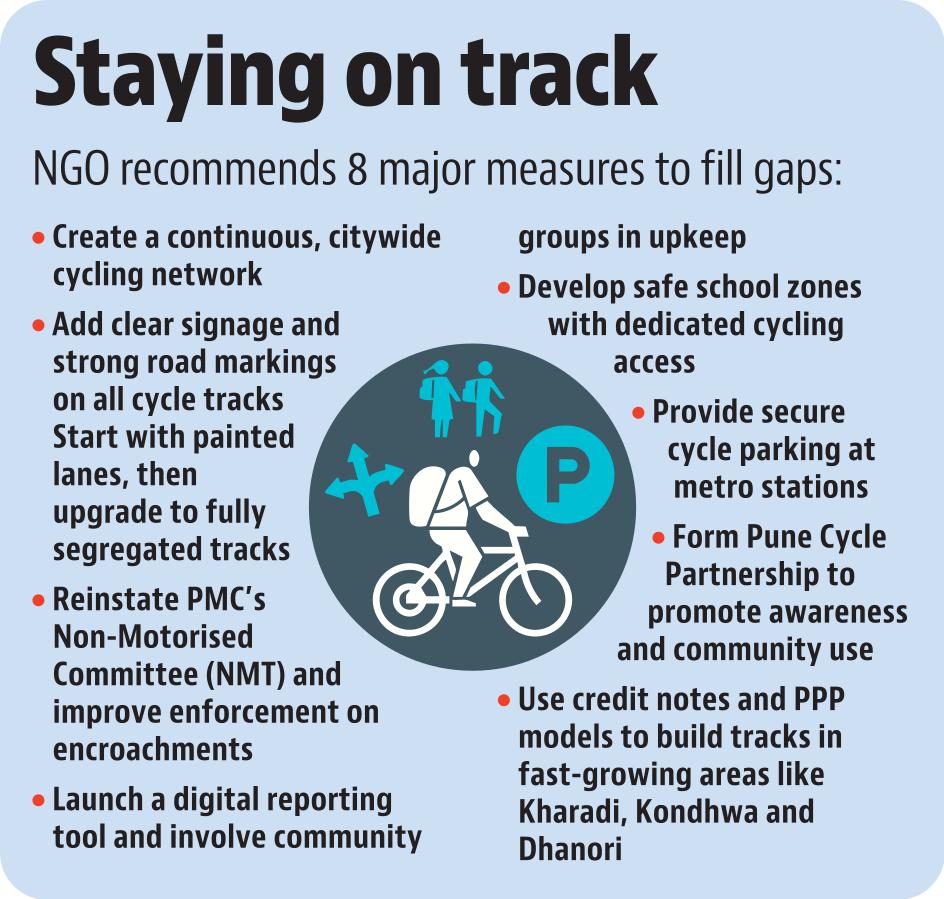
The report warns that without urgent upgrades, Pune risks losing credibility. It offers evidence-based guidance for Pune Municipal Corporation (PMC) and other agencies to build a world-class continuous network that matches the city’s growing international visibility.
The audit shows that 61% of the tracks are only “okay”, while 28% are “poor”. Broken surfaces, encroachments, unsafe junctions and missing signage were among the major issues. The findings also show that nearly 90% of tracks are below acceptable quality.
Tanzeed Allapur, project associate, Parisar, said the city must act urgently. “Pune is gaining global visibility through the Cycle Grand Challenge. But without safe and continuous tracks, the city cannot call itself cyclist-friendly,” he said.
The audit was done by trained volunteers who rode each 500-metre segment to check continuity, safety and comfort. While continuity scored better, safety and comfort performed poorly because of unsafe designs and lack of maintenance.
The report calls for a continuous citywide cycling network, stronger markings, better enforcement, and reinstating PMC’s Non-Motorised Transport (NMT) committee. It also recommends dedicated cycle parking at metro stations and safer routes for school children.
Parisar also urged the civic body to follow Indian Roads Congress (IRC) standards, which are legally binding under the Motor Vehicles Act. “If Pune wants more people to cycle, the infrastructure must match global standards,” he said.
Responding to the report, Ashish Jadhav, superintendent engineer of the PMC road department, said, “We are improving the surface of cycle tracks and have already started work on repairing footpaths, painting walls and curb stones. We are also working on restoring continuity wherever the cycle track is broken. Encroachments on both cycle tracks and footpaths are being removed.”


