
 E-Paper



PMC to test drain enzyme at Jambhulwadi Lake to control water hyacinth problem
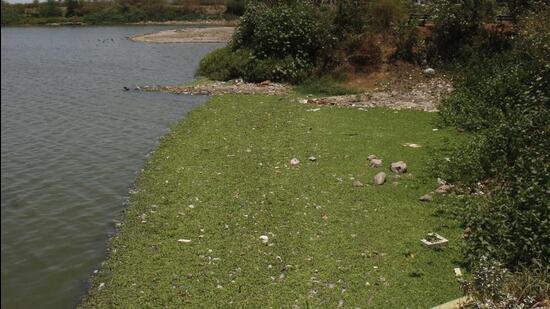
Every year, the PMC spends over ₹10 crore to clear the water hyacinth from the Mula and Mutha rivers and three lakes even as residents have to deal with mosquitoes and bad odour. Water hyacinth blocks the flow of fresh water, creating spots that are ideal for mosquito breeding


The Pune Municipal Corporation (PMC) has decided to test drain enzyme at Jambhulwadi Lake to control the water hyacinth problem across Pune city. Drain enzyme clears organic waste from clogged drains by introducing enzymes or bacteria that feed on organic matter.
As compared to Khadki Cantonment and Pimpri-Chinchwad Municipal Corporation (PCMC), Pune city faces a greater water hyacinth problem.
The Mula and Mutha rivers converge at two points in the Sangamwadi area whereas the Mula and Pawana rivers converge at Sangvi. Hence, water hyacinth flows from the Mula and Pawana rivers into the Pune jurisdiction.
Aundh and Warje are among the worst affected areas while residents of Bopodi, Yerawada, Vishrantwadi and Mundhwa, too, face maximum problems due to water hyacinth.
Every year, the PMC spends over ₹10 crore to clear the water hyacinth from the Mula and Mutha rivers and three lakes even as residents have to deal with mosquitoes and bad odour. Water hyacinth blocks the flow of fresh water, creating spots that are ideal for mosquito breeding.
Kunal Khemnar, additional municipal commissioner of the PMC, said, “This year, we have chosen to test drain enzyme to control hyacinth. The drainage department is using this enzyme in the slum areas with narrow lanes where machines cannot reach. It is proving to be effective. The company has suggested using enzyme for water hyacinth to dry it out and prevent spreading.”
“Earlier, we had decided to use enzyme in the Sarasbaug pond. But there was no hyacinth so we decided to use it at Jambhulwadi Lake. The PMC commissioner has also instructed students to test the enzyme and then apply to other parts of the city. Besides that, we have floated tenders for the removal of hyacinth much earlier due to the upcoming Lok Sabha elections. The work will start in a few days,” Khemnar said.
Last year, the PMC health department had carried out a pilot project using drones to spray insecticide at Katraj Lake to control the mosquito problem there. “Based on the severity of the mosquito problem due to the hyacinth, we will use drones for spraying insecticides,” Khemnar said.
Shridhar Yeolekar, executive engineer of the drainage department, said, “Drain enzyme is used to clear small drainage lines at the ward office level. It does not work for large size drainage lines.”
Alok Adsul, a resident of Vishrant Society in Vishrantwadi, said, “Our society is close to the river, and we’re dealing with mosquitoes and bad odour. The PMC needs to find a lasting solution to the persistent hyacinth problem. Instead of spending money every now and then, the PMC should dedicate resources to finding a permanent solution.”


