
 E-Paper



Taste of life: The khanaval... a life-saving appetiser to Poona’s main restaurant course
Khanaval was an eating “house”, or sometimes a boarding “house” in Poona during the nineteenth century


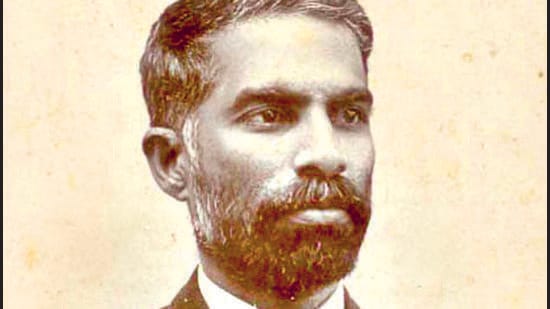
December 1899. When a 23-year-old Dharmanand Damodar Kosambi came from Goa to Pune to study Sanskrit, he had nowhere to go, and no place where he could eat. He went hungry for almost a week before he met Dr RG Bhandarkar, an eminent orientalist, and social reformer, who enrolled him in the Sanskrit school in Nagarkar wada. But, Kosambi still did not know where to have his daily meals. Most of the khanavals in the city refused to feed him because of his caste.
In those days, the floors of houses (and those of the khanavals) were smeared with a mixture of cow dung, soil, and ash. In the khanavals run by and meant for Brahmins, Brahmin helpers would smear the floor after the khanaval members finished their meals. But because Kosambi was a “Saraswat”, the Brahmin khanaval-owners and their helpers did not want to “pollute” their space by feeding him and leaving the floor “un-smeared”.
Finally, with the help of one of his acquaintances, Mr Redkar, Kosambi was successful in convincing a khanaval owner from Budhwar peth to let him have his meals at his eating house. The proprietor of the khanaval wanted Kosambi to smear the floor with cow dung daily after finishing his meals. Kosambi offered to pay 8 annas extra, and the owner agreed to take care of the smearing himself.
There were many students and male workers like Kosambi who did not know where to sleep and have food when they arrived in cities like Bombay and Poona in the nineteenth century. When someone arrived in the city, they either stayed with relatives, friends, or acquaintances from their villages, boarded with a private family who accommodated one or two lodgers, or joined a khanaval. The khanaval would serve them food at a minimum cost and suit their traditional dietary beliefs and practices.
The khanaval was an eating “house”, or sometimes a boarding “house”, to which people could subscribe and have their meals cooked for them. Also known as jevanaval or jevanghar in the nineteenth century, they were formal or informal public or semi-public eating houses for Indians in Bombay and later Poona. Occasionally, the traditional term Bhatiyarkhana, apparently was used, particularly to identify inns or eating houses run by and for Muslims. Molesworth’s monumental Marathi dictionary, in referring to the alternative terms jevanaval and jevanghar, reports that the eating houses had recently been set up in Bombay. The first edition of the dictionary was published in 1828, which means it could be estimated that the institution arose sometime around 1820 in Bombay.
Society accepted the helplessness of a hearth-less person, and dining in the khanaval was tolerated strictly as a necessity. Because of the social proximity involved, many khanavals served men of the same village and caste. Some khanavals allowed homeless or unemployed people to use their space to sleep.
NV Joshi, in his book “Pune Varnan” written in 1868, mentioned that there were almost 20 khanavals in Pune, and were mostly run by widows. The growth of the khanavals was a response to the growth of Bombay, and later Pune, as a market for rural labour and an education hub, and the consequent pattern of migration to the city by male workers. Most of these workers sought to minimise expenses to be able to send money home to their villages, so the khanaval food had to be inexpensive.
JS Karandikar, the ex-editor of “Kesari”, wrote in an article published in “Navayug”: “In 1890, one paid ₹5 per month in a khanaval. For ₹2 extra, one could get ghee and chapati, instead of bhakari. Most students could not afford to pay the monthly fees. A few wealthy students carried ghee in small bowls with them. These khanavals never took a day off. Most of the students did not visit their villages during festivals and holidays. The khanavals made sure they were properly fed during the holidays.”
After khanavals were established, students either had to secure membership in a khanaval or had to depend on the charity of certain families who would feed a few students as a charity in their homes. There were around 4,000 students studying in Pune in 1880, according to the Bombay Gazetteer published in 1885. This number swelled to 10,000 in 1910, according to a report in the newspaper “Jnanaprakash”.
Before the British Raj, poor Brahmin boys coming to towns or cities from villages for education and would typically stay at the premises of a temple or a choultry. But, they had to make arrangements for their own food. To spare the students the trouble and humiliation of begging every day, compassionate families volunteered to feed the students once a week. So a student had to find seven or 14 sponsors depending on whether he chose to eat once or twice a day. This was known as “vaar laavoon jevane” (feeding every week, “varanna” in Kannada) and was in vogue till the First World War. Some students lived by begging food-grains which they would cook themselves. Known as “madhukari”, it helped poor students acquire education.
In 1880, Vishnushastri Chiplunkar, along with Bal Gangadhar Tilak established the New English School in Pune. It was one of the first “native-run” educational institutions in India to offer Western education. Keenly aware of the hardships faced by students and workers in arranging for meals daily, Chiplunkar, around the same time, helped establish another modern intuition, a restaurant, in Pune which would feed students, workers, and guests coming to Pune. After Chiplunkar’s death, Gopal Ganesh Agarkar took it upon himself to convince the residents of Maharashtra of the importance of restaurants.
Let’s keep the story of the first restaurant in Pune, and Maharashtra, for the next week.
Chinmay Damle is a research scientist and food enthusiast. He writes here on Pune’s food culture. He can be contacted at chinmay.damle@gmail.com


