
 E-Paper



By the way: Chandigarh’s north is heaven on earth, and I don’t live there
I have got into the habit of driving around in Chandigarh after midnight and looking at the beautiful houses in the northern sectors. I tried calling it a hobby, but, to be honest, it’s an addiction

 Prefer HTon Google


This is going to sound cheap. But I will say it anyway. Before that, just so you know, ‘Cheap Thrills’ by Sia is my current favourite song. It’s only appropriate that you play it in the background at this point. No, no, that’s not what I wanted to say
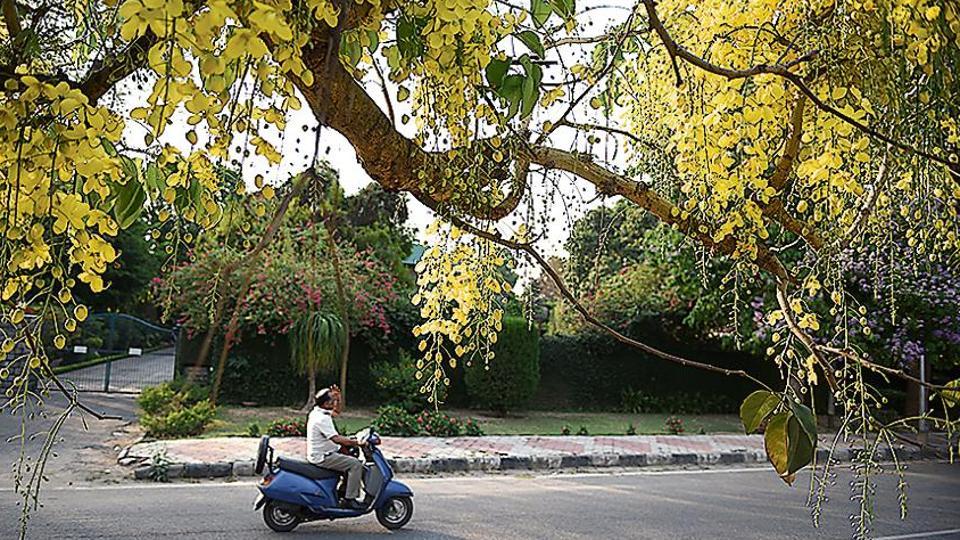
The thing is: I need help. I have got into the habit of driving around in Chandigarh after midnight and looking at the beautiful houses in the northern sectors. I tried calling it a hobby, but, to be honest, it’s an addiction. I do not intend to rob these houses, because robbery is illegal no matter how much we the lesser-haves, who live in an ignored abyss between the haves and have-nots, want to bring about a revolution. Robbing people’s houses to get rich is not known as revolution yet, according to fake decency that keeps our world intact.
I did the drive-around last night too, especially to look at that house on the inner road of Sector 9 that has winding stairs and white windows. There’s a similar house in ‘GTA: Vice City’, an old video game that I play sometimes only to step inside it. (I told you this was going to sound cheap.)
And then there’s that house in Sector 10 that must be at least a hundred times bigger than my flat. Whoever owns it has a lot of personality and style, I think. It has a quaint, quiet structure of probably just three rooms right at the back, with a huge lawn in front. My middle-class mind initially thought the owner must have spent all the money on the plot, and did not have enough left to actually build a grand house on it.
Another I want to own is a corner house in Sector 10. It has a low boundary wall that makes it charmingly disarmed; a red-brick facade covered in vines, and a lived-in white wall stained by rain on the other side; plus a lawn/garden that’s not overly landscaped, which also has a car tyre that committed suicide by hanging itself from a tree but is now quite useful as a swing. Fine, I know the suicide reference was out of place there; the tyre was probably hung there after it had already died. The best part of this house is the ‘servant quarters’ at the back. That’s where I want to live. The main house can be a giant drawing room to hold parties, probably.
Why am I telling you this? We will get there. Before that, tell me if you agree with me: Don’t you think some of the new architecture with steel railings and glass facades makes houses look like hospitals? You just can’t feel at home in a hospital, unless you like being sick and important.
Anyway, I am on this thought trail primarily because I have been reading a host of reports on the First World problems that residents of these sectors face. For instance, the municipal worker who collects dead leaves does not show up on time; or that the park does not have its grass trimmed for days; or that the railing in one godforsaken corner has not been repaired for two weeks now, two weeks!
This has lent me perspective like never before. If indeed people living in heaven – yes, if there is heaven on earth, it is here, it is here – too have problems, I must see mine for what they are. How can an eight-hour power cut in the suburb be a problem if even these guys sometimes have to walk on grass that’s two centimetres too long? Greener grass does not mean it is perfectly cut.
I don’t mean to be mean, but jealousy interrupts everything. All I was saying was that I need help, to be able to get rid of this habit of stalking houses. I have been stopped at least twice by cops, and I have also been stared at violently by private guards. I fear it will lead me to jail. To end it once and for all, I have calculated ways to get a house like that. My current salary means I will need to live 500 years and work 12 hours a day. But the rates will rise too, silly! Or, I can get married to someone in such a house and live with her, off her. That would mean I will have to break up with my fiancee, who is middle-class like me, but I cannot do that because I have already got the cards printed. Cards cost money, you know.
I have even had thoughts about raising a militia to take over these houses. But then I remember that I am socialist only in theory, and that such an act would be no revolution unless I have enough people with me.
My only option is to lose this habit for now, and the thought too eventually. So, if you are out there, somewhere, feeling the same, please get in touch with me. We can fight this together. Or, if there are enough of us, we can even raise a militia. Just saying!
Email writer at aarish.chhabra@htlive.com | Twitter: @aarishc


