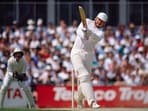
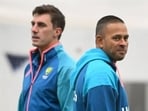
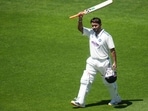
Every so often, a player does not just excel within the game but changes the way it is played. Sanath Jayasuriya did exactly that in 1996. A left-hander from Matara with a bat that seemed built to clear the boundary rope, he turned the opening overs of a one-day innings from a time for caution into a time for attack. In the process, he helped Sri Lanka win their first World Cup and changed the way teams approached batting in the format.
Jayasuriya grew up in Matara and was educated at St Servatius’ College. He made his ODI debut in December 1989 and his Test debut in February 1991. In his early years, he was primarily seen as an all-rounder, a left-arm spinner who batted in the middle order and could hit the ball a long way. That changed when Sri Lanka's team management began using him as an opener in 1993. The decision to promote wicketkeeper Romesh Kaluwitharana alongside him took things a step further. The pair were given the freedom to attack during the fielding restrictions, an approach they developed on the 1995-96 tour of Australia.
It worked beyond anyone's expectations. At the 1996 World Cup, co-hosted by Sri Lanka, India and Pakistan, the two openers tore into attacks and put opposition bowlers under pressure from the outset. Their approach caught teams off guard and changed the possibilities of batting in the opening overs of an ODI. Sri Lanka went on to win the tournament, with Jayasuriya named Player of the Tournament after scoring 221 runs and taking 7 wickets. Wisden named him its Leading Cricketer in the World for 1996 and, unusually, one of its Five Cricketers of the Year for 1997, even though he had not played in England during the preceding season.
His batting exploits were not limited to one-day cricket. In August 1997, in Colombo, he scored 340 against India in the Test in which Sri Lanka posted a world-record 952 for 6. It was the same match in which a young Mahela Jayawardene made his Test debut. Jayasuriya's innings remained the highest individual Test score by a Sri Lankan for nearly nine years, until Jayawardene surpassed it with his 374 against South Africa in 2006. He took over the captaincy in 1999 and led Sri Lanka until 2003. Under his leadership, Sri Lanka shared the 2002 Champions Trophy with India after rain washed out the final on consecutive days. They also reached the semi-finals of the 2003 World Cup. Jayasuriya remained an important part of the side in the years that followed, featuring in Sri Lanka's campaigns that took them to the 2007 ODI World Cup final and the 2009 T20 World Cup final.
His contribution went well beyond his explosive batting. Jayasuriya finished with 13,430 ODI runs and 323 wickets, becoming the first player to score 10,000 runs and take 300 wickets in the format. He retired from Test cricket in December 2007 and played his final ODI in June 2011. By the time he called time on his international career, he had featured in 586 matches, scored 21,032 runs, registered 42 centuries and taken 440 wickets across formats.
Life after cricket took several turns. He played in the IPL for Mumbai Indians, entered politics in 2010 and served as a member of parliament until 2015. He also appeared on the television dance show Jhalak Dikhhla Jaa in 2012 and served as Sri Lanka's chief selector in two separate stints, including during their victorious 2014 T20 World Cup campaign. In 2019, he accepted a two-year ban after admitting to breaches of the ICC's Anti-Corruption Code. The charges related to his failure to cooperate with an investigation and obstructing or delaying the process. The ban was not a finding that he had fixed a match.
His return to the game in a coaching role brought another chapter to his cricketing journey. After Chris Silverwood stepped down following Sri Lanka's early exit from the 2024 T20 World Cup, Jayasuriya took over as interim head coach in July. The results were encouraging. Sri Lanka won an ODI series against India for the first time in 27 years, secured a memorable Test victory over England at The Oval, their first Test win in England in a decade, and swept New Zealand 2-0 at home. In October 2024, he was appointed head coach on a full-time basis.
Jayasuriya remained in the role through the 2026 T20 World Cup, co-hosted by Sri Lanka, but stepped down after the team's elimination in the Super Eights. It brought the curtain down on another significant chapter in a career that had already seen him reshape ODI batting, lead his country, serve its cricket administration and return to the international game from the coaching dugout.


 Live Score
 Teams
 Players

 SRI LANKA