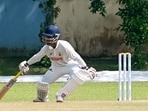
When Zaheer Abbas stepped onto the field, cricket ceased to be a simple duel between bat and ball and became a masterclass in regal, effortless elegance. Born in Sialkot, Punjab, the tall, bespectacled right-handed maestro possessed a batting style so refined and aesthetically pure that spectators and opposing captains alike watched in awe. Operating with a high, flowing backlift and an imperious upright stance, he seemed to view the cricket pitch as a grand canvas, using a soft touch and razor-sharp wristwork to stroke boundary after boundary without ever appearing to hit the ball hard.
Known throughout the cricketing world as the 'Asian Bradman', Zaheer turned run-scoring into a relentless, machine-like art across red-ball and white-ball formats. Over an international career spanning 78 Tests and 62 One-Day Internationals, he amassed 5,062 Test runs at an average of 44.79, featuring 12 centuries, alongside 2,572 ODI runs at an average of 47.62 with 7 centuries. His white-ball strokeplay was years ahead of its era, characterised by an astonishing ability to construct massive scores at rapid strike rates while maintaining textbook technique.
Few batsmen in the history of the sport have ever dominated English conditions or quality bowling attacks quite like Zaheer. His legend was forged on his very first Test tour of England in 1971, where he announced his genius with a breathtaking 274 at Birmingham. He repeated that mastery three years later with a majestic 240 at The Oval. His staggering appetite for runs found its ultimate expression in first-class cricket, where he remains the only Asian batsman to score a century of centuries, concluding his career with 108 first-class hundreds and over 34,000 runs, a monumental record defined by a legendary tenure at Gloucestershire.
Beyond his individual dominance, Zaheer stood as a respected leader and central pillar for both national and domestic setups. Captaining Pakistan across multiple series in the 1980s, he brought a calm, dignified authority to the dressing room. Across domestic circuits, his technical brilliance anchored top orders, elevating the standards of batting for an entire generation of young players who sought to imitate his classical footwork and timing.
Following his retirement from international competition in 1985, Zaheer remained a towering figure in global cricket administration. His contributions to the game culminated in his appointment as President of the International Cricket Council (ICC) from 2015 to 2016, where he represented the global game with the same grace that defined his playing days. He endures in cricket history as a timeless icon of batting perfection, a batsman whose wristy artistry and staggering consistency set the benchmark for Asian batting brilliance.


 Live Score
 Teams
Teams Players
 PAKISTAN
 SL
SL ENG
ENG NZ
NZ Pakistan
 Experience
 Very Bad
 Bad
Bad Ok
Ok Good
Good Excellent