


 Live Score
 Teams
 Players
Rahul Dravid’s “didn’t play smart cricket” comment sums up India’s SA capitulation
The India coach has his task cut out: in identifying the right personnel for different formats in conjunction with the selectors, but even more important is restoring stability in the dressing room.

 Prefer HTon Google


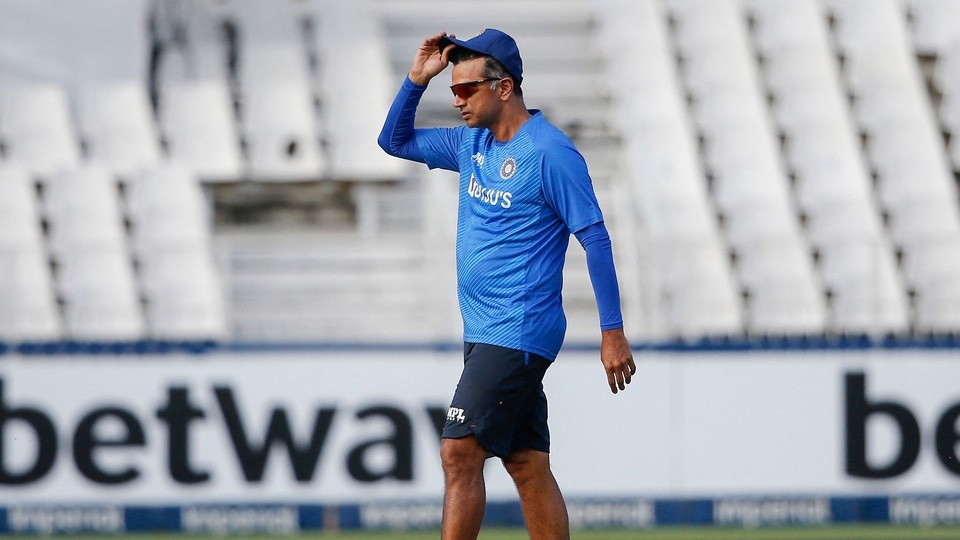
India lost in South Africa because the team “didn’t play smart cricket”, according to chief coach Rahul Dravid. This succinct phrase captures the crux of the matter though I know of a few who wouldn’t have been quite as understated.
I’d qualify the overall performance as pathetic when you consider the slump after winning the first Test handsomely. To lose five matches on the trot—across two formats—suggests lack of resolve, lack of focus, lack of skill, surrender if you will.
This is not to take away anything from South Africa’s magnificent display. Man-for-man—on paper—they lagged way behind. After the first Test was lost, a whitewash by India in the red- and white-ball rubbers looked most likely. To turn the Test series on its head from here was a remarkable achievement.
South Africa were playing at home, of course, but given the meagre talent resources available, compounded by the protracted controversy over racism that had riled the country’s cricket establishment, this victory was no less stunning than India’s against Australia 12 months earlier.
Surprisingly, the grit, guts, chutzpah that had helped India turn the tables on the Aussies was evident only intermittently. As each day brought a fresh crisis, Dravid’s face started losing pallor and shoulders started to sag. By the time the third ODI was lost he looked to be in a stupor at the ineptitude of a team that had promised a rich bounty.
Teams playing overseas nowadays are more or less doomed if they don’t get scores of 325-350 batting first. There was only one score by India above 300, in the first Test which was won. In ODIs, 300 is considered below par these days. India couldn’t get to this benchmark batting first, and failed to chase down even lesser scores. More pertinently, when the chips were down, the Proteas raised their performance, in batting and bowling.
Rabada, Jansen and Nigidi picked up more wickets than Bumrah, Shami and Thakur in the India second innings with the Test in balance, Peterson, Elgar and Co scored more heavily under pressure in the fourth innings, leading to emphatic wins in the second and third match.
In ODIs, the story was similar. South Africa’s batting was more authoritative, the bowlers pulled things back every time in the middle overs, and the fielding remained brilliant in both formats. Simply put, India were upstaged.
The absence of Rohit Sharma and Ravindra Jadeja was keenly felt, of course. Rohit’s been India’s best batsman across formats for a couple of years. His experience as captain would have been invaluable in ODIs. Jadeja in white-ball cricket is a ‘gun’ player with bat, ball and in the field.
But then South Africa too were missing key players. Anrich Nortje was declared unfit on the eve of the Test series and skipped the ODIs too. Quinton de Kock, match-winning wicket-keeper-batsman, retired suddenly after the first Test. Kagiso Rabada, the highest wicket-taker in Tests, was rested for the ODIs.
Did the lingering captaincy controversy involving Virat Kohli have any impact?
When the environment is gripped with uncertainty, interplay and relations between players inevitably undergo change. Dressing room dynamics start adapting to the emerging power matrix: some players respond with apprehension, some with ambition, which can dilute attention from the primary task of winning.
It was was no secret that Kohli was locked in an imbroglio with BCCI for some months. His wife’s Instagram post after he resigned makes this plain, and likely he would have quit the Test captaincy even if the series was won. The systematic dismantling of his power over the past few months left him with little choice.
Considering the plethora of failures in the top order, Kohli showed resolve and finesse without touching the heights of old where he would win such matches off his own bat. He has to swiftly adjust to the changed situation, rediscover his mojo to become the dominant player he was. A great deal depends on the locus the former captain seeks for himself in the recast dressing room. A senior statesman’s role, though anachronistic to his cricketing persona, could be rewarding for him and the team.
This brings us to Dravid. In his first overseas assignment, he got caught in an unexpected maelstrom. Multiple defeats suffered, Test captain lost, several key players—in red- and white-ball cricket—shown up as over the hill, out of form or without appetite to compete at the highest level. His plate of worries is full.
With the T20 World Cup, ODI World Cup and World Test Championship at stake over the next couple of years, Dravid has his task cut out: in identifying the right personnel for different formats in conjunction with the selectors, but even more importantly, restoring stability in the dressing room.
Currently it is wobbly, vulnerable and needs urgent rebooting to start playing smart cricket again.


