E-Paper



Tigress found dead in Corbett Tiger Reserve, first tiger death in Corbett this year
The tigress had injury marks on its neck and it likely died due to infighting with another tigress or tiger, officials said.

 Prefer HTon Google


Carcass of a ten-year-old tigress was found in Corbett Tiger Reserve’s Jhirna Range on Friday.
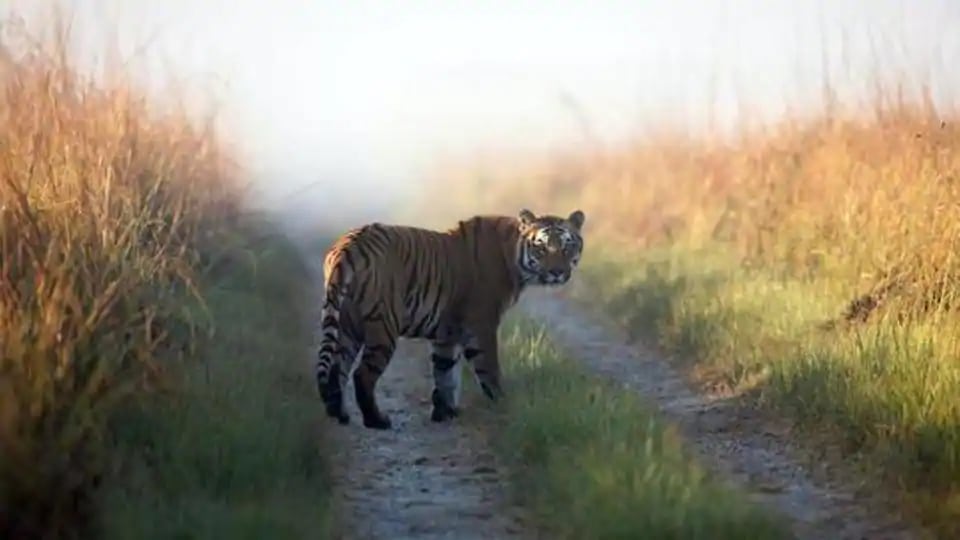
The tigress had injury marks on its neck and it likely died due to infighting with another tigress or tiger, officials said.
“Patrolling staff of the park spotted the carcass of the tigress in Jhirna range on Friday morning. Veterinary doctors conducted its post mortem following which the tigress was cremated. The tigress had injury marks which hinted that it likely died in infighting with another tiger or tigress,” Rahul (who goes by his first name ), director of Corbett Tiger Reserve (CTR) said.
This is the first death of a tiger this year inside Corbett Tiger Reserve, he said.
The viscera of the tigress will be sent for testing to the animal testing lab in Bareilly so that the exact cause of its death is known.
The death of the cat is not an isolated incident in the Kumaon region, as in the last two years, multiple carcasses have been found. In the second week of April, the carcass of a five-year-old male tiger was found in Ramnagar Forest Division near Corbett Tiger Reserve. In December last year, the carcass of a tigress was found in Corbett Tiger Reserve’s Bijrani zone.
In September last year, a tigress was killed in CTR’s Dhela zone. In May last year, the carcass of a male tiger was found in Corbett’s Bijrani zone. In the same month carcass of another tiger was found in Corbett landscape under a culvert in Ringoda stream.
In February 2019, the carcass of a tigress was found in the forests of Terai Central forest division in Nainital, with officials saying the tigress died of old age or from some ailment. In January 2018, a tiger death was reported from Nainital district’s Ramnagar Forest Division. In April 2018, a tiger was killed in Surpudali range of Corbett Tiger Reserve. In May 2018, a tigress was found dead in the forests of Almora district.
Corbett and its surroundings have one of the highest tiger densities in the world. The tiger population has increased in the Corbett landscape over the years, with last estimates pointing out that there are over 260 tigers within CTR at present, said forest officials. Ramnagar Forest Division around Corbett has over 14 tigers per 100 sq km, while Corbett has 9.4 tigers/100 sq km, according to experts.