
 E-Paper



Coronavirus in Delhi: Govt sets up buffer zones around 19 sealed pockets of the city
Coronavirus in Delhi: Buffer zones are geographical areas immediately surrounding containment zones, as described by the Union health ministry in a document — Containment Plan for Large Outbreaks — released earlier this week.


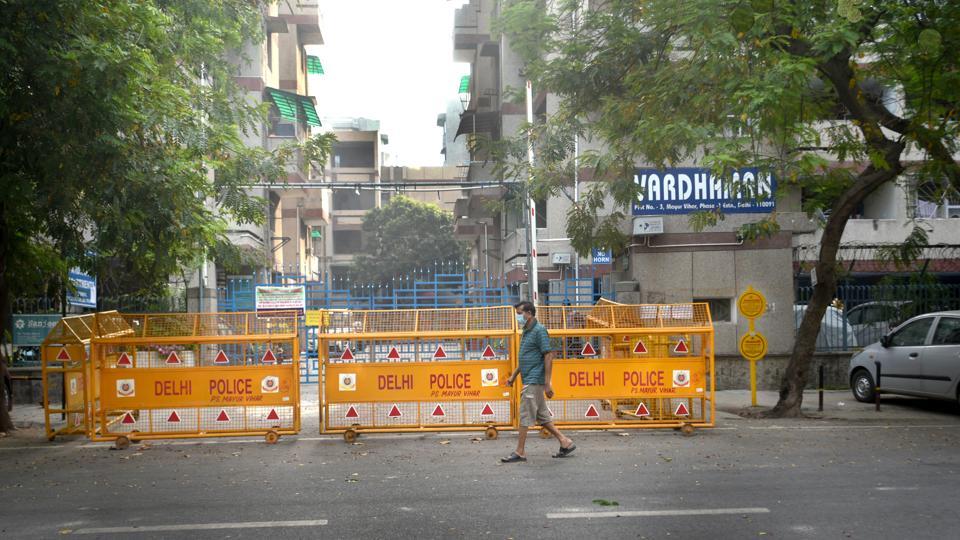
After naming 30 areas as containment zones and sealing them, the Delhi administration has set up buffer zones in 19 of these to prevent transmission of the coronavirus disease (Covid-19), senior government officials said Friday.
Buffer zones are geographical areas immediately surrounding containment zones, as described by the Union health ministry in a document — Containment Plan for Large Outbreaks — released earlier this week.
Officials said it is not necessary to set up buffer zones around four apartments and gated colonies — three in east Delhi and one in south-west Delhi.
Work on demarcating buffer zones in the seven additional areas notified on Friday was ongoing and will be announced soon, the officials said.
The buffer zones will also be under constant surveillance, with residents being directed to maintain a strict quarantine. Even business establishments dealing in essential goods and services have been advised to stagger their timings in these zones.
The modalities of setting up such zones were discussed in a meeting chaired by Delhi’s Lieutenant Governor (L-G) Anil Baijal on Thursday. In the blueprint sent to the chief minister’s office, seen by HT, the periphery of each containment zone is marked in red, while that of the buffer zones is marked in purple.
The containment zones comprise apartment blocks, gated communities, slums, streets, even entire neighbourhoods.
“Similarly, every buffer zone is different in its own way. It can range from a few adjoining lanes and roads to few adjoining buildings and shanties,” a district magistrate who did not wish to be identified said.
Tanvi Garg, district magistrate (New Delhi), who has two containment zones under her jurisdiction, said: “Buffer zones are created for enhancing enforcement of surveillance and quarantine norms in the core containment zones. They are an essential part of the policy.”
“The size, perimeter and other specifics of buffer zones depend on the core containment zones in question, in terms of its population density, the scale of the outbreak and potential rate of transmission,” said BM Mishra, district magistrate (South Delhi), who has two containment zones under his jurisdiction.
Rahul Singh, district magistrate (South-West Delhi), who has two containment zones under his jurisdiction, said: “The basic idea is to create a graded progression between the normal lockdown, which is in place, and stricter containment policy. Health officials are playing a major role in the demarcation of these zones.”
In terms of enforcement of surveillance, sanitation and other measures, a buffer zone is a semi-quarantine zone, a senior government official said.
Another official said that similar to containment zones, all roads and lanes connecting the buffer zones with arterial roads are blocked by the police. These areas are disinfected but at longer intervals compared to the containment zones
Nobody other than residents, the police, health officials, sanitation workers and essential goods and services providers are legally allowed to cross the barricades.
Those delivering essentials have to wait at the last barricade, and are not allowed to venture further.
Unlike containment zones, residents in buffer zones can step out of their homes wearing face masks, but might be questioned by police, who will patrol the areas around the clock and also be deployed in temporary pickets. So far, there are no door-to-door drives being conducted by health workers in the buffer zones, to check residents’ health for flu-like symptoms but this exercise is soon likely to be added in the protocol, the official added.
In containment zones, all shops are closed and essentials, including medicines, are procured through orders routed though appointed community leaders and residents’ welfare association office-bearers. These are delivered to common collection points by health workers and sanitation workers.
In buffer zones, shops dealing in essentials — medicines, milk, fruits, vegetables and groceries — are open but have been subjected to staggered timings. Police and government officials personally monitor social distancing norms outside these shops, when open, the official said.
According to Jugal Kishore, head of community medicines department at Safdarjung Hospital, creating buffer zones around containment zones is a conventional policy approved by the World Health Organization (WHO) years ago. “It is a welcome move. In India, it was successfully implemented to prevent cases of H1N1 and Zika viruses.”
While some RWAs said that they were briefed by the district administration in the last 48 hours about the buffer zones, others said that they are still awaiting clear instructions.
“Proper briefings were conducted by the subdivisional magistrates (SDMs). It is a good move. Safety comes first. After the briefings, pamphlets with contact details of RWA members are being published and distributed in the buffer zones. This has already been done in the containment zones,” said BS Vohra, president of the Joint Front RWA in East Delhi, where there are nine containment zones, the most in the city.
KC Rana, general secretary of Khirki village, which is a buffer zone, said, “It is a welcome move, but we are awaiting a briefing. We have been getting a lot of calls from anxious neighbours and there is panic shopping happening. That has to be controlled.”
Five sub divisional magistrates individually confirmed that briefings in the containment zones are almost done and are likely to be completed in buffer zones by Sunday.

Stay updated with all top Cities including, Bengaluru, Delhi, Mumbai and more across India. Stay informed on the latest happenings in World News along with Delhi Election 2025 and Delhi Election Result 2025 Live, New Delhi Election Result Live, Kalkaji Election Result Live at Hindustan Times.


