
 E-Paper



Delhi government starts first model treatment centre for Hepatitis C
The centre at the Lok Nayak Hospital will provide free viral load testing facility and medicines for Hepatitis C every day between 9am and 1pm.

 Prefer HTon Google


The Delhi government has inaugurated a model treatment centre for Hepatitis C, a viral infection that causes liver inflammation, which if left untreated can lead to liver cancer and liver cirrhosis or scarring of the liver. An estimated 30,000 to 40,000 people in Delhi live with Hepatitis C.
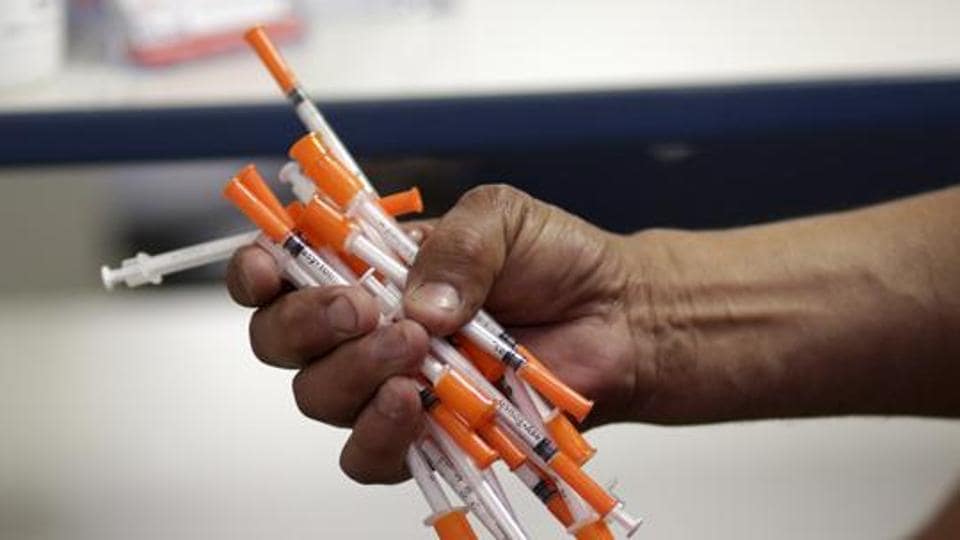
The centre at the Lok Nayak Hospital will provide free viral load testing facility and medicines for Hepatitis C every day between 9am and 1pm.
“There is a simple and inexpensive blood test and a rapid diagnostic test to check whether a person has Hepatitis C, or not. People who have been diagnosed with Hepatitis C—during blood donation, tests for other treatments, during routine medical examinations etc—can just walk into the centre to check the viral load and, if needed, get medicines for free,” said Dr Suresh Kumar, director, professor of medicine at the hospital and the nodal officer for the programme.
The viral load test measures the amount of virus per unit of blood and tells the doctor how sick a person is and whether they need medication or not. The test costs around ₹4,000 in private centres.
“This is the only government centre that offers free viral load testing (others charge nominal rates) and the only one to provide relevant medicines as of now,” Dr Kumar said, adding that the medicines are given to the state government under the central government’s National Viral Hepatitis Programme. In another two months, the free medicines will be available at five other hospitals in the city, he added.
“These medicines for Hepatitis C are a miracle of modern science. They can clear the virus out of a person’s system within three months. We will test and treat people to ensure that they do not suffer from the complications. Maulana Azad Medical College will continue to act as the central laboratory even after the programme begins at other centres. The viral load testing will be performed here after collecting samples from various government hospitals,” he said.
Under the “Delhi model”, five government hospitals have already randomly tested 17,000 people for Hepatitis C in the last six months. “Instead of waiting for a diagnosis, around 17,000 people were screened for Hepatitis C in five government hospitals in Delhi. About 30 people tested positive,” said Dr SK Sarin, director, Institute of Liver and Biliary Sciences (ILBS), an autonomous hospital under the Delhi government that specialises in treatment of liver related ailments.
The programme will also start immunising people against Hepatitis B, another viral infection affecting the liver. “The central government programme also has provision for immunisation against Hepatitis B and it is also likely to start soon,” Dr Kumar said.


