
 E-Paper



Delhi’s air far better compared to previous 2 years, shows pollution data
Delhi encountered its cleanest November air in three years when the AQI reading improved to 171 on November 4. An AQI reading of 171 is considered to be moderate and such clean air is usually experienced during summer and monsoon months.

 Prefer HTon Google


The spiking pollution levels in Delhi might have already set off alarm bells, but data available with the Central Pollution Control Board shows that air quality in the national capital is still better when compared to 2016 and 2017.
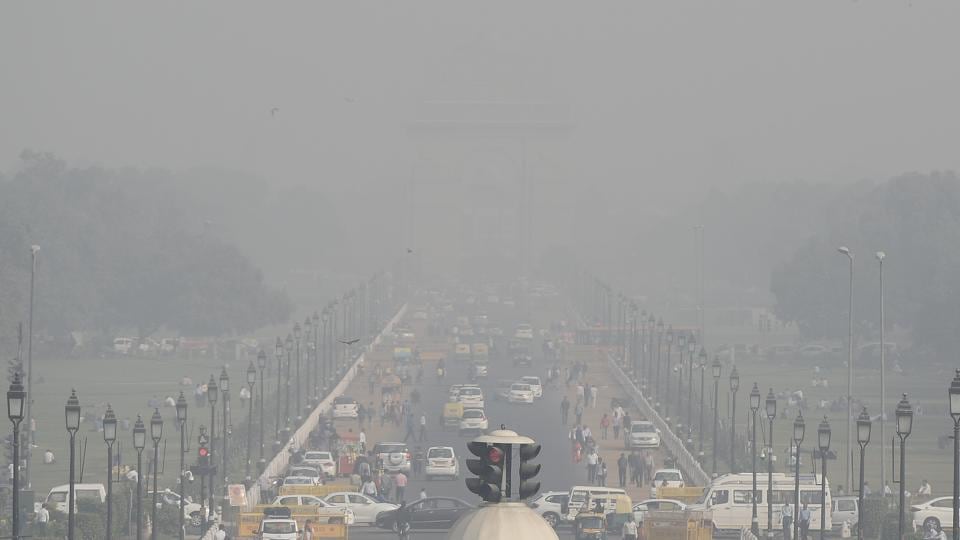
“If we consider data from January 1 to November 11, in 2018 there are only 158 days during which air quality was bad. In 2016 and 2017, this number was 197 and 166 respectively,” a senior CPCB official said.
Even though the Air Quality Index comprises six categories — good, satisfactory, moderate, poor, very poor and severe — the CPCB, for simplicity, tags the first three categories as good and the last three categories as bad.
“While the number of bad days has gone down over the past three years, the number of good days has been increasing since 2016. In 2016, the number of good days till November 11 was 108. In 2017, it went up to 150, and this year between January 1 and November 11, we have already had 158 good days,” the official said.
Delhi encountered its cleanest November air in three years when the AQI reading improved to 171 on November 4. An AQI reading of 171 is considered to be moderate and such clean air is usually experienced during summer and monsoon months.
“Ground-level interventions are playing an important role. Air quality is showing signs of improvement, even though we still need to ramp up our activities throughout the year. The Comprehensive Action Plan, which suggests long term measures, needs to be implemented,” Anumita Roy Chowdhury, executive director (research and advocacy) at Centre for Science and Environment, said.
The CPCB’s data also shows that this year, in November (considered to be one of the most critical months as pollution levels peak then), the number of days when air quality was severe reduced. November usually has the highest number of severely polluted days.
This year, until November 11, Delhi encountered only four such days. In 2016 and 2017, there were at least nine and six such days during the same period.
“It is usually during November that Delhi encounters some of the foulest air because of several factors, including adverse weather conditions, the festive season and stubble burning in northwest India. In December, when winter sets in, unless there is an adverse weather event, pollution levels usually don’t spike to severe levels,” D Saha, former head of the CPCB’s air quality laboratory, said.


