
 E-Paper



Early warning system for indoor pollution in public places on anvil
The early warning system will try to forecast how the indoor air quality at public places could deteriorate within a few hours and even advise people to vacate the place to bring down levels of pollution.


NEW DELHI
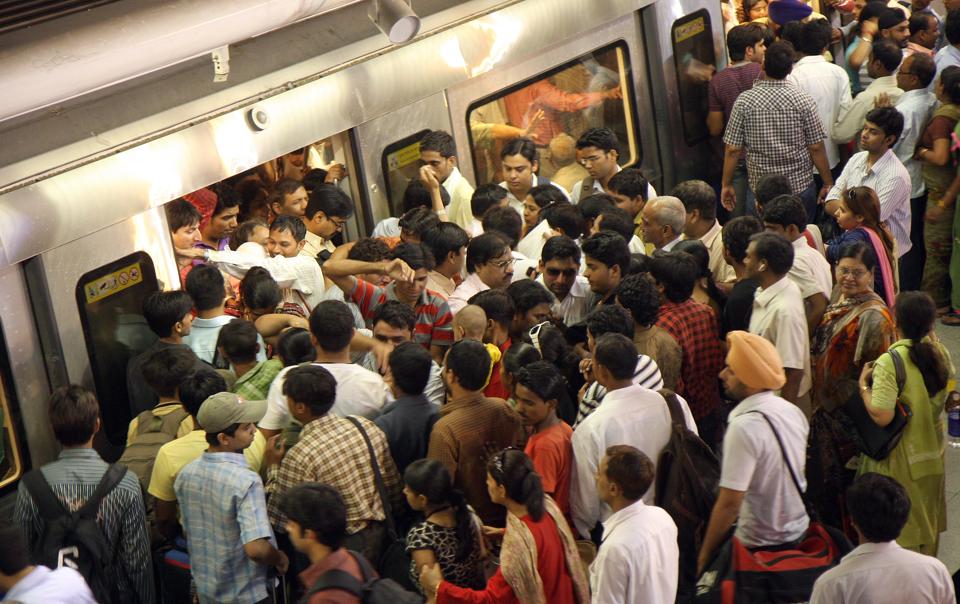
The Central Pollution Control Board (CPCB) is considering funding a project by a government research institute, proposing an early warning system for indoor air pollution in public places such as metro stations, shopping malls and multiplexes in the National Capital Region.
“We have received around 39 proposals from various research institutions such as IIT, NEERI, TERI, NPL and CSIO, many of which are R&D projects aimed at controlling air pollution in Delhi-NCR. We have already sanctioned eight of them and the rest is being evaluated,” said A Sudhakar, member secretary of the CPCB, India’s apex pollution controlling body.
The early warning system will try to forecast how the indoor air quality at public places could deteriorate within a few hours and even advise people to vacate the place to bring down levels of pollution.
“We have proposed to set up a kind of early warning system inside public places that could not just measure pollution but even forecast how air quality could deteriorate over the next few hours. It is being assessed by the CPCB and we are yet to get the final nod,” said Srinivas Kota, a scientist from Central Scientific Instruments Organisation (CSIO) in Chennai, a national laboratory under the Council of Scientific & Industrial Research.
The CSIO team will take up four types of buildings that are prone to air pollution such as the metro, a multiplex, a commercial building like an office and a residential complex and then try to build a base line data of the pollutants and air quality.
“Once that is done, we would try to find a correlation between outdoor pollution levels and indoor pollution levels. This would tell us how indoor quality changes when outdoor pollution increases. Whether pollution level falls when outdoor air quality improves or whether the pollutants get trapped,” Kota said.
The third stage is to set up some kind of sensors to detect pollution levels. The data would go to a central data bank and monitoring room. Models could be used to forecast the pollution levels over the next few hours,” he added.
The Supreme Court had in August 2016 imposed a 1% cess on the ex-showroom price of diesel vehicles with an engine capacity above 2000 cc. The CPCB had been collecting this cess over the past 17 months and the corpus has now crossed Rs 73 crore. It is being used to fund these projects.
Scientists said that an advisory system could be set up based on the forecasting system, asking people to vacate the building when pollution levels rise and put a cap on the entry of more people.
“Indoor air pollution could spike because of poor ventilation. Earlier studies have found that pollutants like CO2 and volatile organic compounds are always higher indoor than outdoor. Outdoor pollutants such as particulate matter and NO2 could also rise when outdoor pollution peaks. The particles may get trapped because of poor ventilation,” said Mukesh Khare, a professor of environmental engineering at the Indian Institute of Technology, Delhi
Scientists said that measuring the level of CO2 could be a good way of detecting other pollutants as CO2 is often termed as a ‘surrogate index’, meaning that rising levels of CO2 could mean other pollutants are also shooting up. According to international standards, if levels of CO2 breaches 1000 ppm then it is considered foul.
“According to the standards set up by the American Society of Heating, Refrigerating and Air-conditioning Engineers, if the level of CO2 crosses 2000 ppm then non-clinical symptoms like nausea, headache and breathlessness start showing. The building is considered as ‘sick’ if the CO2 levels are so high,” said Radha Goyal, deputy director of Indian Pollution Control Association, a Delhi based NGO.

Stay updated with all top Cities including, Bengaluru, Delhi, Mumbai and more across India. Stay informed on the latest happenings in World News along with Delhi Election 2025 and Delhi Election Result 2025 Live, New Delhi Election Result Live, Kalkaji Election Result Live at Hindustan Times.


