
 E-Paper



Six districts in Delhi had higher positivity rate than city’s average during first 19 days of Dec: Govt tells high court
The highest daily positivity rate reported during this period was in southwest district on December 1, when it saw a positivity of 7.99%. In the same period, Delhi’s daily positivity rate dipped from 6.85% to 1.30%.

 Prefer HTon Google


At least six of Delhi’s 11 districts reported a positivity rate higher than the city’s average of 3.25% during the first 19 days of December, according to data submitted by the state government in the Delhi high court. The highest average positivity rate was reported by northwest district at 4.75%, followed by southwest district (4.00%) and New Delhi district (3.51%), the data shows.
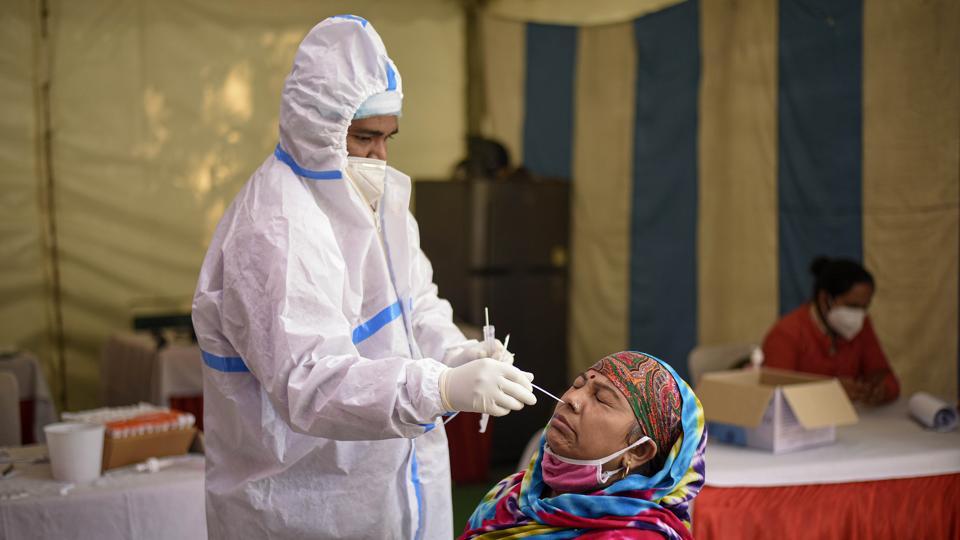
The highest daily positivity rate reported during this period was in southwest district on December 1, when it saw a positivity of 7.99%. In the same period, Delhi’s daily positivity rate dipped from 6.85% to 1.30%.
On Wednesday, Delhi saw a positivity rate of 0.99% — the lowest since the Delhi government releasing regular data on cases and tests. In comparison, the national average positivity rate stood at about 6.1%.
Positivity rate or the proportion of samples that return positive among the total tested depicts the ongoing spread of the infection. Experts believe the spread of the infection to be under control when a positivity rate of 5% or less is maintained in an area for more than two weeks.
The data was submitted to the high court on a petition seeking to ramp up testing in the capital. During the hearing on Dec 14, the bench of justices Hima Kohli and Subramonium Prasad asked the Delhi government to ramp up testing in the districts that had seen a surge in the number of cases.
“In the status report, you should indicate the districts in Delhi where number of cases have gone up. We expect you to increase the testing in those particular areas in districts where rate infection is higher. Doing random testing is one part, but if the focus is not on those particular areas, that won’t help,” the bench said.
The court wanted to know the current situation while also seeking to know whether the government had started a fresh sero-survey.
As per the data, northwest Delhi, which had the highest positivity rate, saw an increase of 1,863 between the average number of tests in the first week of December and the third week of December. For New Delhi district, the increase was of 1,468 between the first week and third week.
As for southwest district, where the positivity rate was the second highest, the average number of tests dipped in week two and went up by only 101 between the first and third weeks, as per the data.
“It is very encouraging to see that the positivity rate in Delhi has been going down consistently, especially since the government has increased the number of more accurate RT-PCR [reverse-transcription polymerase chain reaction] tests. However, this does not mean that the government can scale down the number of tests. If the current number of tests is maintained and the positivity rate continues to remain low, it will instil confidence in people that the number of infections have gone down and to keep an eye out for future increase in the number of cases,” said Dr Lalit Kant, former head of the department of epidemiology and infectious diseases at the Indian Council of Medical Research.


