
 E-Paper



To combat dengue, north Delhi corporation breeds Gambushia fish that eats mosquito larvae
The department had begun the process of breeding gambushia fish, often called ‘mosquito fish’, two months back at their hatcheries and today the numbers have grown into thousands.


As monsoon approaches, the health department of the North Delhi municipal corporation MCD (Narela Zone) has decided to breed larvae-eating fish in water bodies to deal with mosquitoes.
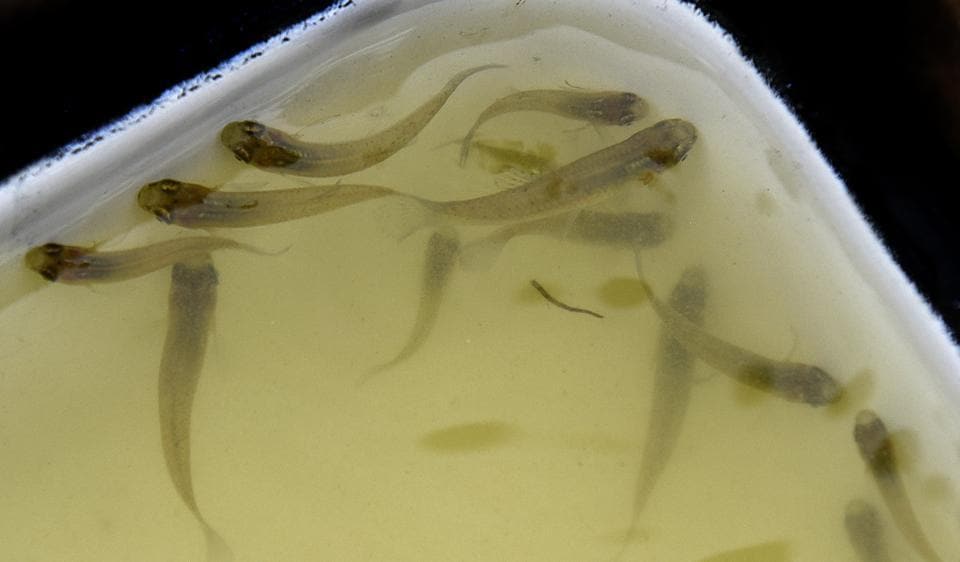
The department had begun the process of breeding gambushia fish, often called ‘mosquito fish’, two months back at their hatcheries and today the numbers have grown into thousands.
The fish, sized 8 mm at birth and about 50 mm as an adult, feeds on only mosquito larvae and survives for four years. In a month, a fish lays between 50 and 200 eggs, which become an adult in 90 days.
Considering there are so many water bodies in rural areas, the civic agency faces a lot of problem in spraying the insecticides at all these places. On the contrary, this biological method is a long-term solution to deal with the breeding of dengue mosquitoes, which grow in fresh water, said officials.
“Out of total water bodies, about 50 have fresh water and during monsoon these become breeding grounds of dengue mosquitoes. Insecticides and medicines harm other natural habitat as well. That’s why we have decided to use eco friendly techniques,” said Dr. Pramod Varma, deputy health officer, Narela Zone.
Varma said the process of releasing the fish to the water bodies will start by June end—a few days before the onset of monsoon. “During monsoon their numbers increase gradually and each would finish off larvae over 40 times its body weight in a day,” said the official.
Gambusia fish can be bred even at home, the official said. “A single, fully grown gambushia fish eats about 100 to 300 mosquito larvae per day,” he said.
The cost of introducing such fish is relatively low compared to the cost of fogging machines and spraying larvicide oil in water bodies.
“We spend between R 1-1.5 lakh on spraying insecticides in water bodies, which remains affective for 15 days. On the other hand, the fish feeds on mosquito larvae and requires no other food,” a public health department said.
The north corporation plans to transport these fish to other health centres. Health officials will identify areas prone to mosquito breeding and start releasing them into ponds, fountains and stagnant water in these areas.
“Fish would be transported to local and periphery areas, where there is breeding of mosquitoes. We have spoken to the horticulture department for developing small water bodies in neighbourhood parks where we can breed these fish,” senior district malaria officer said.
Stay updated with all top Cities including, Bengaluru, Delhi, Mumbai and more across India. Stay informed on the latest happenings in World News along with Delhi Election 2025 and Delhi Election Result 2025 Live, New Delhi Election Result Live, Kalkaji Election Result Live at Hindustan Times.


