
 E-Paper



Why Delhi gets waterlogged? Cow dung to wires, everything flows into rainwater drains
A report prepared by a panel of engineers from PWD and civic bodies says Delhi’s storm water drains are being used to dump sewage and solid waste leading to choking and flooding during rains.


Why do even light rain showers leave Delhi roads flooded? Why do labourer die while cleaning drains manually? Why do drains remain constantly choked despite dredging ?
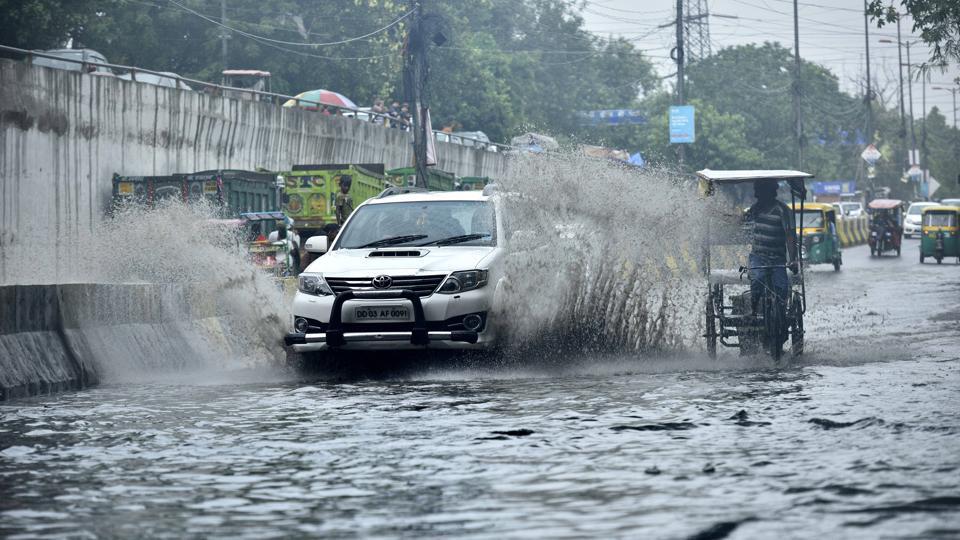
A Delhi government report says that the network of storm water drains in the city carries almost everything from cow dung to untreated industrial waste, garbage to construction waste and even power cables.
The report, prepared by a committee of chief engineers of PWD and civic bodies, has recommended separate sewerage and storm water drainage system to prevent waterlogging and outbreak of epidemics.
The report has been prepared after chief minister Arvind Kejriwal said that manual scavenging of drains should be done away with and suggested that possibility of mechanised cleaning of drains should be explored.
Sarvagya Kumar Srivastava (engineer-in-chief PWD), V K Jain (chief engineer, irrigation & flood control), PC Meena (engineer-in-chief, East DMC), Umesh Sachdeva (engineer-in-chief, South DMC) and Vijay Prakash (engineer-in-chief, North DMC) were part of the committee and it submitted the report last week.
As per the report, Delhi has a drain network of 3,468km managed by nine different agencies. Last year, these agencies removed 11,89,000 metric tonne silt from the drain.
“Ideally, storm water drains should carry only the rainwater, but there are a large numbers of colonies that do not have a sewerage system and the sewerage discharge from these colonies flows into storm water drains. As a result, these drains carry the discharge round the year and are filled with not only sewage but also solid waste in some cases,” the report said.
According to the report, the main cause of flooding is blockage of natural water flow.
“Over the years, hundreds of colonies have sprung up in various parts of the city. Majority of these colonies are situated on the ‘Original Flood Plains’ of Yamuna river. In addition, natural water bodies of the city have also been encroached upon. These factors have resulted in blockage and even disappearance, in some cases, of natural water courses. Rainwater, when it does not get entry into natural water bodies or water courses, finds its way to flow into surrounding roads or habited areas and thus causing flooding in the area,” the report said.
The report also blamed mushrooming of unauthorized colonies for the problem. “These colonies have come up in an unplanned manner and have no provisions for the basic civic amenities including sewerage and storm water drainage,” the report said.
The study found that in the absence of a proper sewerage system, large drains cater to the mixed flow of the sewage and storm water. These drains, originally designed to cater to storm water only, now carry additional load of sewage and even solid waste generated by nearby households and commercial areas. This results in flooding even with a minor downpour.
“Another major cause responsible for flooding is the unabated dumping of solid waste, garbage, cow dung and construction and demolition waste in the drains,” the report said.
The report also flagged poor sweeping mechanisms in Delhi as road waste/ garbage is dumped in storm water drains.
“Cow dung is disposed of into storm water drains from dairies spread across the city. This results in blockage of storm water drains that are not designed to cater to this. These drains have to be cleaned regularly to keep them flowing,” the report said.
The committee has recommended investment of Rs 3,100 crore in latest technology for mechanized cleaning of drains. For long term, the committee has recommended building sewerage system and adequate number treatment plants across the city.

Stay updated with all top Cities including, Bengaluru, Delhi, Mumbai and more across India. Stay informed on the latest happenings in World News along with Delhi Election 2025 and Delhi Election Result 2025 Live, New Delhi Election Result Live, Kalkaji Election Result Live at Hindustan Times.


