
 E-Paper



Epidemic Act will add more teeth to battle coronavirus
Delhi invoking the epidemic act will help them ensure that these people do not end up spreading the infection any further in the city.


Delhi’s healthcare workers have been busy keeping an eye on all the international travellers, the six people from the city who have tested positive, and over 1,400 people that the patients came in contact with before being isolated. Around 420 uncooperative people — who have been refusing isolation — have been adding to their woes.
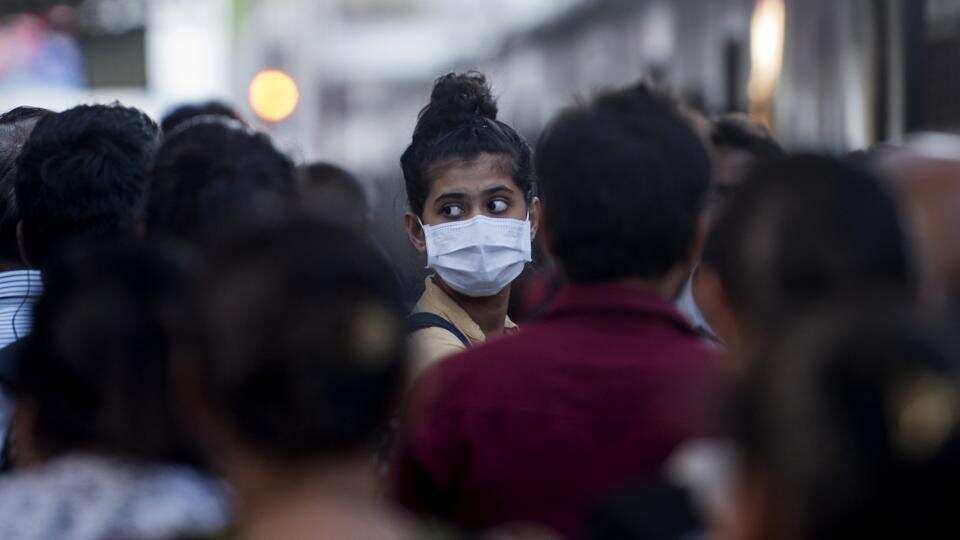
Delhi invoking the epidemic act, however, will help them ensure that these people do not end up spreading the infection any further in the city.
So far, India officially has reported 81 cases and two deaths from Karnataka and Delhi.
“There are around 420 people in Delhi who were categorised as high-risk and were advised to get tested and remain in hospital isolation. They refused to do so. Most agreed to stay in home-quarantine, but there too they put other members of the family at risk. The state Integrated Disease Surveillance Programme (IDSP) has now prepared a list of these uncooperative people and shared it with the respective district deputy commissioners. They can now take action under the epidemic act,” said an officer from Delhi’s IDSP cell.
The regulations issued by the Delhi government under the 1897 Epidemic Act on Thursday allows district magistrates to take action against such uncooperative people under section 133 of the Code of Criminal Procedure, which allows the removal of a person obstructing the government’s work or causing nuisance. It allows “coercive action as deemed necessary”.
The regulations also allow up to six months imprisonment and ₹1,000 fine or both under sec 188 of the Indian Penal Code.
Putting others at risk
In the absence of available treatment or vaccine, the only way to contain the spread is to isolate people who already have contracted the virus. Not doing so might lead to the person passing it on to others in his family or those he/she comes in contact with.
The 46-year-old man from Janakpuri, who tested positive for Covid-19 this week, passed on the infection to his 69-year-old mother. The mother-son duo was admitted to the isolation ward of Dr Ram Manohar Lohia hospital, where the 69-year-old succumbed on Friday night.
For just this one Delhi patient, who returned from Italy with the disease, the Uttar Pradesh authorities are tracking over 1,500 people – 707 staff from the factory where he worked and their family members. The man also came in contact with countless others in the Metro who cannot be traced.
“He travelled to his workplace in Noida in the Metro for several days. This means he came in contact with countless other people who we are not able to trace; there is just no way to do it. We have now put people in his immediate neighbourhood and his office under surveillance,” said another IDSP official.
A 52-year old man from Uttam Nagar, who returned from Thailand and Malaysia and tested positive last week, also came in contact with at least 434 persons, according to the government. The first person to test positive for Covid-19 in Delhi — a 45-year-old man from Mayur Vihar — had thrown a birthday party for his son at a five-star hotel in Delhi before being isolated.
“We have a good system of surveillance in place and the act was brought into force to provide the healthcare workers more teeth to enforce restrictions and preventions that need to be taken. Fortunately, people are well informed now and might be more willing to cooperate with the authorities. I personally feel that force should not be used because then people become less willing to cooperate,” said Jugal Kishore, head of the department of community medicine at Safdarjung hospital. He appreciated the measures taken by the government to prevent public gatherings, closing down movie theatres, and college and schools.
The regulations by the government under the Epidemic Act also puts the onus on people who have travelled abroad to get in touch with the government in case they start showing symptoms. The regulations also make it mandatory for all hospitals and doctors to report any suspected case of Covid-19 to the government.
Not just in Delhi, there have been reports from across the country of people running away from quarantine facilities. In Kerala, a family that had returned from Italy had not disclosed their travel history at the airport. Authorities later came to know of the cases only after two older relatives sought medicalcare.
The 76-year-old man from Kalburgi in Karnataka, whose death was the first one linked to Covid-19 in India, was treated by a doctor at home and a private hospital in Kalburgi. He was moved to a private hospital in Hyderabad by family members against the advice of authorities. He finally died on the way to an government isolation facility.
“People must take all the precautions suggested by healthcare workers. In 80% of the Covid-19 cases, people get mild symptoms such as fever and cough. The problem is they can pass on the disease to their relatives and others who might be old or have other conditions like diabetes and hypertension. And, we know that the disease is more severe and even fatal for them,” said Dr Kishore.
Lockdown works
Once the virus starts circulating in the community, the lockdown of an area to prevent infected persons coming in contact with others is efficient to curtail the spread.
The Delhi regulations allow officers in Delhi to seal any area in the city and prohibit entry or exit of people from there. This is what the Chinese government did to contain the Covid-19 crisis.
A study published in the Journal of the American Medical Association shows that the true number of cases in the community slowed down after China initiated the shutdown of Wuhan and a day later when 15 other cities in the Hubei province were locked down.
The number of cases being reported by the authorities when people sought medical care was still going up.
The true number of cases was estimated on the basis of the history of symptoms given by the patients.


Stay updated with all top Cities including, Bengaluru, Delhi, Mumbai and more across India. Stay informed on the latest happenings in World News along with Delhi Election 2025 and Delhi Election Result 2025 Live, New Delhi Election Result Live, Kalkaji Election Result Live at Hindustan Times.


