
 E-Paper



Minutest, deadliest particles in Delhi air less than last year
The level of harmful PM2.5 in Delhi’s notoriously toxic air has come down compared to last year, a monitoring agency said on Monday.


The level of harmful PM2.5 in Delhi’s notoriously toxic air has come down compared to last year, a monitoring agency said on Monday, indicating a significant drop in vehicular emissions and burning of garbage and crop residue in a city gasping for breath.
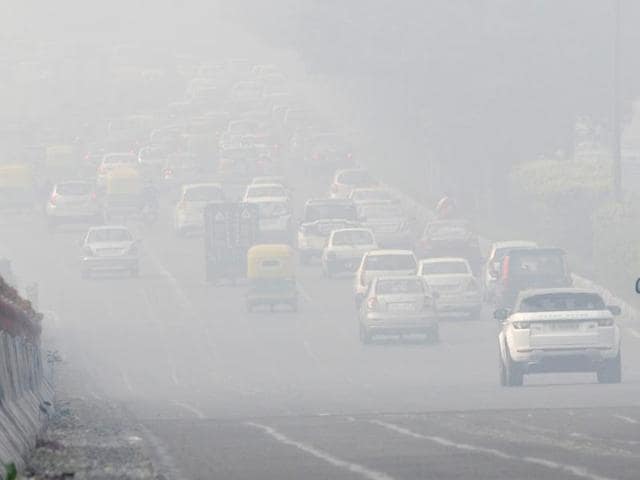
The System of Air Quality and Weather Forecasting and Research (SAFAR) said concentration of particulate matter 2.5, which may cause serious respiratory and heart ailments, was still in the “very poor” category but was significantly low for December — a month when air toxicity shoots up with a dip in temperature.
“The PM2.5 levels settled at 129 micrograms per cubic metre Sunday compared to 196 micrograms the same time last year. It falls in the ‘very poor’ category but is significantly low for prevailing weather conditions,” said Gurfan Beig, head of the agency which maintains the SAFAR air quality index. It is run by the Indian Institute of Tropical Meteorology under the ministry of earth sciences.
“Since December 10, the temperature has been falling. This normally pushes up the particulate matter levels but this time there has been a steady fall in it,” he said, attributing the welcome dip to increased awareness on air pollution. “People have become more aware leading to a reduction in emissions from vehicles and biomass burning,” he added, but cautioned it was too early to draw a conclusion.
On December 12, the city recorded a PM2.5 level of 159 micrograms per cubic metre, down from 186 micrograms recorded the same day last year. A comparison of data recorded in the second weeks of December 2014 and 2015 also revealed in a dip in PM2.5 levels on heavy foggy days.
PM 2.5 causes irritation in eye, nose, throat and lung, coughing, sneezing, runny nose and shortness of breath. In the long run, it may lead to respiratory and heart ailments.

Stay updated with all top Cities including, Bengaluru, Delhi, Mumbai and more across India. Stay informed on the latest happenings in World News along with Delhi Election 2025 and Delhi Election Result 2025 Live, New Delhi Election Result Live, Kalkaji Election Result Live at Hindustan Times.


