
 E-Paper



When families from Pakistan took refuge in Delhi tombs
Soon after the Partition, communal violence erupted in the city. Initially, many Muslim families from the city took shelter in Purana Qila, Humayun’s Tomb and Nizamuddin Dargah complex before leaving for Pakistan. “Later, these sites served as refugee camps for Hindus coming from across the border. A majority of them belonged to Punjab and Sindh provinces. They continued to stay in monuments years after the Partition,” said RV Smith, historiographer and chronicler of the Capital.

 Prefer HTon Google


The Partition brought lakhs of refugees from Pakistan to Delhi. They camped in military barracks, religious places, school buildings and monuments in south Delhi. Several temporary colonies cropped up in Purana Qila, Safdarjang Tomb, Humayun’s Tomb and tombs of Chote Khan and Bade Khan in South Extension-1.
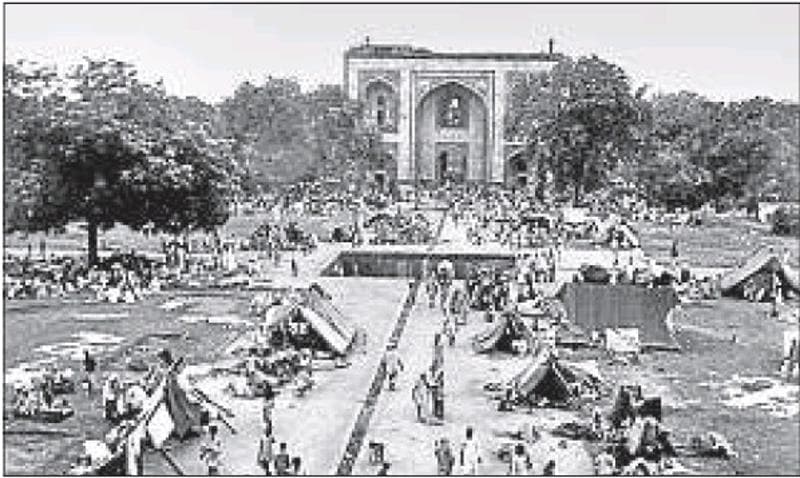
Soon after the Partition, communal violence erupted in the city. Initially, many Muslim families from the city took shelter in Purana Qila, Humayun’s Tomb and Nizamuddin Dargah complex before leaving for Pakistan. “Later, these sites served as refugee camps for Hindus coming from across the border. A majority of them belonged to Punjab and Sindh provinces. They continued to stay in monuments years after the Partition,” said RV Smith, historiographer and chronicler of the Capital.
The sites provided shelter to them for at least five years before the government earmarked land for them at different locations in Delhi.
Old timer sand historians said that areas near Y am una River including tombs which had accessibility to water were preferred by refugees. Historian Dr Swapana Liddle said ,“Many refugees stayed at Hum ayun’ s Tom band P ur ana Q ila. The tombs of Chote Khan and Bade Khan also witnessed huge influx. There are other little known tombs and monuments where they lived. However, the exact number of refugees staying here cannot be determined.”
“At the time of Partition, the entire area whether South Extension-1 or adjoining Amrit Nagar was a barren land. The tombs were preferred not because of their structure but because they had huge gardens,” said 78-year-old Narayan Gulati, resident of Amrit Nagar, who stayed in one of these tombs at that time.
Amrit Nagar resident Amreek Singh, whose relatives camped in these tombs, said,“Safd ar jung tomb was one of the sites where refugees stayed with their families.” According to Singh, hardly hundred people stayed at Safdarjung tomb. These people had migrated from Jhang district in Punjab province of Pakistan.
At the time of Partition, women in the refugee camps sold chana in crowded places to earn for the family. Their struggle ended only after government took concrete steps to settle them.
In later stages, when settlement colonies were established, refugees in what is now known as Barapullah and South Extn-1 set up a temporary market where daily need items were available.


