
 E-Paper



A tinder box of communalism
Karnataka is witnessing increasing divisions on religion. The government must step in now

 Prefer HTon Google


Karnataka has become a boiling pot of communal passions over the past months. It can be argued that the state has always leaned to the Right, but even a cursory perusal of Karnataka’s politics shows that while caste often decided who came to power, money remained the governing currency — one reason for the corruption scandals (and allegations) in the state. If the liquor lobby called the shots early in the state’s history, it was the mining and land lobbies later.
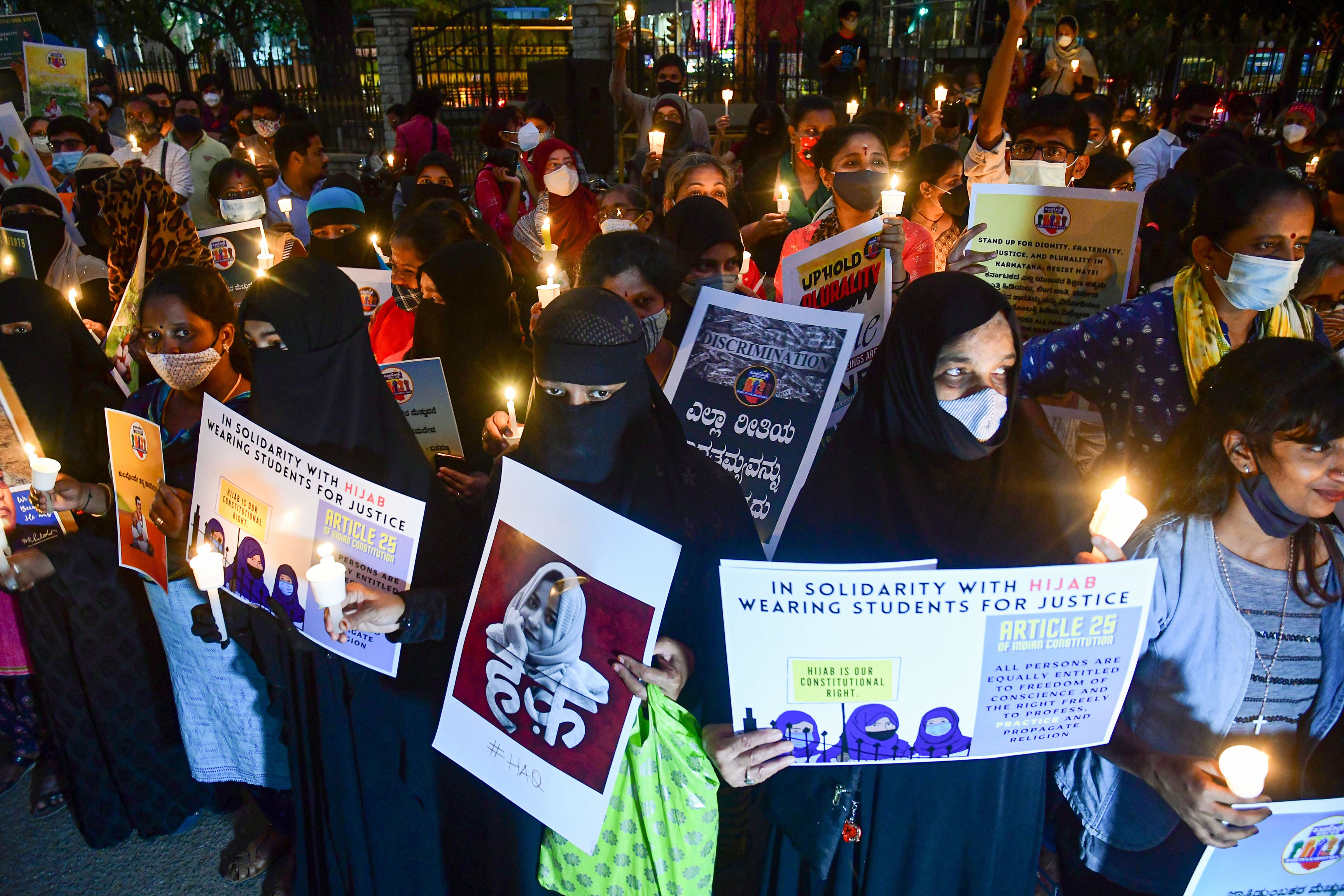
In 2021, the state passed a stringent cow slaughter law and, towards the end of the year, another prohibiting forced religious conversion. And this year has seen a government order on uniforms that prevented the entry of hijab-clad Muslim students into schools and colleges, a follow-up government order (which pretty much said that banning the hijab was not unconstitutional), and widespread misuse of an interim order of the high court on the hijab issue by schools and colleges that did not have any rules regarding uniforms to bar the entry of hijab-wearing students, even teachers (for whom, there was no uniform). In the last instance, it has emerged that groups on both sides have fuelled the controversy, and political parties have been quick to jump into the fray. On Sunday, a Bajrang Dal worker was killed in Shivamogga, prompting the closure of educational institutions in the city for two days, and before the investigation was complete, a Karnataka minister attributed it to “Muslim goondas (criminals)”, while another linked it to the hijab controversy. It may well turn out that the killing may have been on account of the victim’s faith — after all, Karnataka has become a tinder box as elucidated above. Or it may not.
While it is evident that the government, as well as Opposition parties, in Karnataka are at fault for allowing the situation to come to this, the primary fault is the former’s — as it always is; the government has more responsibility to ensure that situations such as this do not spiral out of control, since it also has the power to ensure they don’t. It hasn’t missed anyone’s notice that much of this has happened after a change of chief ministers (CMs), one that came after much haggling, with the choice of the new CM in June last year continuing to be debated within his party (the Bharatiya Janata Party), for months thereon. While the hijab issue is now before the Karnataka High Court — and irrespective of the ruling, this is unlikely to mark the end of the legal challenge — it is incumbent on the government and other parties to restore a sense of calm, and for the CM to display both leadership and statesmanship in cooling tempers.


