
 E-Paper



Decoding the UP manifestoes
The Bharatiya Janata Party’s and the Samajwadi Party’s documents reveal agriculture and employment are the main issues. Identity politics matters too

 Prefer HTon Google


Employment, agriculture, safety for women and better law and order, targeted delivery of subsidies and bolstering of infrastructure. These appear to be the primary issues shaping the election season in Uttar Pradesh (UP), if the manifestoes released by the Bharatiya Janata Party (BJP) and its primary challenger, the Samajwadi Party (SP), are anything to go by.
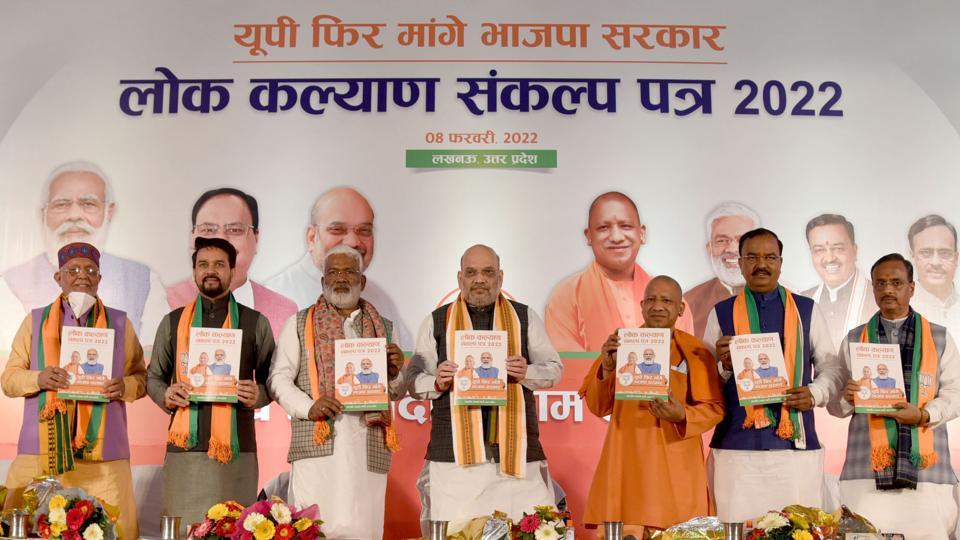
Both documents, released on Tuesday, underline three issues. One, rural distress and agricultural slowdown. For the BJP, this can be ameliorated through mega irrigation schemes, expanding buying at State-regulated support prices and bettering payment schedules. For the SP, which hopes to bene-fit from the yearlong protests against three now-scrapped farm laws, the remedies include reducing the debt of cultivators, more procurement and cheap loans, and free giveaway of fertiliser and seeds. Two, both parties see resentment over unemployment as a big concern and are looking towards targeted subsidies to provide a healing touch. The BJP, which triumphed in the past three elections in UP on the back of improved delivery of welfare schemes and visibly improved quality of rural life, promises to give jobs, or self-employment opportunities and double incomes. This is supplemented with piped water, subsidised housing, free gas cylinders, welfare payouts and free tablets or smartphones. The SP makes similar pledges of I-T jobs, monthly pensions for worker and social groups, free laptops and an urban job guarantee scheme. Three, law and order is a priority for both. The BJP, which has made law and order an election plank, promises to make roads safer for women, establish anti-corruption units, strengthen its controversial law against forced conversion and establish anti-terrorist commando centres. The SP, which alleges that the action on criminals was biased by caste allegiances, has promised a policy of zero tolerance of hate crimes against women, minorities and Dalits, a group it hopes to wean away.
Elections are rarely decided on single issues. Conventional narratives such as caste and faith blend with livelihood concerns, and macro frames of reference such as Hindutva, secularism or social justice are not enough to explain the voting choices. It is yet unclear who has the edge in this election but the manifestoes make it clear that concerns of jobs, safety and a better quality of life, combined with that old staple, identity, will determine the victor.


