E-Paper



At COP31, India urges developed nations to honour Paris Agreement finance commitments
India said no country should be left behind in the collective efforts to address climate change.

 Prefer HTon Google


India on Tuesday called on developed countries to fulfill their finance obligations under the Paris Agreement, saying public funding must remain central to catalysing climate action in developing nations and strengthening adaptation finance flows to address their vulnerabilities.
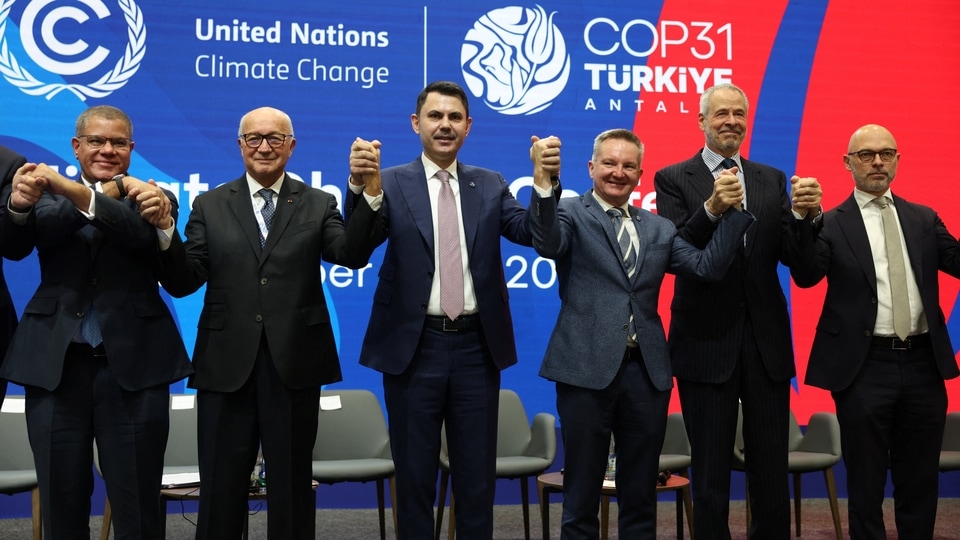
Delivering India’s opening statement at the 31st edition of the Conference of the Parties (COP) in Antalya, Türkiye, Ministry of Environment, Forest and Climate Change secretary Narendra Bhooshan underscored the fundamental importance of Article 9.1 of the 2015 Paris Agreement, which establishes the developed countries' obligation to provide financial resources to developing countries.
"UNFCCC (United Nations Framework Convention on Climate Change) and its Paris Agreement remain the most inclusive platforms where every country has a voice. India reaffirms its faith in this process, rooted in equity and the principle of CBDR-RC (Common But Differentiated Responsibilities and Respective Capabilities)," he said.
The goal of the Paris Agreement is to keep long-term global temperatures from warming 1.5 degrees Celsius (2.7 degrees Fahrenheit) above pre-industrial times and if not that well below 2 degrees Celsius (3.6 degrees) by slashing planet-warming emissions from coal, oil and gas.
Bhooshan said the prospect of global warming crossing the 1.5°C threshold made equity particularly urgent, and added that no country should be left behind in the collective efforts to address climate change. India reiterated that it would contribute its fair share to global climate action while safeguarding its development priorities and the well-being of its people.
India has been stressing the need for greater technology transfer, arguing that barriers related to costs, intellectual property rights and trade must be addressed to ensure developing countries can access clean technologies.
Earlier, Union environment minister Bhupender Yadav outlined India's negotiating priorities, saying the country would push for predictable, largely public and concessional climate finance that does not add to the debt burden of developing nations. India is also seeking a decision to commence the Climate Finance Work Programme at COP31.
The two-week conference kicked off earlier this week in the Mediterranean resort city of Antalya, with governments under pressure to tackle the climate crisis after a year of heatwaves in Europe, deadly floods in Nepal and major wildfires in Indonesia.
COP31 host Turkey is championing a voluntary initiative to accelerate the electrification of transport, buildings and industry, with a target of raising electricity's share of global energy consumption to 35 percent by 2035.