
 E-Paper



Dissent bolsters democracy
The crackdown on the October 10 protest raises questions of procedural safeguards and proportional use of force

 Prefer HTon Google


The unprecedented crackdown on a planned protest against chief election commissioner Gyanesh Kumar has turned Delhi into a virtual fortress and raised three sets of questions.
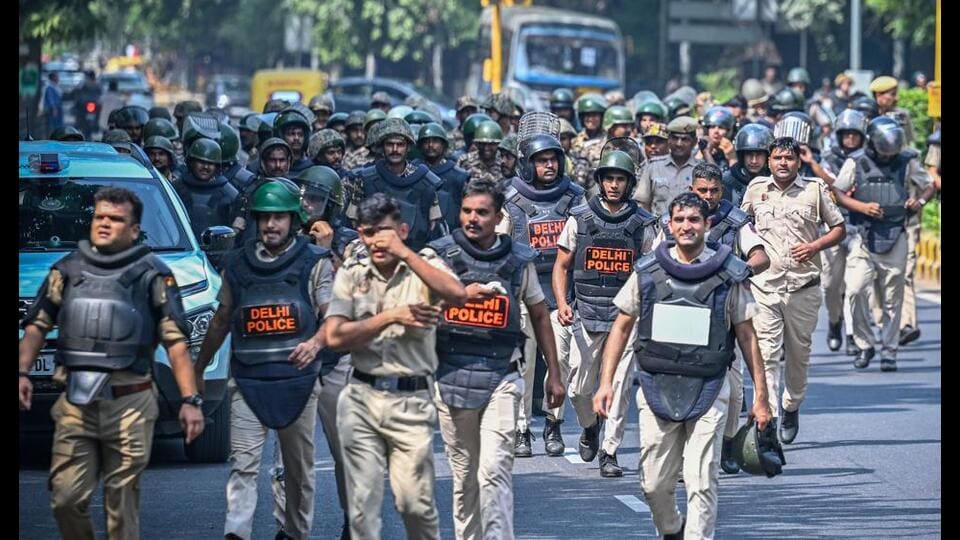
The first is around the measures taken to ensure a peaceful protest. The Constitution’s imposition of reasonable restrictions on fundamental rights assumes that authorities will not use their powers arbitrarily, balance them against rights, and only do what’s necessary to stave off violence. Even where legislation authorises arrest or detention, authorities are expected to act within limits and comply with applicable constitutional safeguards. But the closure of 57 metro stations — reduced to 45 after a Supreme Court rap — the cancellation of long-distance trains, curtailment of movement and internet services in several parts of Delhi, and deployment of 40,000 personnel who detained 7,000 people indicate that the use of power was disproportionate to the cause. Such actions dim the moral legitimacy of a liberal democracy such as India and lead to allegations that the authorities are not just against violent elements in the protest, but the protest itself.
The second set of questions is around procedural safeguards, some of which were raised before the apex court on Sunday. Confusion abounds on the orders that led to the detention of Cockroach Janta Party leaders from a flight, on whether detentions happened outside the original jurisdiction of the prohibitory order, and whether police stood by while Right-wing groups thrashed agitators. Procedural safeguards are not mere formalities, they are the hinge on which rights and restrictions are balanced. The authorities will do well to set the record straight.
The third question is a larger one. In decrying detentions except in accordance with procedure established by law, the top court has often underlined (as it did Sunday) the fundamental tension between personal liberties and law and order. In a country where the lower courts often rubber stamp police action in the name of rule of law, the court has to clearly spell out the contours of preventive detention powers. The continuing detentions on Sunday — of people even walking on roads — even after a court advisory shows this should come sooner, rather than later.
This newspaper has earlier noted that police action cannot smother an issue that has genuine ground resonance — exhibited during the NEET protests. To be sure, no stir can be allowed to turn violent and the authorities have a right to make arrangements to ensure order. But the world’s largest democracy should keep in mind that expressions of dissent only strengthen our electoral fabric, not weaken it.


