
 E-Paper



Fix Manipur’s law and order
A sensitive state cannot be allowed to slip into cycles of violence and chaos. The authorities must focus on re-establishing the rule of law

 Prefer HTon Google


For around six weeks, a corner of India has been convulsed by wave upon wave of violence, stoked by decades of simmering tensions between two groups with a long history of acrimony and mistrust, and a raft of miscalculated political moves by a government that clearly underestimated the ethnic animus and the havoc its steps could wreak. The initial burst of brutality was concentrated in a three-day period, when armed men and women ran riot across the state, barging into hostels to pull out innocent students and thrash them, march into villages and neighbourhoods packed with unarmed residents and indiscriminately open fire, and set ablaze houses by the dozens. As hostilities between the Meitei community and the Kuki community mounted, tens of thousands of people, stricken with fear, fled their homes in the dead of the night into jungles and relief camps, often across state borders.
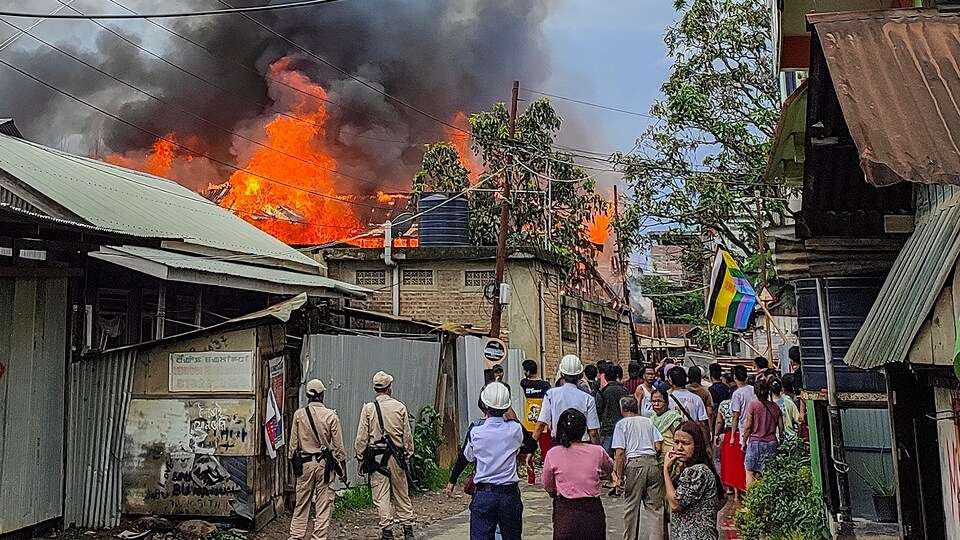
But far more worrying is the recent resurgence of violence after a lull in clashes. There was hope that after tens of thousands of security personnel were parachuted into the state and the law-and-order administration was shaken up and restructured, local authorities would get a better grip on the state. However, the sharp escalation in violence in the past two weeks has belied that hope. The burning of an ambulance or the house of a Union minister is only a portent of a horrifying reality gripping the state, where the armed forces are sometimes finding themselves stranded on highways, blockaded by groups of local women, unable to move forward; where the police force appears compromised and hopelessly divided, unable to enter villages even hours after a crime has occurred; where the civilian administration appears all but absent when tensions escalate on the ground; and where new geographical fault lines seem to have emerged, dividing the state’s population along ethnic lines. This doesn’t augur well for a sensitive state in a border region with a turbulent history of narcotics trade and militants.
There are many reasons why things have come to such a pass. The most immediate was a high court order that proposed a tweak in the state’s reservation matrix, bringing the Meiteis within the Scheduled Tribe fold. But the state government’s aggressive moves — including its unilateral withdrawal from some tripartite agreements between itself, the Centre and militant groups, and its so-called anti-encroachment drive in the forested hills that sparked fears of dispossession and displacement — contributed to the chaos. This newspaper has noted before that bridging the ethnic gulf in the state should be a priority for the government. But with the peace process in a shambles — a bunch of prominent Kuki and Meitei civil society groups have distanced themselves from a government panel headed by governor Anasuiya Uikey — the administration must focus on getting a handle on the law-and-order situation first.
The Union government must consider sending high-level emissaries to bring all stakeholders back to the negotiating table and the security establishment must re-establish a reputation of credibility and impartiality. At the same time, the government needs to dispel the perception that elements in the local police are complicit in the violence, and crack down on errant personnel. Most of all, accountability must be fixed for administrative lapses and law-and-order failures. Manipur cannot be allowed to burn any longer.


