
 E-Paper



India’s regional challenge
China and nationalism have made it more complex for Delhi


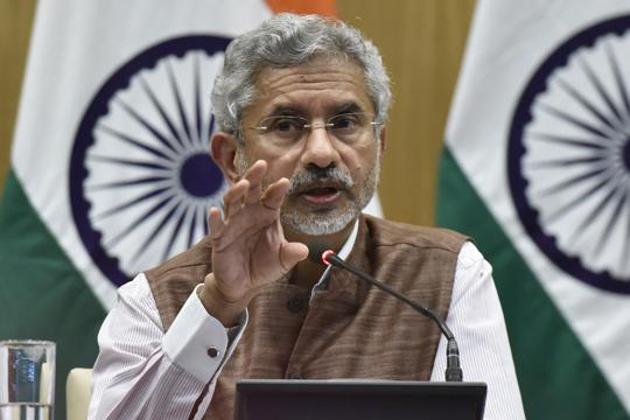
Last week, former Congress president Rahul Gandhi offered his explanation on why the Chinese decided to be aggressive at the border at this juncture. Among other reasons, he attributed this to the failure of the Narendra Modi government’s foreign policy, in particular, when it comes to the neighbourhood. External affairs minister S Jaishankar countered Mr Gandhi — and on the neighbourhood, listed out India’s engagement with smaller countries, the development assistance being offered, and landmark deals.
Between the political black-and-white worldview — where Mr Gandhi sees a failure in India’s handling of the neighbourhood, and Mr Jaishankar sees success — lies a complex truth. India is more invested in the neighbourhood than it has been, but it has also become more challenging for New Delhi to secure its interests in the region. This is due to two factors. The first reason is the increased presence of China. Beijing has decided to engage with political parties, official institutions, media, businesses, and societies in South Asia — with the objective of increasing its control, and eroding Indian influence. India has historic advantages of connectivity, people-to-people linkages, and cultural convergence. But it lacks the resources, single-minded determination, and is often caught between conflicting objectives and ad-hoc policymaking, which makes meeting the China challenge more difficult. The second reason is the nature of democratic contestation in the neighbourhood. Given India’s size and role in the domestic politics of Nepal, Bangladesh or Sri Lanka, there is a “nationalist” constituency in each of these countries that earns political advantage by being seen as adversarial to India. These domestic constituencies then become a natural, receptive partner for China.
These twin challenges affect the policy matrix in Delhi. The government has sought to break out of this challenge by taking a firm position against hostile governments and encouraging friendly parties which have come to power (Maldives), working with supposedly antagonistic partners to neutralise their hostility (KP Oli in Nepal, the Rajapaksas in Sri Lanka), or backing its allies (the Awami League in Bangladesh). But these methods are not foolproof, and have thrown mixed results, and will be a challenge for New Delhi. As the neighbourhood gets more complex, India’s government and Opposition should develop a bipartisan approach. Mr Gandhi and Mr Jaishankar should go offline, and have a chat about these complexities.


