
 E-Paper



Is Asia’s oldest insurgency close to a resolution? | HT Editorial
A peace pact is welcome. But bringing NSCN (I-M) on board is important


The Naga insurgency has been one of India’s oldest conflicts. Right from Independence, Naga groups have asserted their distinct identity and sought to break away from the Indian State. Led by Angami Zipo Phizo, the movement for secession took a violent turn in the 1950s. When some elements signed a peace accord with the government, a more radical outfit — the Nationalist Socialist Council of Nagaland (NSCN) — was set up under the leadership of T Muivah, Isak Swu and SS Khaplang. The group eventually split.
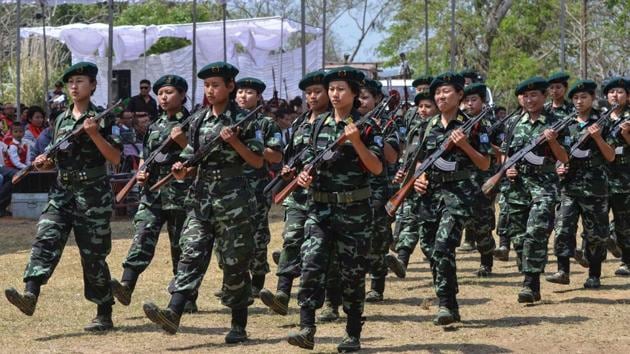
The movement itself had two major strands: Recognition of Naga sovereignty; and the integration of all Naga-speaking areas (particularly of Manipur) into a Greater Nagaland. These were demands that no government in Delhi could meet. The first — sovereignty — would undercut India’s claim over the region; the second — integration — would create a backlash in Manipur. But since the 1990s, Delhi began engaging closely with NSCN, led by Isak and Muivah (I-M). A ceasefire was declared. Multiple rounds of negotiations were held. Violence dipped — even though the insurgents maintained a parallel government in the state. And, in 2014, a “secret” framework agreement was signed.
Delhi is close to signing a final peace agreement with a section of the Naga groups such as the Naga National Political Groups, but this does not include the NSCN (I-M). There has been an evolution in the Naga position. Demands for Independence have faded. But symbolically, they want a recognition of a distinctive Naga identity. This, for NSCN (I-M), means a recognition of the Naga flag and a separate Naga constitution — demands that Delhi finds hard to accept. It is also clear that Delhi will not redraw state boundaries. With a clever mix of engagement, coercion, co-option, and inducements, Delhi has managed to neutralise the Naga extremists. A peace agreement will be most welcome. But unless NSCN (I-M) is brought on board, sustainable peace and closure of the insurgency will be hard to achieve.


