
 E-Paper



Ramp up testing, now | HT Editorial
Opening doors for the private sector is good. Act on it swiftly

 Prefer HTon Google


India’s hesitation in adopting mass testing for coronavirus (Covid-19) even as it spreads is jeopardising the lives of millions who may be infected but don’t know it. India has, so far, limited testing to those with travel history from affected countries, their contacts, and symptomatic health workers dealing with Covid-19 patients. The government has argued that it is not possible to test everyone. It has plans to scale up diagnostic laboratories doing Covid-19 tests from 63 to 121, and is putting in place mechanisms to allow 51 private labs to test. Officials have suggested that if India begins testing people with symptoms, the system will not have enough capacity to test, once community transmission begins.
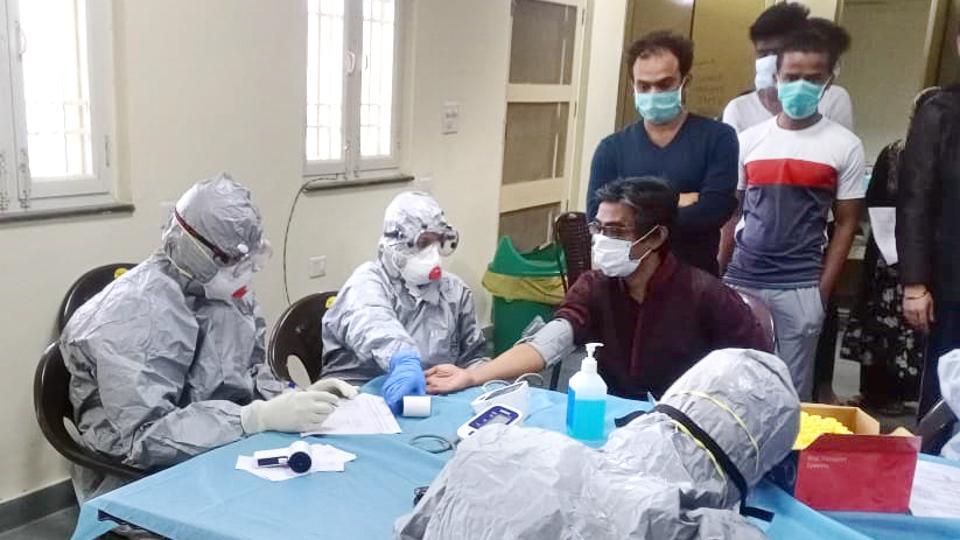
The government, however, must reconsider its approach. A new analysis of data from China shows that for every confirmed case, there are another five to 10 people in the community with undetected disease. Many people with mild or no symptoms remain undiagnosed but infect others. In China, this led to nearly 80% of the new cases. Random community testing of 1,100 patients in intensive care units, as India is doing, is too small a sample for a population of 1.37 billion. The first 500 random cases have tested negative, but this should not make the government complacent. To deal with the issue of capacity, there is only one way out — involve the private sector substantially. The government is considering the option now, but it should move fast. India has procured one million diagnostics kits, but the overstretched government sector does not even have the human resources to scale up to a few thousand tests. Even when a little over 10% of its diagnostic capacity of 6,000 tests a day is being used at the Indian Council of Medical Research labs, the diagnostic reports for tests take several days to be generated.
Rapid mass testing in South Korea has brought down new infections and death rates to less than 1%, compared to the world average of close to 4%. Makeshift fever clinics in China, offering rapid testing, brought down new cases on Monday to 21, compared to 62 in the United States and 344 in Italy, where the epidemic spiralled out of control because of delayed diagnosis. The World Health Organization has urged countries to test every suspected case. India must redefine its outdated testing parameters to permit walk-in testing. It has allowed two labs to do rapid testing, but this is not enough. This is the biggest health emergency in living memory. As long as quality and infection control measures are in place, it should not matter whether testing is done in public or private hospitals, for it saves lives. .


