
 E-Paper



Unpacking India’s latest trade data
Numbers suggest that India is gaining from its inherent buffer in external trade.

 Prefer HTon Google


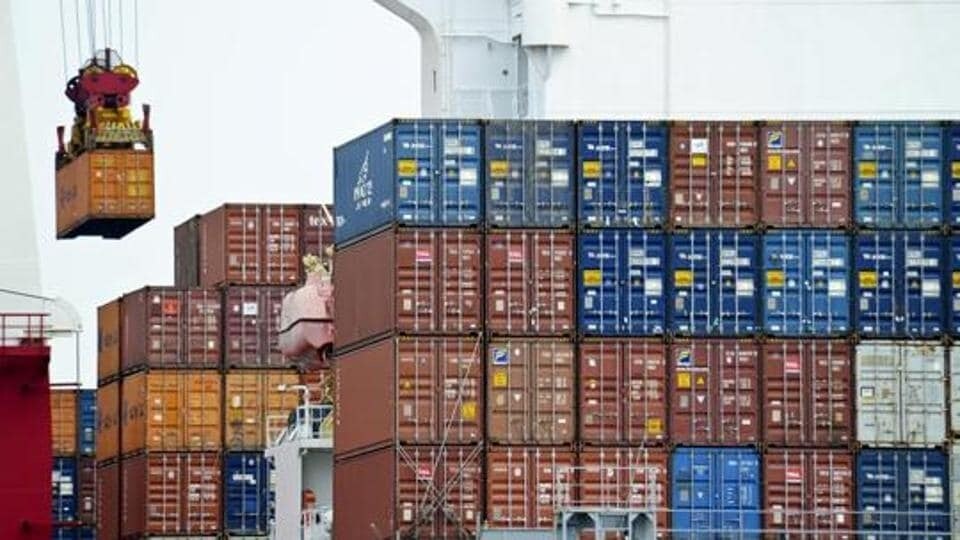
India’s merchandise exports have fallen from $38 billion in January to $33.9 billion in March. But thanks to a much larger fall in imports — the respective numbers are $60 billion and $51 billion — the merchandise trade deficit has dipped from $22 billion to $17 billion between January and March 2023. These numbers suggest that India is gaining from its inherent buffer in external trade. While a slowing global economy is generating headwinds for exports, the fall in commodity prices is also bringing down the import bill. Brent crude, for example, was trading below $75 per barrel on Thursday. Meanwhile, despite the dip in recent months, India’s exports for the year are on track for another record, especially thanks to services.
India’s service exports have shown a discernibly better performance in the post-pandemic period. A recent research note by HSBC economists Pranjul Bhandari and Aayushi Chaudhary argues that service exports have outpaced all high, medium, and low-tech exports by a considerable margin, even after adjusting for inflation. At a time when the global economy, especially financial markets, are facing considerable uncertainty, the importance of reducing the trade deficit and the cushion this brings for the macro economy cannot be overestimated. Because India is a net importer of goods, a booming economy would have given us less of an advantage on exports, but a bigger disadvantage on imports due to higher global commodity prices.
Of course, if the trend in merchandise exports continues it will hurt certain sections of the Indian economy, and also affect overall economic growth. Economic policy must do all it can to solve these challenges. However, now is the time to focus more on preserving macroeconomic stability until global economic conditions start returning to normalcy.


